Steel has long been the go-to structural material in construction, but Fiber-Reinforced Polymer (FRP) is quickly taking its place across industrial, infrastructure, and commercial projects. From corrosion resistance to installation speed, FRP solves pain points steel cannot match. Below we break down why the shift is happening—and how FRP outperforms steel in real-world use.

Why Choose FRP Grating Instead of Metal Grating?
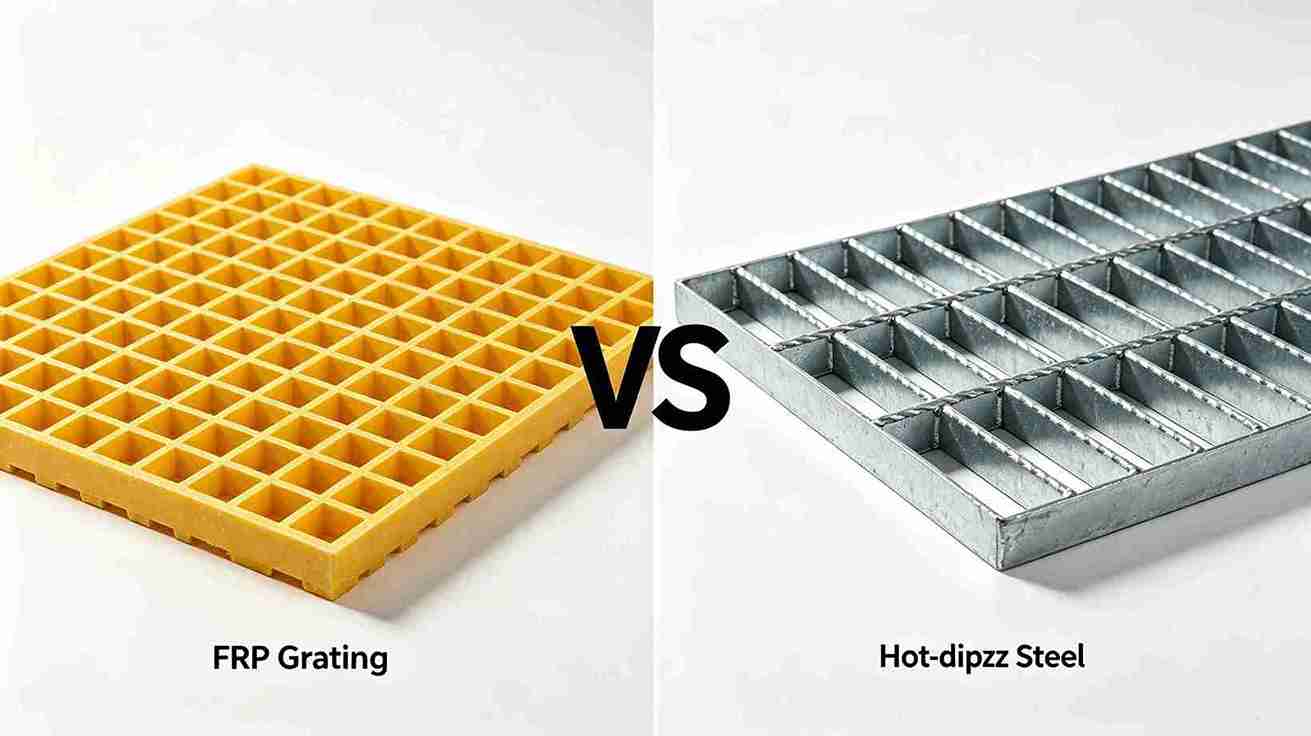
FRP grating outperforms metal alternatives by delivering corrosion-free performance in moisture, chemicals, and saltwater environments where steel rusts and fails fast. It combines high strength with light weight to support heavy loads without the ongoing upkeep metal requires, making it the top pick for industrial walkways, coastal platforms, and wastewater facilities.
What Makes FRP Grating Systems Easy to Install?
FRP grating is up to 75% lighter than steel, eliminating heavy machinery and cutting labor time dramatically. It cuts easily with standard tools, requires no welding or specialized equipment, and speeds up on-site assembly. Lighter weight also lowers transport costs and speeds up project timelines compared to bulky steel grating.
How to Care for and Maintain FRP Grating?
FRP grating needs little to no ongoing maintenance—no painting, rust treatment, or corrosion repairs. Occasional light cleaning is all it takes to preserve performance and appearance. Unlike steel, which demands regular recoating and inspection to prevent structural degradation, FRP stays durable with minimal effort over decades of service.
What Are the Key Differences Between FRP and Steel Grating?
The core gap lies in durability, cost of ownership, and usability:
- Corrosion: FRP resists chemicals, salt, and moisture; steel rusts and weakens over time.
- Weight: FRP is far lighter for easier handling and installation.
- Maintenance: FRP is near maintenance-free; steel needs frequent upkeep.
- Safety: FRP is non-conductive and non-magnetic; steel conducts electricity and heat.
- Lifespan: FRP lasts longer in harsh conditions with lower total lifecycle cost.
Key Reasons FRP Is Replacing Steel in Modern Construction
1. Unmatched Corrosion Resistance
Unlike steel, which rusts in coastal, industrial, and wet environments, FRP is highly resistant to chemicals, moisture, and saltwater. It maintains structural integrity without degradation, making it perfect for marine works, chemical plants, and wastewater treatment facilities.
2. Lightweight Yet High Strength
FRP is up to 75% lighter than steel while delivering strong tensile strength. This reduces transport effort, simplifies handling, and cuts installation time—without sacrificing load-bearing performance.
3. Significantly Reduced Maintenance
FRP eliminates the painting, touch-ups, and rust repairs steel requires. Lower maintenance translates to direct savings on labor, materials, and downtime over the structure’s lifespan, lowering total cost of ownership.
4. Faster Installation & Lower Labor Costs
Its light weight and easy workability cut project timelines and labor expenses. No heavy cranes or welding crews are needed, speeding up construction and reducing on-site disruption.
5. Non-Conductive & Non-Magnetic Safety
FRP does not conduct electricity or heat and is transparent to magnetic fields. This makes it essential for electrical substations, data centers, medical facilities, and other sensitive installations where steel poses safety risks.
6. Better Environmental Sustainability
As noted by Composite-Tech, FRP offers a smaller carbon footprint thanks to its long service life, reduced replacement cycles, and lower energy use in production and transport. It supports green building goals better than steel.
Where Is FRP Most Commonly Used vs Steel?
- Concrete Reinforcement: FRP rebar replaces steel in bridge decks, marine structures, and underground projects prone to corrosion.
- Industrial Structures: FRP grating, walkways, and handrails in chemical plants, water treatment facilities, and heavy industrial zones.
- Critical Infrastructure: Coastal construction, tunnels, and high-corrosion zones where steel fails prematurely.
Final Thoughts
FRP is more than a steel alternative—it is a performance upgrade for modern construction. With superior corrosion resistance, easy installation, minimal maintenance, and strong safety benefits, it delivers long-term value steel cannot match. For projects prioritizing durability, speed, and low lifecycle cost, FRP is now the first choice over traditional steel.