Select proper FRP handrails for Australian scenarios. Coastal, industrial and municipal projects all need them. Meanwhile, balance compliance, safety and environmental durability. In addition, Australia faces harsh outdoor and industrial conditions. Salt spray, strong UV and chemicals erode common materials. Thus, local strict standards must be fully followed. This guide lists key FRP handrail selection factors. It covers usage notes and core product advantages. It helps you choose wisely for your project.
Key Selection Factors for Australian FRP Handrails
To ensure your FRP handrails perform reliably in Australian environments and meet regulatory requirements, focus on these critical factors:
Compliance and Standards
Compliance with Australian standards is non-negotiable, as it guarantees safety, durability, and compatibility with local building codes.
- Industrial/Municipal Use: Ensure your FRP handrails comply with AS1657-2018, the Australian standard for fixed platforms, walkways, stairways, and ladders. This standard dictates load capacity, height, and structural requirements to protect workers and the public in industrial and municipal settings.
- Public Access: For areas open to the general public, compliance with AS1428 (mobility access standards) is essential. This ensures handrails are accessible to people with disabilities, with appropriate grip dimensions and placement.
- Pools: Select FRP handrails that meet safety standards for corrosion resistance in chlorinated or saltwater pool environments. Chlorine and salt easily damage traditional materials, FRP natural corrosion resistance is highly essential, and pool safety compliance fits aquatic environment needs.
Environmental Suitability
Australia’s diverse environments—from coastal salt zones to industrial chemical areas—require FRP handrails tailored to specific exposure risks. Choose resin types based on the environment:
- Vinyl ester resins are best for high chemical resistance, making them ideal for industrial applications like wastewater treatment plants, where exposure to harsh chemicals is common. Their molecular structure minimizes hydrolysis, ensuring superior durability in corrosive settings.
- Isophthalic resins are suitable for general-purpose applications, including most municipal and pool settings, offering a balance of durability and cost-effectiveness for less extreme exposure.
Design and Structure
The design and structure of FRP handrails should align with their intended use, balancing ergonomics, strength, and ease of installation:
- Round Profiles: Best for ergonomic grip, which is crucial for public access areas and public pools. Their smooth, curved design ensures comfortable use for all users, including children and people with mobility needs.
- Square Profiles: Provide superior structural strength, making them ideal for industrial settings (mining, oil & gas) where handrails must withstand heavy loads, impacts, and harsh conditions.
- Modularity: Opt for modular FRP handrail systems for easy on-site fabrication and assembly. Modular designs reduce installation time and labor costs, especially in remote or hard-to-reach areas, and allow for easy repairs or expansions later on.
Safety and Maintenance
Safety and low maintenance are key priorities for Australian FRP handrails, given the country’s harsh weather and often remote project locations:
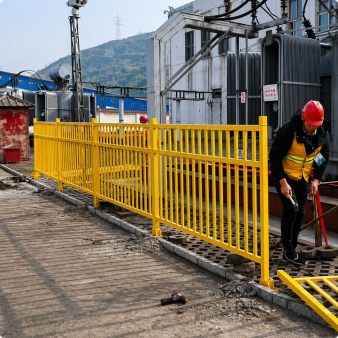
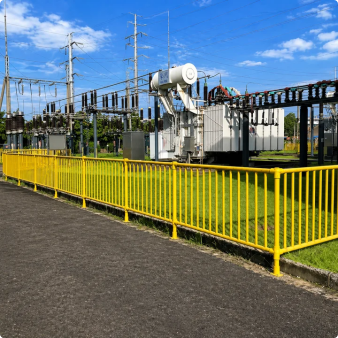
- Color: For industrial compliance, use safety yellow or other high-visibility colors to enhance visibility in busy or low-light industrial environments, reducing accident risks.
- UV Resistance: Ensure the FRP handrails include a polyurethane UV coating for long-term outdoor exposure. Australia’s intense UV radiation can cause fading, brittleness, and cracking—polyurethane coatings protect against this damage, extending the handrails’ lifespan.
- No Maintenance: Select products that require no welding or painting, such as those from Weldlok. FRP’s inherent durability means it does not rust, warp, or degrade, eliminating the need for regular upkeep that plagues metal handrails.
Selecting FRP Handrails by Application
The right FRP handrail depends on its intended use—here’s how to tailor your choice to pools, industrial sites, and municipal infrastructure:
Pools
When selecting FRP handrails for pools (public or private), focus on the specific demands of aquatic environments. As described by Billabong Pool Service, prioritize non-conductive, corrosion-proof material that remains cool to the touch—critical for pool areas where users may touch handrails with wet hands and children may come into contact with them. Ensure ADA-like compliance, with a height of 34″–36″ to meet safety standards, and consider RYPRY for guidance on the best pool-specific FRP handrail options. Additionally, choose isophthalic resin handrails for general pool use, or vinyl ester resins for saltwater pools with higher corrosion risks.
Industrial (Mining, Oil & Gas)
Industrial settings like mining, oil, and gas require FRP handrails that can withstand heavy loads, chemical exposure, and extreme conditions. Prioritize high-strength, chemical-resistant systems—opt for square profiles for maximum structural strength and vinyl ester resins for superior chemical resistance against fuels, solvents, and industrial chemicals. High-visibility colors (like safety yellow) enhance safety, and modular designs simplify installation in remote industrial sites. Non-conductive properties are also critical in these settings, reducing the risk of electric shock near electrical equipment.
Municipal/Infrastructure
Municipal and infrastructure projects—such as parks, boardwalks, and public buildings—focus on durability and public safety. Choose FRP handrails that comply with AS1657-2018 and AS1428, with round profiles for ergonomic public use. Prioritize UV resistance and low maintenance, as municipal handrails are often exposed to the elements and require minimal upkeep to stay safe and functional. Lightweight, modular designs also help reduce installation costs for large-scale municipal projects.
Benefits of Australian FRP Handrails
FRP handrails offer distinct advantages over traditional materials like metal and wood, making them ideal for Australian conditions:
- Corrosion Resistance: Essential for coastal or chemical-intensive environments, FRP is impervious to salt, chlorine, and harsh chemicals, eliminating rust and degradation that shorten the lifespan of metal handrails.
- Non-Conductive: Safer than steel near electricity, FRP handrails cut electric shock risks and fit industrial sites, power plants and pool equipment areas.
- Lightweight: Typically a quarter of the weight of steel, FRP handrails reduce installation costs by eliminating the need for heavy machinery and reducing labor requirements. Their lightweight design also makes them ideal for modular assembly and remote project sites.
Final Thoughts
Selecting the right FRP handrails for Australian pool, industrial, and municipal use comes down to prioritizing compliance, environmental suitability, design, and safety. By aligning your choice with AS standards, choosing the right resin and profile, and focusing on application-specific needs, you can ensure your FRP handrails stand up to Australia’s harsh weather and deliver long-term value.
Whether you’re installing handrails for a public pool, industrial facility, or municipal boardwalk, FRP’s corrosion resistance, non-conductive properties, and low maintenance make it the superior choice for Australian projects. For high-quality, compliant FRP handrails tailored to Australian conditions, turn to Mingchifrp—a trusted supplier that offers modular designs, UV protection, and application-specific resin options—ensuring your handrails are safe, durable, and cost-effective for years to come.