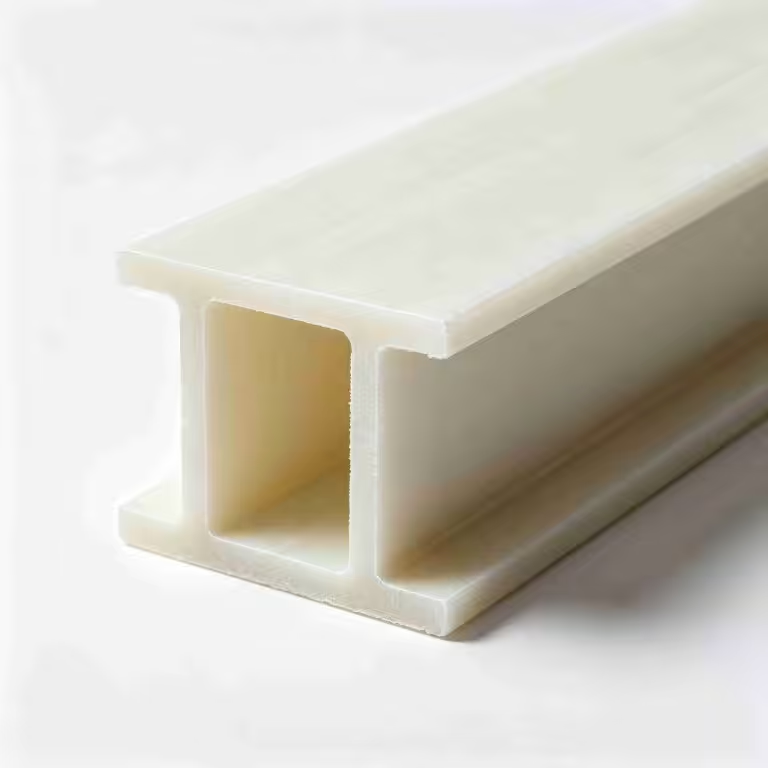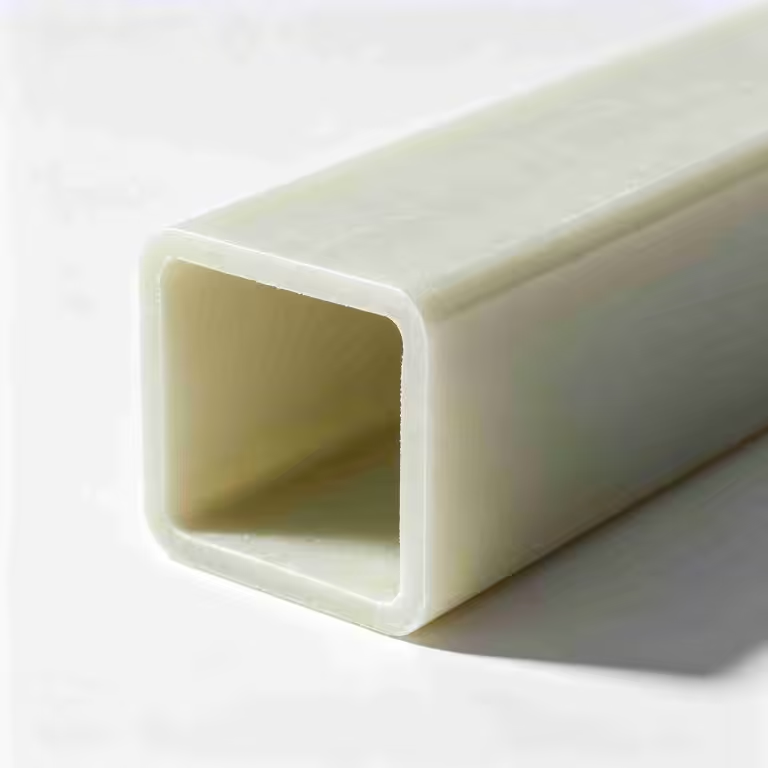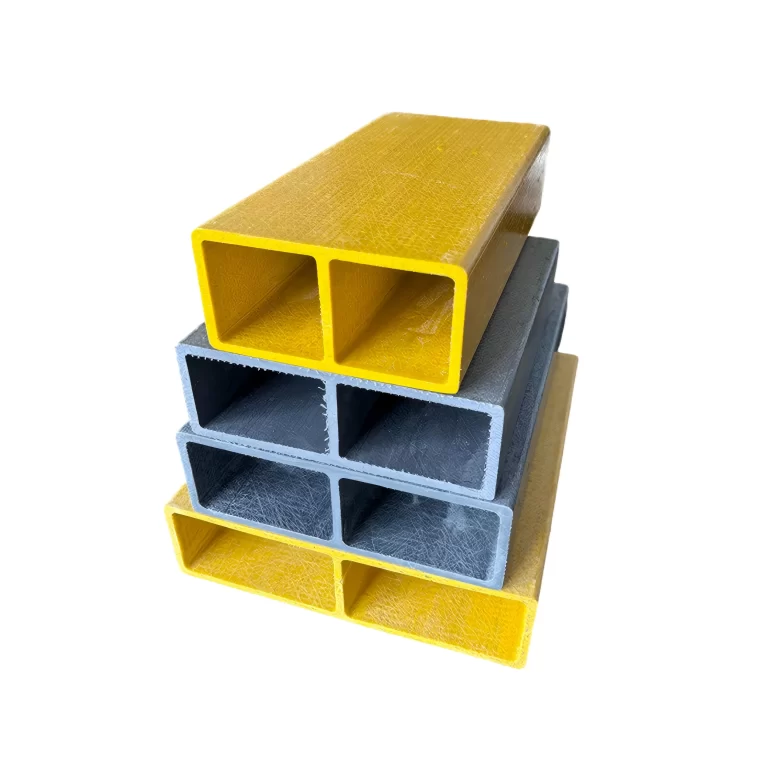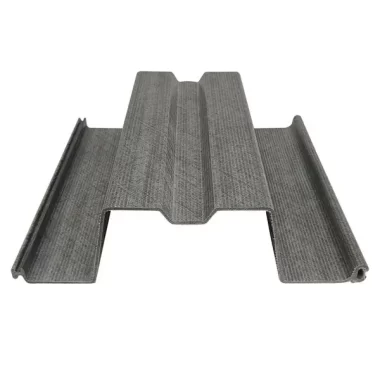

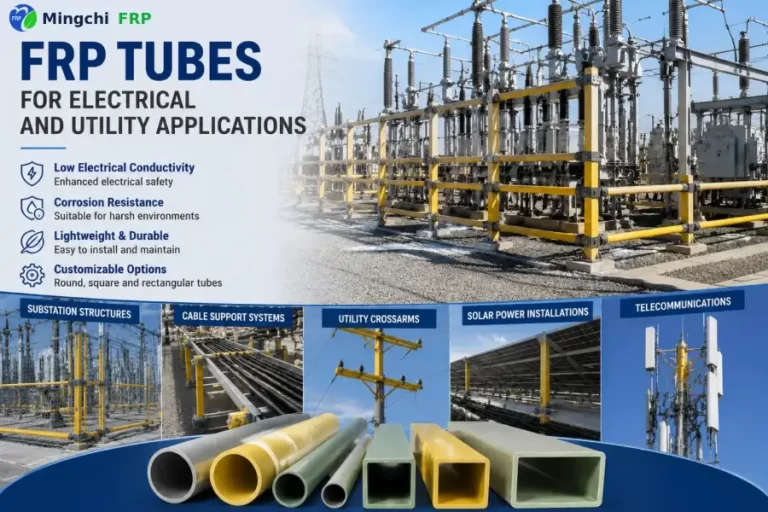
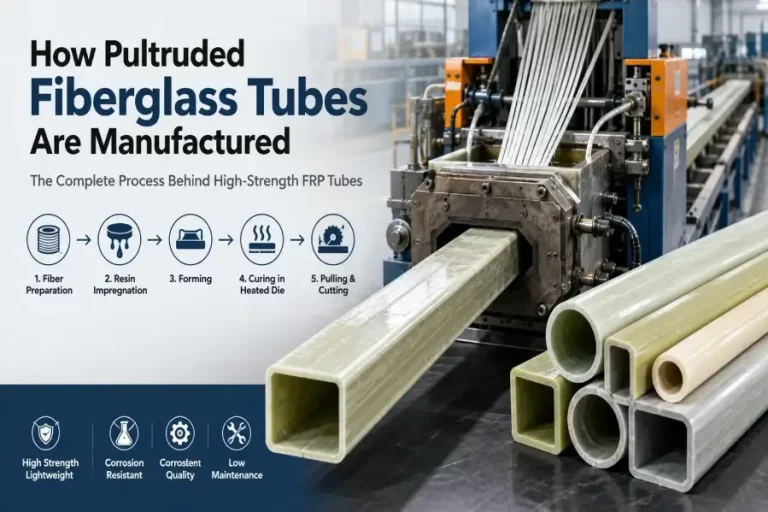
FRP (Fiberglass Reinforced Plastic) profiles are widely used in industrial structures because of their excellent corrosion resistance, lightweight design and high mechanical strength.
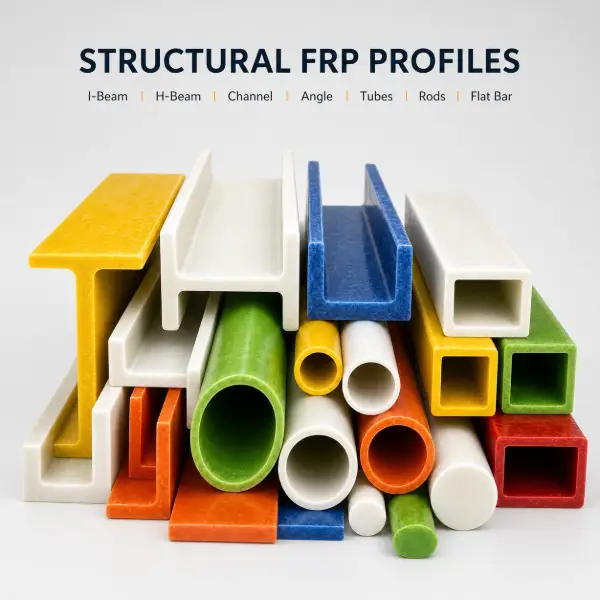
Common FRP profiles include:
- FRP square tubes
- FRP round tubes
- FRP I beams
- FRP channels
- FRP angles
- FRP flat bars
During installation, FRP profiles often need to be cut according to project requirements.
Compared with steel profiles, FRP is easier to process, but because it contains continuous fiberglass reinforcement, the correct cutting tools and methods are important to achieve clean edges and avoid fiber damage.
This guide explains how to cut FRP profiles, the best FRP cutting tools, cutting methods and safety precautions.
Can FRP Profiles Be Cut?
Yes, FRP profiles can be cut using common power tools with suitable blades.
However, FRP is different from wood or ordinary plastic materials.
The fiberglass reinforcement makes FRP:
- Strong
- Abrasion resistant
- Lightweight
- Résistant à la corrosion
Using unsuitable tools may cause:
- Rough cutting edges
- Fiber exposure
- Resin damage
- Excessive fiberglass dust
For industrial FRP profiles, choosing the correct FRP cutting tools is essential.
Best Tools for Cutting FRP Profiles
1. Circular Saw with Diamond Blade
A circular saw is one of the most commonly used tools for cutting FRP structural profiles.
Suitable for:
- FRP square tubes
- FRP rectangular tubes
- FRP channels
- FRP flat bars
Advantages:
✓ Fast cutting speed
✓ Straight cutting lines
✓ Good edge quality
For production and installation projects, diamond blades provide longer service life and cleaner cuts.
2. Angle Grinder for On-Site FRP Cutting
Angle grinders are widely used for onsite modification of FRP profiles.
Suitable for:
- Caillebotis FRP
- FRP tubes
- Small profile adjustments
Advantages:
- Easy operation
- Portable
- Suitable for installation sites
However, additional dust protection should be used because grinding creates more fiberglass particles.
3. Band Saw for Precision FRP Profile Cutting
For factory processing, band saws can provide accurate cutting results.
Suitable for:
- Large quantities of FRP profiles
- Structural fiberglass shapes
- Customized production
Advantages:
- Stable cutting
- Good dimensional accuracy
- Reduced material waste
How to Cut FRP Profiles Step by Step
Step 1: Measure and Mark the Cutting Position
Before cutting:
- Confirm profile dimensions
- Mark the cutting line
- Check installation requirements
Accurate measurement prevents material waste.
Step 2: Secure the FRP Profile
Fix the profile firmly before cutting.
This helps prevent:
- Vibration
- Uneven edges
- Cutting deviation
Par exemple :
FRP square tubes should be supported evenly to avoid deformation during cutting.
Step 3: Select the Correct Cutting Blade
Different FRP products require different tools.
| FRP Product | Recommended Tool |
|---|---|
| Tube carré FRP | Circular saw + diamond blade |
| Tube rond FRP | Circular saw / band saw |
| FRP I Beam | Diamond blade saw |
| Profilé en U PRFV | Circular saw |
| Grille FRP | Angle grinder |
Step 4: Cut at a Stable Speed
Avoid excessive pressure.
Correct cutting method:
- Maintain steady speed
- Let the blade do the work
- Avoid overheating
This helps protect the fiberglass structure inside the profile.
How to Cut FRP Material Safely
When learning how to cut FRP material, safety is important.
Cutting fiberglass products produces fine particles.
Recommended protection:
- Safety glasses
- Dust mask
- Gloves
- Protective clothing
For industrial processing, dust extraction systems are recommended.
Cutting Different Types of FRP Profiles
Cutting FRP Square Tube
FRP square tubes are commonly used for:
- Cadres structurels
- Handrail systems
- Support structures
Recommended tools:
- Circular saw
- Diamond blade
Cutting FRP Round Tube
FRP round tubes require accurate cutting to ensure proper connection.
Recommended tools:
- Band saw
- Circular saw
After cutting, edges should be cleaned before assembly.
Cutting FRP I Beam and Channel
FRP structural profiles such as I beams and channels are commonly used in load-bearing applications.
Recommended:
- Diamond blade saw
- Industrial cutting equipment
Proper cutting ensures accurate installation of structural components.
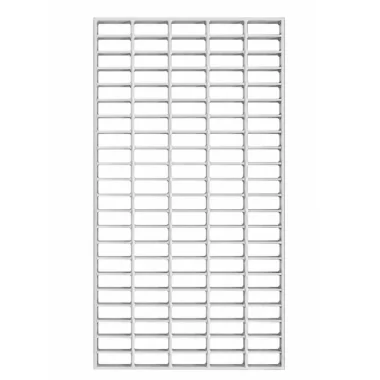
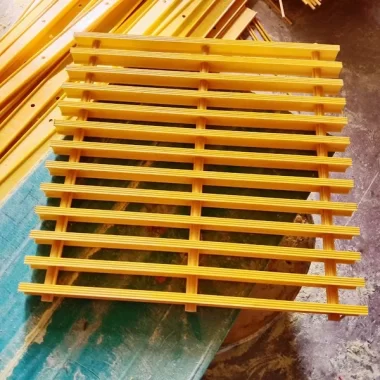
Cutting FRP Grating
Although this article focuses on FRP profiles, FRP grating is another common product requiring cutting.
Common tools:
- Angle grinder
- Circular saw
- Diamond blade
Proper cutting helps maintain:
- Load performance
- Installation accuracy
- Structural integrity
FAQ About Cutting FRP
How to cut FRP?
FRP can be cut using diamond blades, carbide saw blades or angle grinders depending on the product type.
What is the best way to cut FRP profiles?
The best way to cut FRP profiles is using a diamond blade circular saw because it provides clean edges and efficient processing.
How to cut fiberglass tubes?
Fiberglass tubes can be cut using a circular saw, band saw or diamond cutting blade.
Can FRP grating be cut?
Yes. FRP grating can be cut using angle grinders or diamond blade saws.
Why Choose Mingchi FRP Profiles?
Mingchi supplies a wide range of pultruded FRP profiles, including:
- FRP square tubes
- FRP round tubes
- FRP I beams
- FRP channels
- FRP angles
- FRP flat bars
Our fiberglass profiles are designed for:
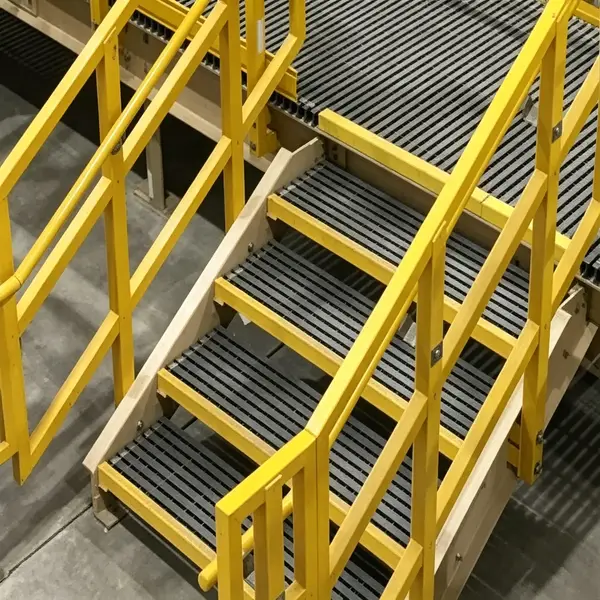
- Structures industrielles
- Handrail systems
- Platforms
- Corrosion-resistant applications
Conclusion
Cutting FRP profiles correctly helps ensure accurate installation and long-term performance.
For most FRP cutting applications:
✓ Use diamond or carbide cutting blades
✓ Select suitable FRP cutting tools
✓ Secure the profile before cutting
✓ Follow proper safety procedures
With the correct cutting method, FRP structural profiles can be processed efficiently while maintaining their strength, durability and corrosion resistance.