
When it comes to industrial, commercial, or infrastructure projects that use fiber-reinforced polymer (FRP) materials, the layout planning of FRP profiles and FRP grating is not just a secondary step—it’s the foundation of ensuring structural integrity, cost-effectiveness, and long-term performance. A poorly planned FRP layout can lead to material waste, installation delays, compromised safety, and even reduced service life of your FRP components. On the other hand, a well-optimized layout maximizes the efficiency of every FRP profile and FRP grating panel, minimizes waste, speeds up installation, and ensures your project meets all design and safety standards. At mingchi, we’ve helped countless clients optimize their FRP layouts for diverse applications—from industrial platforms to wastewater treatment plants—and in this blog, we’ll share our step-by-step guide to planning an FRP layout that delivers maximum efficiency.
Why FRP Layout Planning Matters (And What Happens When It’s Overlooked)
FRP materials—including FRP profiles and FRP grating—are celebrated for their lightweight, corrosion resistance, high strength-to-weight ratio, and low maintenance requirements. But these benefits can only be fully realized if the layout is designed with purpose. Unlike traditional materials like steel or concrete, FRP components have unique properties that influence layout decisions: they are lightweight but require proper spacing to handle loads, they can be customized but need precise cutting to avoid waste, and their corrosion resistance makes them ideal for harsh environments—but only if the layout accounts for environmental stressors.
A common mistake many project managers make is rushing into installation without a detailed FRP layout plan. This often results in: excessive material waste (cutting FRP profiles or grating panels to sizes that don’t fit, leading to unused scraps), installation delays (reworking sections because the layout doesn’t align with structural needs), safety hazards (improper spacing of FRP grating or inadequate support for FRP profiles), and higher long-term costs (needing to replace or reinforce poorly laid FRP components). For businesses looking to leverage the full benefits of FRP, layout planning is non-negotiable—and it starts with understanding your project’s unique needs.
Step 1: Conduct a Comprehensive Site Assessment & Define Project Requirements
The first step in planning an efficient FRP layout is to conduct a thorough site assessment and clearly define your project’s goals. This stage lays the groundwork for every subsequent decision, from choosing the right FRP profiles and FRP grating to determining spacing and installation methods. Here’s what to focus on:
- Load Requirements: Calculate the maximum load the FRP components will need to support—this includes static loads (e.g., equipment, personnel) and dynamic loads (e.g., moving machinery, foot traffic). For FRP grating, this will determine the panel thickness, mesh size, and support spacing. For FRP profiles (such as I-beams, channels, or angles), load requirements will dictate the profile size and material grade. For example, heavy-duty industrial platforms may require thick FRP grating (38mm or more) and robust FRP I-beams, while light-duty walkways can use thinner grating and smaller profiles.
- Environmental Conditions: Assess the environment where the FRP layout will be installed. Will it be exposed to chemicals (e.g., in chemical plants), moisture (e.g., wastewater treatment facilities), extreme temperatures, or UV radiation? FRP materials are naturally corrosion-resistant, but the layout should account for environmental stressors—for example, in corrosive environments, avoid gaps that can trap chemicals, and use corrosion-resistant fasteners to secure FRP profiles and grating.
- Site Dimensions & Constraints: Measure the installation area accurately, noting any obstacles (e.g., pipes, columns, equipment) that will impact the FRP layout. Irregularly shaped areas may require custom-cut FRP grating panels or FRP profiles, so precise measurements are critical to avoid waste. Additionally, consider access points for installation—ensuring there’s enough space to maneuver FRP components into place without damaging them.
- Regulatory & Safety Standards: Ensure your FRP layout complies with local building codes, industry standards (e.g., ACI 440.2R for FRP strengthening systems), and safety requirements. For example, FRP grating used in walkways must meet slip-resistance standards, and FRP profiles must be spaced to prevent structural failure. Non-compliance can lead to fines, project delays, or safety incidents.
By addressing these factors upfront, you’ll avoid costly rework and ensure your FRP layout is tailored to your project’s unique needs. For personalized guidance on assessing your site, visit mingchi to consult our team of FRP experts.
Step 2: Choose the Right FRP Profiles & FRP Grating for Your Layout
Not all FRP profiles and FRP grating are created equal—and choosing the right products is key to an efficient layout. The type, size, and configuration of your FRP components will directly impact layout efficiency, material usage, and performance. Here’s how to select the right products:
FRP Profiles: Match Shape to Function
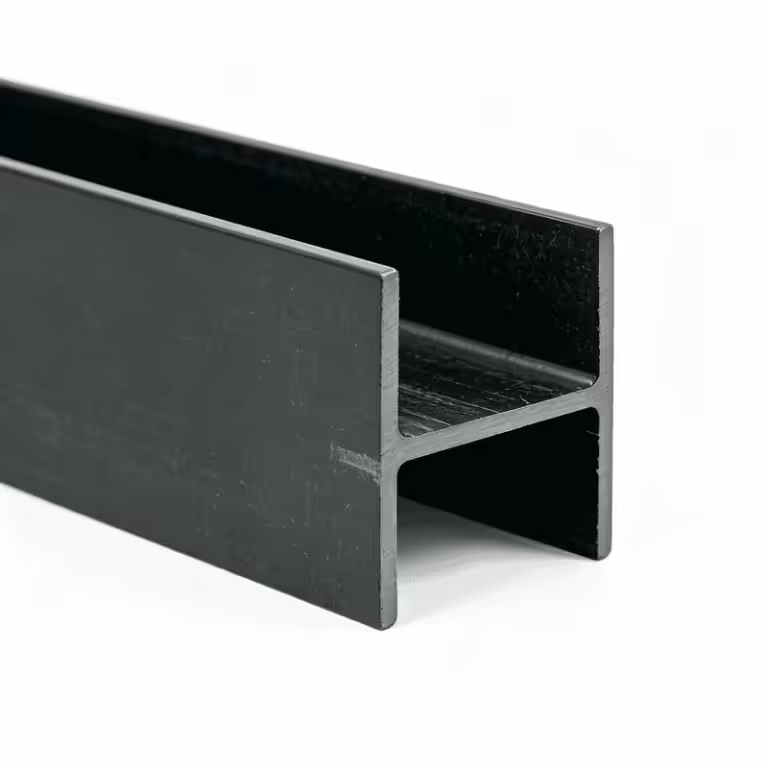
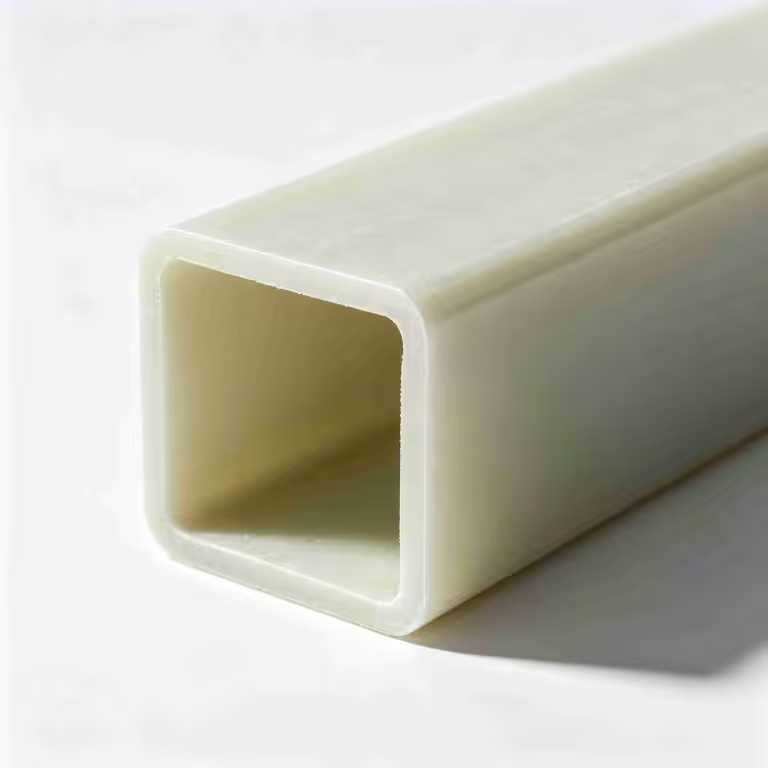
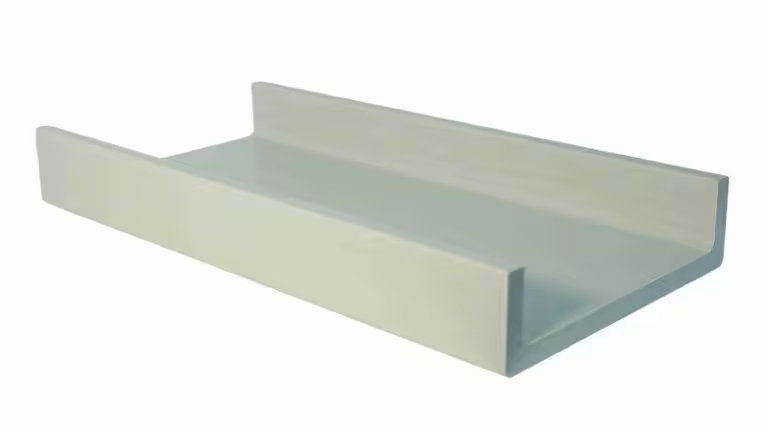
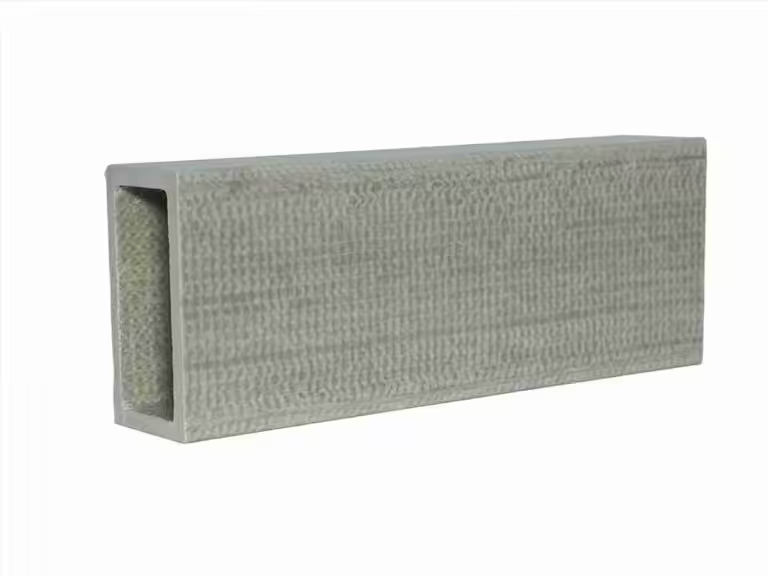
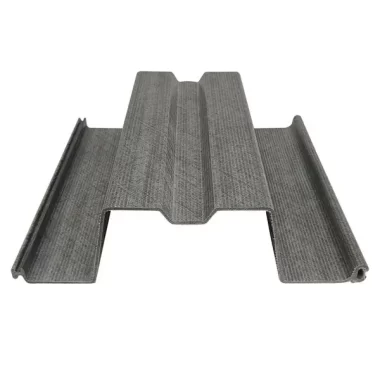
FRP profiles come in a variety of shapes, each designed for specific structural roles. Common types include I-beams, channels, angles, T-beams, and rectangular tubes—each with unique load-bearing capabilities. When planning your layout, select FRP profiles that align with your structural needs to avoid over-engineering (which wastes material and increases cost) or under-engineering (which compromises safety).
Beispiel:
FRP I-beams are ideal for main support structures (e.g., platform beams) due to their high bending efficiency.FRP channels work well for edge beams, stair stringers, and cable trays.FRP angles are perfect for bracing, connection legs, and reinforcing corners.
Additionally, consider the length of FRP profiles—using longer profiles (where possible) reduces the number of joints, speeding up installation and improving structural integrity. At mingchi, we offer custom FRP profiles in various lengths and sizes to fit your layout needs, minimizing waste and simplifying installation.
FRP Grating: Optimize Panel Size & Mesh Configuration
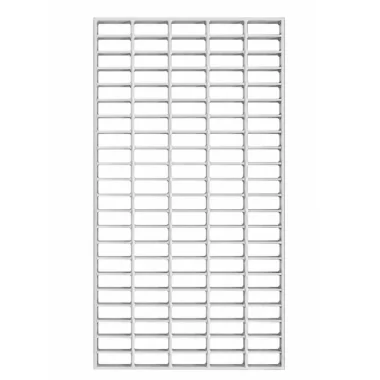
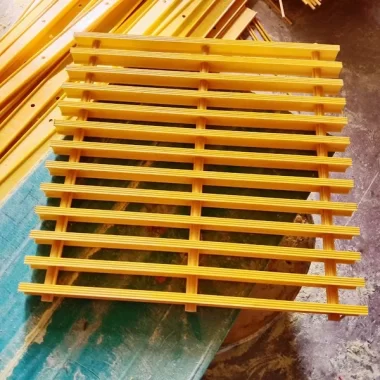
FRP grating is available in different panel sizes, mesh configurations (e.g., 19x19mm, 25x25mm), and thicknesses—each suited to different applications. When planning your FRP grating layout, aim to use full panels wherever possible to reduce cutting and waste. For irregular areas, measure carefully and order custom-cut panels to ensure a perfect fit.
Key considerations for FRP grating layout:
Plattengröße: Standard FRP grating panels are often 1.2m x 2.4m, but custom sizes are available. Using full panels minimizes seams, which reduces installation time and improves safety (fewer gaps to trip over).Mesh Configuration: Smaller mesh sizes (e.g., 19x19mm) are ideal for applications where small objects might fall through (e.g., industrial platforms), while larger mesh sizes (e.g., 50x50mm) work well for light-duty walkways. The mesh size also impacts load capacity—smaller meshes distribute weight more evenly.Dicke: Thicker FRP grating (25mm–50mm) is suitable for heavy loads, while thinner grating (19mm) works for light-duty applications. Match the thickness to your load requirements to avoid overusing material.
By selecting the right FRP profiles and FRP grating for your layout, you’ll maximize efficiency, reduce waste, and ensure long-term performance. For help choosing the right products, explore our selection at mingchi.
Step 3: Design the Layout for Installation Efficiency & Material Optimization
Once you’ve assessed your site and selected the right FRP components, it’s time to design the layout itself. The goal here is to minimize material waste, speed up installation, and ensure structural integrity. Here are our key tips for efficient FRP layout design:
Cutting FRP profiles or grating panels not only wastes material but also increases installation time and labor costs. To minimize cutting:
Align FRP profiles and grating panels with the site’s dimensions—use full-length profiles and panels wherever possible.For irregular areas, use computer-aided design (CAD) software to map the layout and determine the exact sizes of custom-cut components. This ensures you only cut what’s necessary and reduces scrap.Order FRP components in custom lengths or sizes to fit your layout—many manufacturers (including mingchi) offer custom cutting services, eliminating the need for on-site cutting and reducing waste.
Optimize Spacing for Load Capacity & Installation
The spacing of FRP profiles and FRP grating supports is critical to both structural integrity and installation efficiency. For FRP grating, the spacing of support beams (typically FRP I-beams or channels) must be compatible with the grating’s load capacity—spacing that’s too wide can cause the grating to sag or fail, while spacing that’s too narrow wastes material.
A general rule of thumb: For 38mm thick FRP grating, support spacing should not exceed 1.5m; for thicker grating (50mm+), spacing can be increased slightly. For FRP profiles used as support beams, spacing should be determined by the load requirements and the profile’s bending strength. Consult the manufacturer’s specifications (available at mingchi)for precise spacing guidelines.
An efficient FRP layout isn’t just about installation—it’s also about long-term maintenance. Ensure your layout includes access points (e.g., removable FRP grating panels) for equipment maintenance, inspections, or repairs. This avoids the need to remove entire sections of FRP components when maintenance is required, saving time and reducing damage.
For example, in wastewater treatment plants, removable FRP grating panels allow access to pipes and pumps without disrupting the entire platform. In industrial facilities, leaving gaps between FRP profiles for wiring or plumbing can simplify maintenance and avoid costly rework later.
Consider Assembly & Fastening Methods
The way you fasten FRP profiles and grating panels will impact installation efficiency and structural integrity. FRP components can be fastened using bolts, clips, or adhesive—choose a method that is quick to install but secure.
For FRP grating, using clip fasteners (such as M-type or L-type stainless steel clips) is faster than bolting and reduces damage to the grating panels. For FRP profiles, bolted connections are ideal for structural support, but ensure the bolts are corrosion-resistant and tightened to the manufacturer’s specifications (over-tightening can crush FRP laminates). Additionally, pre-drill holes in FRP profiles at least 2x the hole diameter from the edge to avoid cracking.
Step 4: Test & Adjust Your FRP Layout Before Installation
Before beginning installation, it’s critical to test your FRP layout to identify any issues or inefficiencies. This step can save you time, money, and headaches down the line. Here’s how to test your layout:
- Mock-Up Installation: Create a small mock-up of your FRP layout (e.g., a section of the platform or walkway) to test fit, spacing, and installation methods. This allows you to identify any issues (e.g., ill-fitting panels, incorrect spacing) before installing the entire layout.
- Load Testing: If your project involves heavy loads, conduct load testing on the mock-up to ensure the FRP profiles and grating can handle the required weight. This helps avoid structural failure and ensures compliance with safety standards.
- Review with Stakeholders: Share your FRP layout plan with your installation team, engineers, and any other stakeholders to get feedback. They may identify inefficiencies or safety concerns you missed.
Adjust your layout based on the test results—this could mean changing the spacing of FRP profiles, ordering custom-cut grating panels, or switching to a different fastening method. Taking the time to test and adjust ensures your layout is as efficient and effective as possible.
Step 5: Partner with a Trusted FRP Supplier for Layout Success
Even the best layout plan will fail if you use low-quality FRP components or work with an inexperienced supplier. Partnering with a trusted FRP supplier—like mingchi —ensures you have access to high-quality FRP profiles and FRP grating, custom cutting services, and expert guidance to optimize your layout.
At Ming Chi FRP, we offer a wide range of FRP products, including standard and custom FRP profiles, FRP grating, and accessories. Our team of experts has years of experience helping clients plan efficient FRP layouts for diverse applications, from industrial platforms to marine structures. We provide personalized support throughout the layout planning process, from site assessment to product selection to installation guidance, ensuring your project is a success.
Final Thoughts: Maximize Efficiency with a Strategic FRP Layout
Planning an FRP layout for maximum efficiency requires careful consideration of your project’s needs, the right FRP components, and a focus on material optimization and installation ease. By following the steps outlined in this blog—conducting a site assessment, choosing the right FRP profiles and FRP grating, designing for efficiency, testing and adjusting, and partnering with a trusted supplier—you can create an FRP layout that minimizes waste, speeds up installation, ensures safety, and delivers long-term performance.
Whether you’re working on a small walkway or a large industrial project, the team at mingchi is here to help. Contact us today to learn more about our FRP products and how we can help you plan an efficient FRP layout that meets your goals. Remember, a well-planned FRP layout isn’t just a cost-saving measure—it’s an investment in the safety, durability, and efficiency of your project.