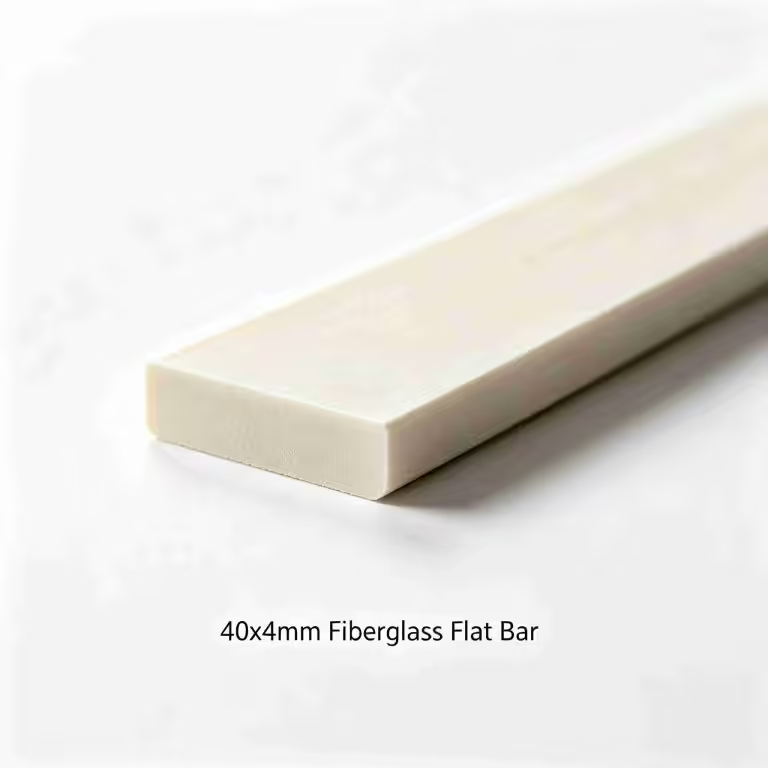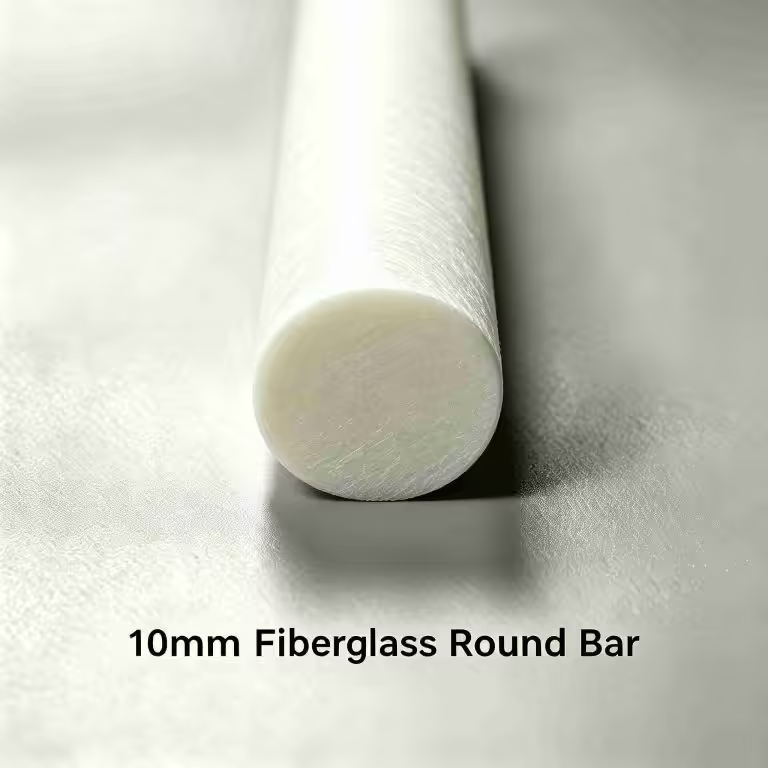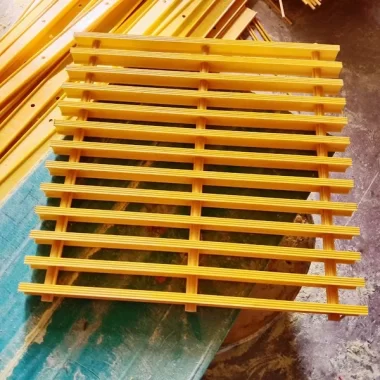

In corrosive industrial environments such as chemical plants, wastewater treatment facilities, and offshore platforms, traditional metal handrails often suffer from rust, corrosion, and structural degradation over time.
The FRP Handrail System (Fiberglass Reinforced Plastic handrail) is specifically designed to solve these challenges. Manufactured from high-strength fiberglass and resin composites, it delivers excellent corrosion resistance, lightweight structure, and long-term low maintenance performance.
Compared with steel handrails, FRP systems offer a significantly longer service life and lower total lifecycle cost, making them an increasingly preferred solution for industrial safety applications.
What Is an FRP Handrail System?
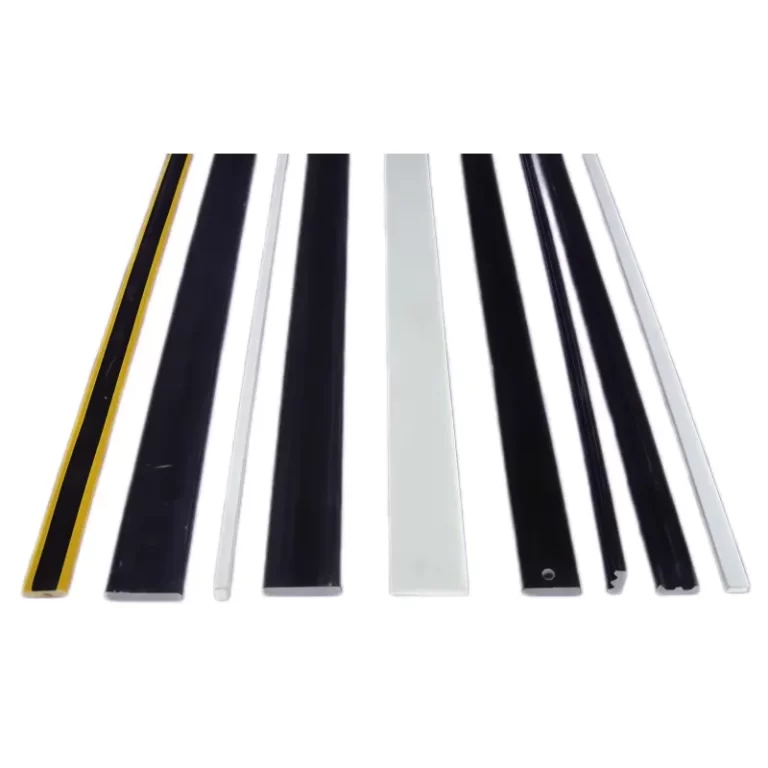
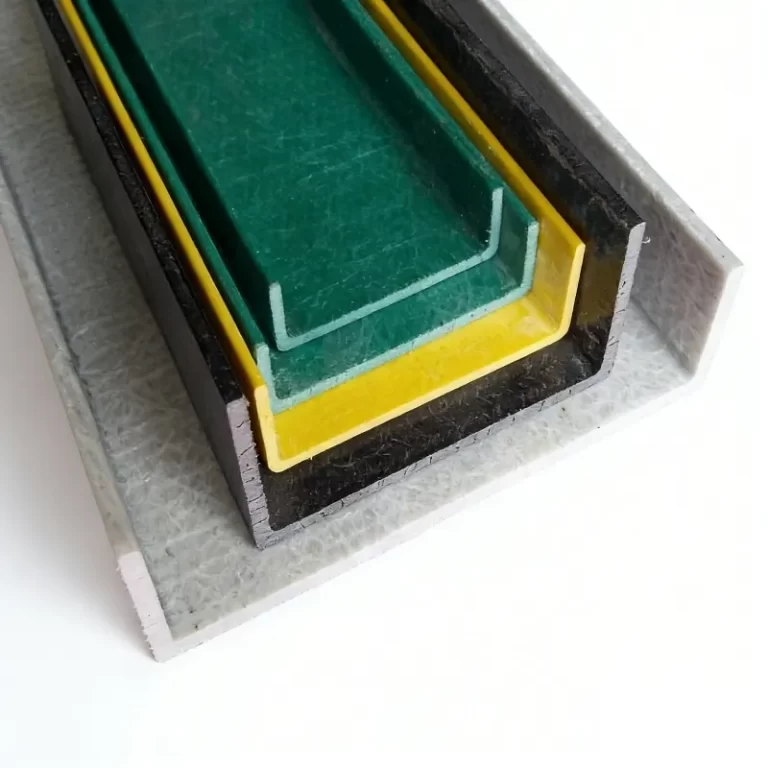
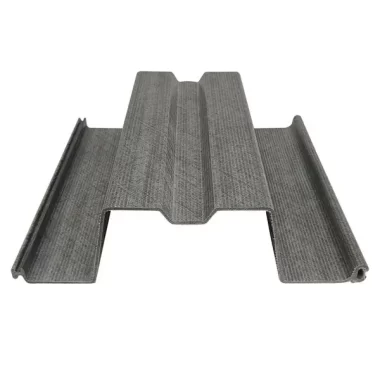
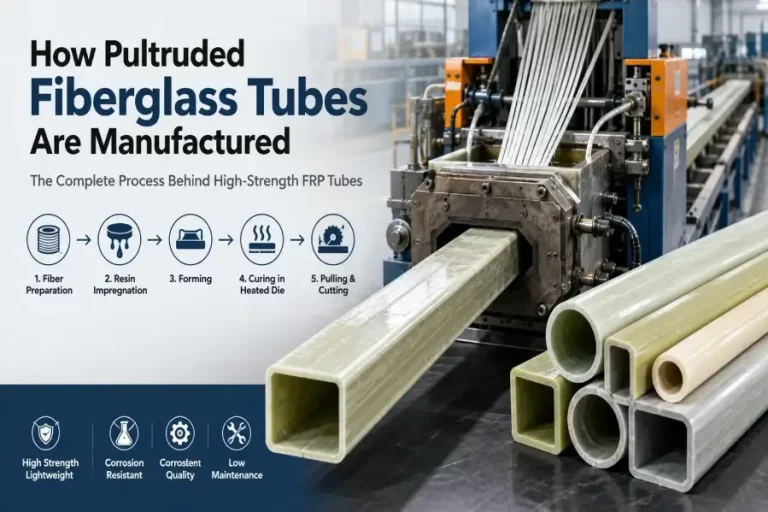
An FRP Handrail System is a modular safety railing structure made from fiberglass reinforced plastic materials, typically produced through the pultrusion process.
A standard system includes:
- Posts (upright supports)
- Rails (horizontal beams)
- Top handrail
- Base plates and connectors
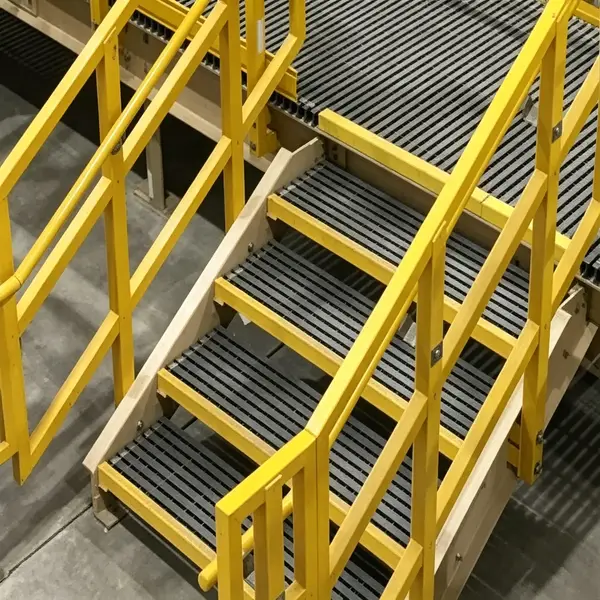
These components are assembled into a flexible system suitable for both indoor and outdoor industrial environments.
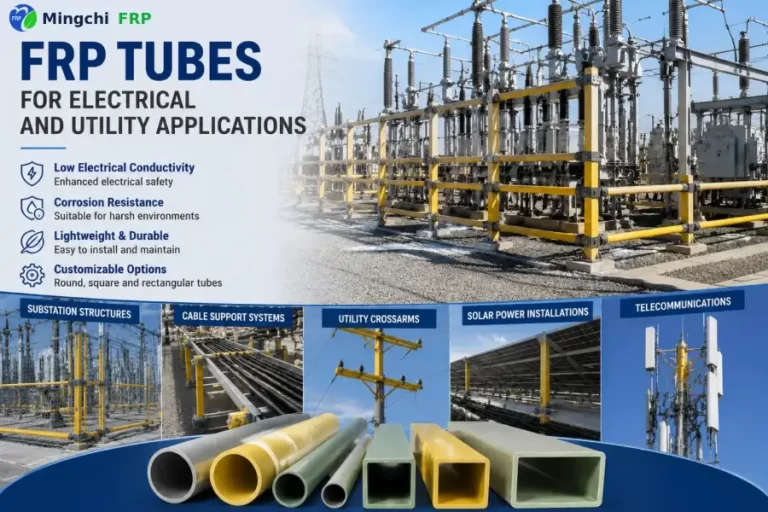
FRP handrails are widely used in areas where corrosion resistance, electrical insulation, and structural durability are required.
Why Choose FRP Handrails?
1. Excellent Corrosion Resistance
FRP materials do not rust like steel and can withstand exposure to acids, alkalis, salt spray, and other harsh chemicals.
2. Lightweight and Easy to Install
FRP systems weigh approximately 75% less than steel, reducing transportation and installation costs.
3. Low Maintenance Cost
No painting, anti-rust treatment, or frequent maintenance is required, significantly reducing long-term operational expenses.
4. Electrical Insulation Properties
FRP is non-conductive, making it ideal for electrical facilities and high-voltage environments.
5. Long Service Life
Under normal industrial conditions, FRP handrails can last more than 20 years.
FRP Handrail vs Steel Handrail
| Característica | Pasamanos de PRFV | Steel Handrail |
|---|---|---|
| Resistencia a la corrosión | Excelente | Prone to rust |
| Peso | Lightweight | Pesado |
| Maintenance | Minimal | Frequent maintenance required |
| Vida útil | 20+ years | 5–10 años |
| Instalación | Easy modular system | More complex |
Application Areas
FRP Handrail Systems are widely used across multiple industrial sectors:
Chemical Plants
Used for platforms, walkways, and equipment protection structures exposed to corrosive chemicals.
Wastewater Treatment Facilities
Ideal for humid and chemically aggressive environments.
Offshore Platforms & Marine Engineering
Highly resistant to saltwater corrosion, making it suitable for marine applications.
Instalaciones industriales
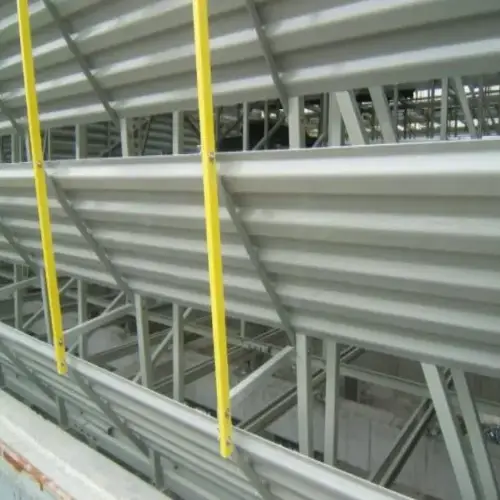
Used for stairways, access platforms, and maintenance walkways.
Power & Electrical Facilities
Due to its insulation properties, FRP is ideal for high-voltage safety zones.
Technical Specifications
- Material: Fiberglass Reinforced Plastic (FRP)
- Manufacturing Process: Pultrusion
- Surface Treatment: UV-resistant coating (optional)
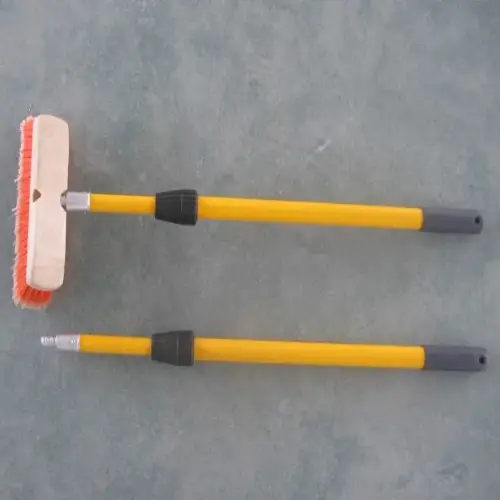
- Color Options: Yellow / Grey / Custom colors
- Service Life: 20+ years
- Assembly Type: Modular bolted connection system
Preguntas Frecuentes
Will FRP handrails degrade over time?
With UV-resistant coatings, FRP systems maintain long-term performance even in outdoor environments.
Is FRP strong enough for industrial use?
Yes. FRP offers high strength-to-weight ratio and meets industrial safety requirements for walkways and platforms.
Can FRP handrails be customized?
Yes, we support full customization including dimensions, colors, and structural design.
Conclusión
FRP handrail systems are increasingly replacing traditional steel railings in corrosive industrial environments due to their durability, safety performance, and long-term cost efficiency.
With excellent corrosion resistance, lightweight structure, and extended service life, FRP has become a preferred solution for chemical, marine, and infrastructure applications worldwide.
If you are evaluating FRP solutions for your project, Mingchi PRFV can support customized handrail system design and manufacturing based on different industrial requirements.