Slipping accidents rank among the most common workplace safety hazards across industrial, commercial, and marine environments. Wet floors, oily surfaces, and dusty walkways drastically reduce traction and trigger costly injuries, downtime, and compliance penalties. Traditional flooring materials like steel, concrete, and wood often fail to deliver reliable grip in harsh working conditions. For this reason, professional FRP anti-slip surface treatments have become the go-to solution for modern safety-focused facilities. This technical guide from mingchi breaks down core anti-slip treatment techniques, applicable scenarios for frp profiles and frp grating, performance standards, and maintenance best practices to help businesses select durable, cost-effective anti-slip FRP solutions.
Why Anti-Slip Treatment Is Essential for FRP Products
FRP (Fiber Reinforced Plastic) composites already outperform traditional materials in corrosion resistance, lightweight strength, and weather durability. However, raw FRP surfaces feature a smooth, dense resin finish that becomes extremely slippery when exposed to water, chemical liquids, grease, or fine dust. Untreated frp grating flooring and structural frp profiles pose hidden safety risks in high-traffic industrial areas.
Professional anti-slip treatments fix this flaw without compromising the inherent advantages of FRP materials. Proper surface modification boosts surface friction, maintains structural integrity, and extends the service life of FRP components. Unlike temporary anti-slip tapes or spray coatings, standardized FRP anti-slip processing delivers permanent, wear-resistant traction that adapts to long-term high-load and harsh-environment use.
Common FRP Anti-SlipSurface TreatmentTechnologies
Manufacturers adopt four mainstream anti-slip treatment methods for custom anti-slip FRP profiles and grating, each with unique technical characteristics, cost ranges, and application scenarios. Choosing the right technique directly impacts safety performance and long-term maintenance costs.
1.Grit Embedding Anti-Slip Treatment
Grit embedding is the most widely used industrial-grade anti-slip process for FRP products. During the FRP curing stage, technicians uniformly embed high-hardness abrasive particles such as aluminum oxide and silicon carbide into the surface resin layer. These particles bond tightly with the FRP substrate instead of simply attaching to the surface.
This method creates a rough, uniform texture that delivers stable high friction coefficients even under continuous water and oil erosion. It suits heavy-duty industrial FRP grating walkways, platform treads, and stair nosings. The embedded grit structure resists frequent cleaning and mechanical friction, avoiding peeling or fading common in thin coating solutions.
2.Molded Textured Anti-Slip Processing
Molded textured treatment integrates anti-slip patterns during the FRP pultrusion and molding process. Manufacturers use customized molds to form crescent grooves, fine dimples, or linear raised textures on the surface of frp profiles and flat grating panels.
This all-in-one molding process ensures consistent surface texture across every product batch. It leaves no weak bonding points and maintains the original waterproof and corrosion-resistant properties of FRP materials. Molded textured FRP products fit light-to-medium traffic scenarios, including commercial corridors, factory auxiliary walkways, and landscape drainage platforms.
3.Surface Sandblasting Roughening Treatment
Sandblasting targets finished FRP products that require secondary anti-slip upgrades. Workers spray fine quartz sand or steel grit onto smooth FRP surfaces at controlled pressure to create a uniform micro-rough structure. This physical roughening method removes surface resin gloss and instantly improves foot traction.
Sandblasting offers flexible operation and low modification costs, making it ideal for on-site renovation of existing FRP facilities. Its only limitation lies in relatively weaker wear resistance compared to grit embedding, so it works best for low-frequency use indoor FRP structures.
4.Special Anti-Slip Coating Spraying
High-performance anti-slip resin coatings provide a supplementary solution for FRP surfaces with ultra-high anti-slip requirements. The specialized coating contains anti-slip fillers and forms a tough, elastic protective film after curing. It enhances surface friction while adding extra waterproof and chemical-resistant protection.
This treatment excels in humid and corrosive environments such as sewage treatment plants and chemical workshops. It also serves as an effective repair method for aging FRP surfaces with worn anti-slip performance.
Key Performance Standards for Qualified FRP Antislip Surfaces
Not all rough FRP surfaces meet industrial safety standards. Qualified anti-slip treated FRP grating and profiles must pass professional traction testing to ensure reliable safety performance. Industry mainstream testing benchmarks include ASTM E303 pendulum testing and ANSI A326.3 dynamic coefficient of friction (DCOF) evaluation.
High-quality treated FRP products maintain a wet surface friction coefficient above 0.5, while premium grit-embedded products can reach 0.8 or higher. This performance far exceeds the safety threshold for industrial walkways and effectively reduces slip-and-fall accidents by over 60%. Meanwhile, standard anti-slip treatments do not affect the drainage capacity of perforated FRP grating, ensuring zero water accumulation on working surfaces.
Application Scenarios for Anti-Slip FRP Profiles and Grating
Treated FRP anti-slip products cover diverse industrial and civil scenarios, replacing traditional metal and wooden flooring for safer, longer-lasting performance.
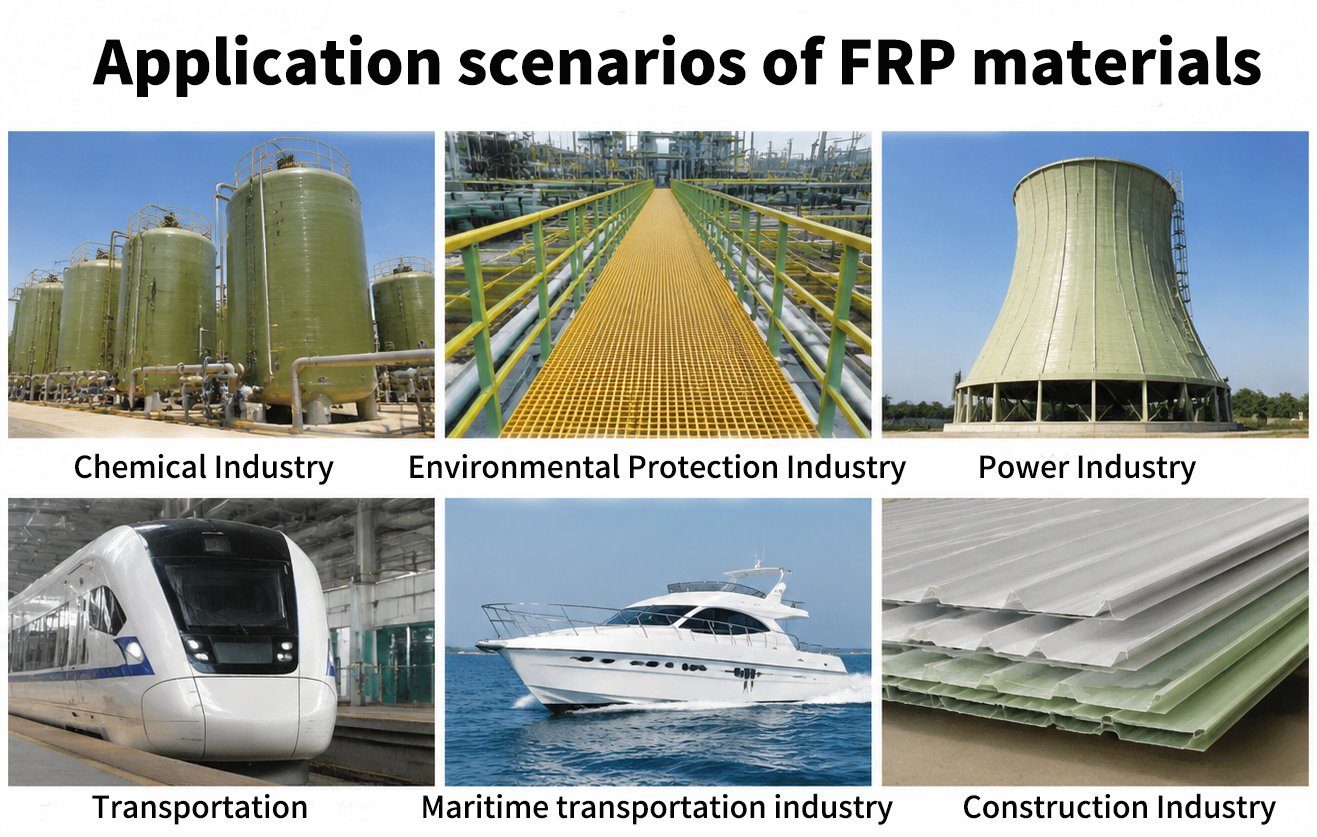
Industrial factory facilities: Anti-slip FRP grating serves as workshop walkways, equipment platforms, and trench covers. Its corrosion resistance adapts to chemical, electroplating, and pharmaceutical factory environments where water and chemical spills occur frequently.
Marine and offshore platforms: Salt fog and seawater soaking make marine surfaces extremely slippery. Grit-embedded frp profiles and grating provide stable anti-slip traction and resist seawater corrosion, outperforming rust-prone steel materials.
Public and municipal infrastructure: Anti-slip FRP products apply to drainage ditch covers, overpass walkways, and park platform flooring. They deliver lightweight installation, low noise, and zero maintenance advantages.
Daily Maintenance Tips for Anti-Slip FRP Surfaces
FRP anti-slip treatments require minimal maintenance, but proper daily care maximizes service life and preserves consistent anti-slip performance. First, clean surface dust, oil stains, and debris regularly with water or neutral detergents. Avoid strong corrosive solvents that may damage the surface anti-slip structure.
Second, inspect high-traffic areas quarterly for local wear or particle shedding. For minor worn spots, supplementary anti-slip coating can restore traction quickly. Third, avoid sharp hard object scratching and excessive heavy impact, which may damage the textured anti-slip layer.
Final Thoughts
FRP anti-slip surface treatment is not just a simple surface modification process, but a key technical upgrade that balances safety, durability, and cost efficiency. Different treatment technologies cater to diverse usage loads and environmental demands, enabling frp profiles and frp grating to deliver full performance in complex working scenarios. Whether for new project customization or old facility renovation, standardized anti-slip processing effectively eliminates slip risks and reduces long-term operational costs.