
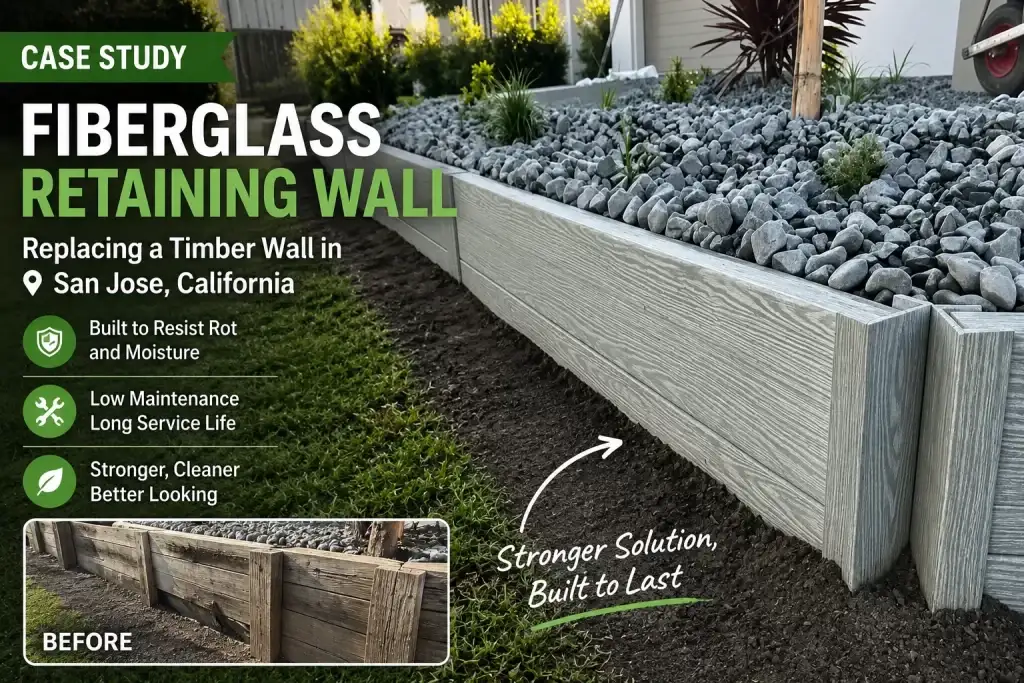
In March 2025, a homeowner in San Jose, California completed a backyard renovation project using a fiberglass retaining wall system to replace an aging timber retaining structure that had begun to deteriorate after years of exposure to moisture.
The original wall had been installed more than a decade earlier to support a sloped garden area. Over time, seasonal rainfall and continuous soil pressure caused the timber structure to lean outward. Several sections showed signs of rot, and frequent repairs were becoming necessary to maintain stability.
Rather than rebuilding with another wooden wall, the homeowner wanted a solution that would offer a longer service life with minimal maintenance requirements.
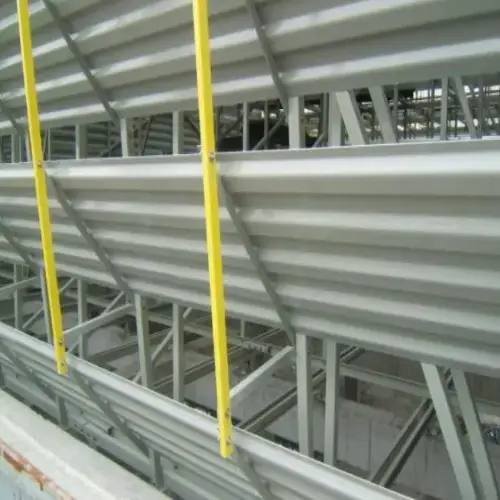
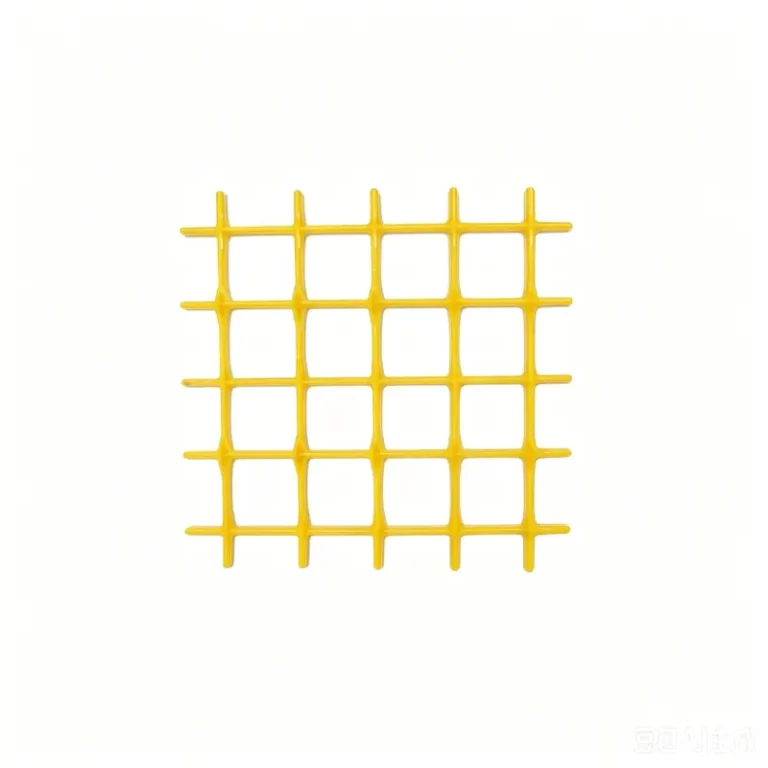
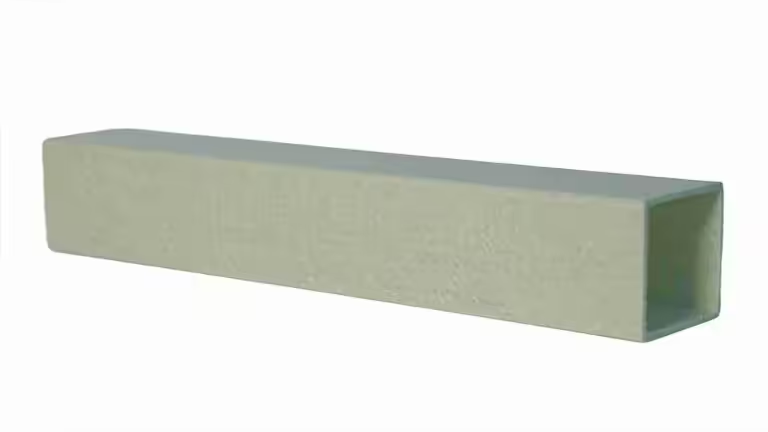
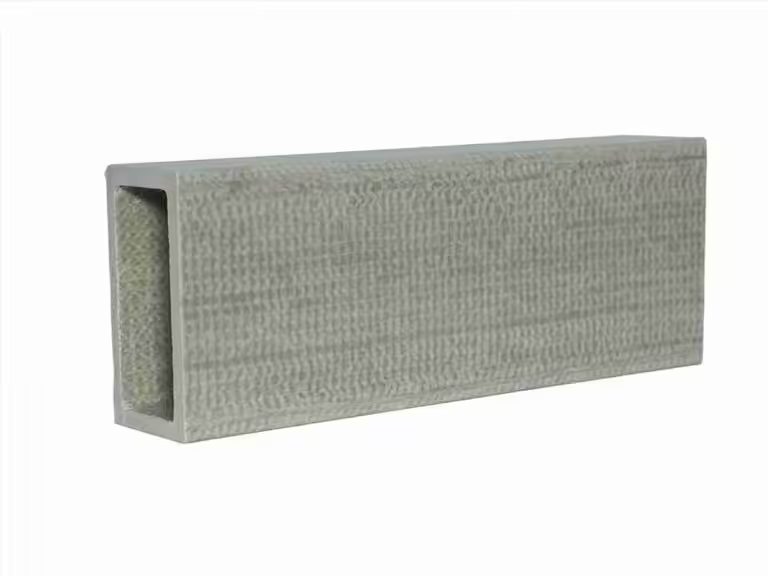
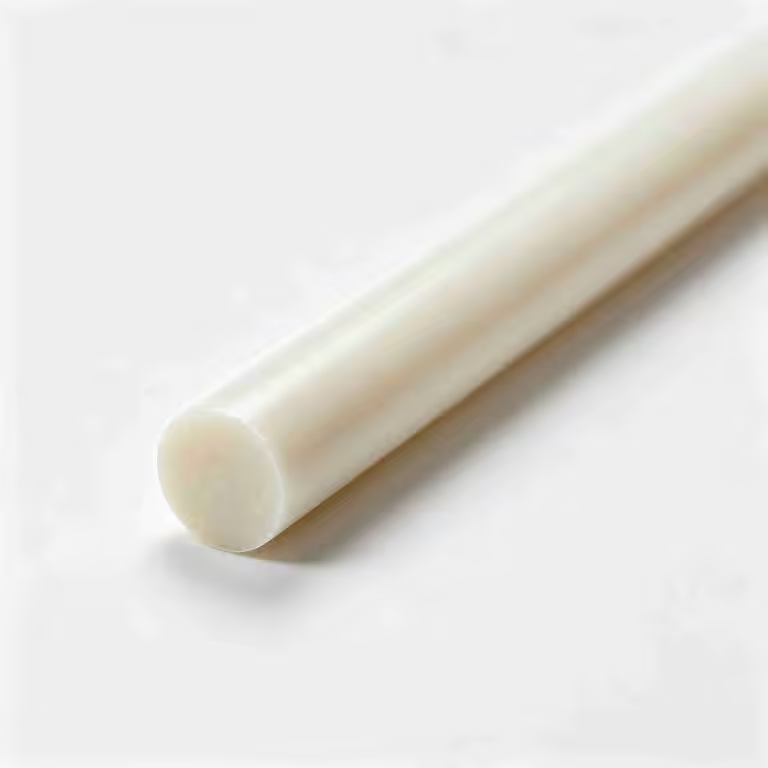
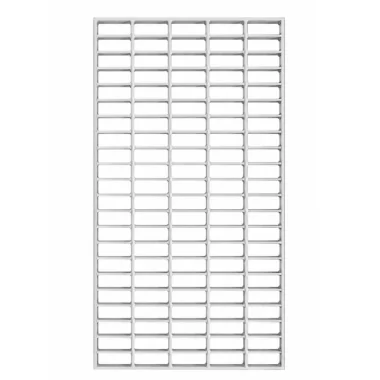
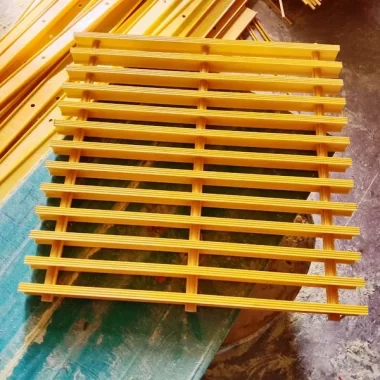
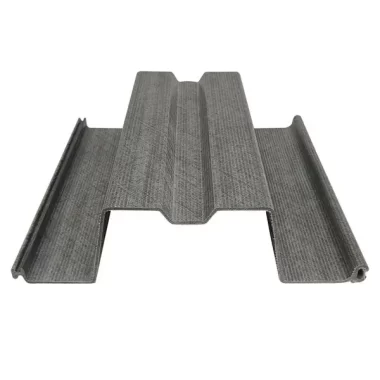
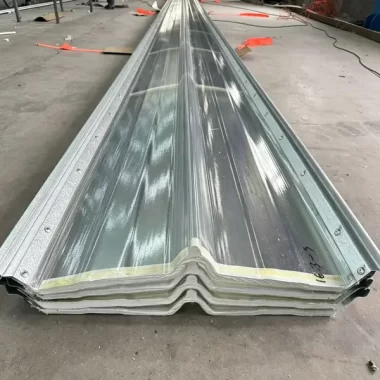
After consulting with a local landscape contractor, a pultruded 모듈형 유리섬유(FRP) 옹벽 시스템 was selected for the project.
프로젝트 개요
| 항목 | 사양 |
|---|---|
| 프로젝트 위치 | 미국 캘리포니아주 산호세 |
| 적용 유형 | Residential Backyard Retaining Wall |
| 토류 높이 | 0.9 – 1.2 m |
| 벽 길이 | Approx. 10 m |
| 토양 상태 | Clay Soil with Seasonal Moisture |
| 기후 노출 환경 | Wet Winters & Dry Summers |
| Existing Structure | Pressure-Treated Timber Wall |
| 교체 소재 | Pultruded FRP Retaining Wall System |
Why the Original Timber Wall Failed
Although pressure-treated timber is commonly used in residential landscaping, its lifespan can be significantly affected by moisture, seasonal weather changes, and continuous soil contact. These conditions explain why many projects are replacing traditional materials with weather-resistant FRP composite materials.
In this project, the retaining wall was exposed to:
- Constant contact with moist soil
- Seasonal rainfall during winter months
- Natural ground movement
- Long-term biological degradation
After more than 10 years of service, the homeowner noticed visible deformation and surface deterioration. Several boards had started to warp, and localized rot was present near ground level.
The contractor determined that replacing individual sections would only provide a temporary solution, making a full replacement the more practical option.
Why Fiberglass Was Selected
The project team evaluated several alternatives, including new timber and concrete retaining wall systems.
Fiberglass was ultimately selected because it offered several advantages for the site conditions.
Corrosion and Rot Resistance
Unlike timber, fiberglass does not absorb moisture and is not vulnerable to rot, insects, or fungal decay. This makes it particularly suitable for retaining wall applications where continuous soil contact is unavoidable.
Reduced Maintenance Requirements
The homeowner wanted to avoid the ongoing sealing, staining, and repair work typically associated with timber structures.
Because fiberglass does not rust, rot, or require protective coatings, future maintenance needs are significantly reduced.
Lightweight Installation
Compared with concrete systems, lightweight pultruded fiberglass profiles are easier to transport, handle, cut, and assemble during installation.
This helped simplify construction within the limited-access backyard area without requiring heavy equipment.
Project Results
Following completion, the new retaining wall provided a cleaner appearance while improving structural reliability.
Key outcomes included:
- Elimination of timber rot concerns
- Improved resistance to moisture exposure
- Reduced long-term maintenance requirements
- Enhanced backyard aesthetics
- Longer expected service life compared with traditional timber construction
The homeowner was particularly interested in reducing future maintenance costs and avoiding another replacement project within the next decade.
자주 묻는 질문
Is fiberglass retaining wall material stronger than timber?
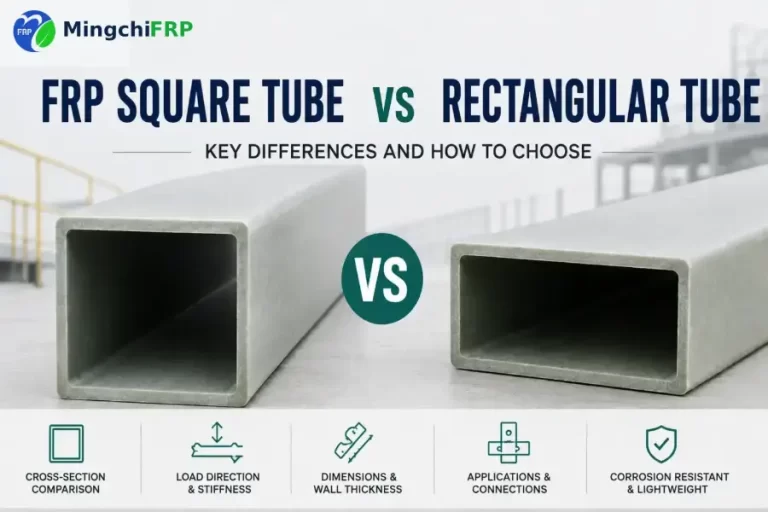
Yes. Pultruded fiberglass profiles typically provide a higher strength-to-weight ratio than conventional timber materials while also offering superior resistance to moisture-related deterioration.
Can fiberglass retaining walls be used in residential landscaping?
Absolutely. Fiberglass retaining wall systems are increasingly used in residential gardens, backyard renovations, parks, and commercial landscaping projects.
Does fiberglass require painting or sealing?
In most applications, fiberglass retaining walls do not require routine painting, sealing, or anti-corrosion treatments.
How long can a fiberglass retaining wall last?
Service life depends on environmental conditions and design specifications, but fiberglass retaining wall systems are commonly selected for projects requiring long-term durability and low maintenance.
결론
For homeowners dealing with aging timber retaining walls, fiberglass offers a modern alternative that combines durability, low maintenance, and long-term performance.
This San Jose backyard renovation demonstrates how a fiberglass retaining wall system can provide a practical solution in environments where moisture exposure has historically shortened the lifespan of traditional timber structures.
For more information about fiberglass retaining wall systems, explore our Fiberglass Retaining Wall product page or contact the Mingchi FRP team to discuss your project requirements.