
In modern infrastructure development, engineers and project owners are increasingly searching for materials that can withstand harsh environmental conditions while reducing long-term maintenance costs.
FRP (Fiberglass Reinforced Plastic) solutions for infrastructure applications have become a practical alternative to traditional steel and concrete in many engineering scenarios.
Unlike conventional materials that degrade due to corrosion, FRP systems are engineered composite solutions designed for:
- Long-term durability in aggressive environments
- Reduced lifecycle maintenance cost
- Lightweight structural efficiency
- High resistance to chemical and moisture exposure
As infrastructure expands into coastal, industrial, and high-corrosion environments, FRP is no longer a niche material—it is becoming a standard engineering option.
What FRP Solutions Mean in Infrastructure Engineering
FRP solutions refer to engineered structural systems made from:
- Glass fiber reinforcement (E-glass, S-glass)
- Thermoset resin systems (polyester, vinyl ester, epoxy)
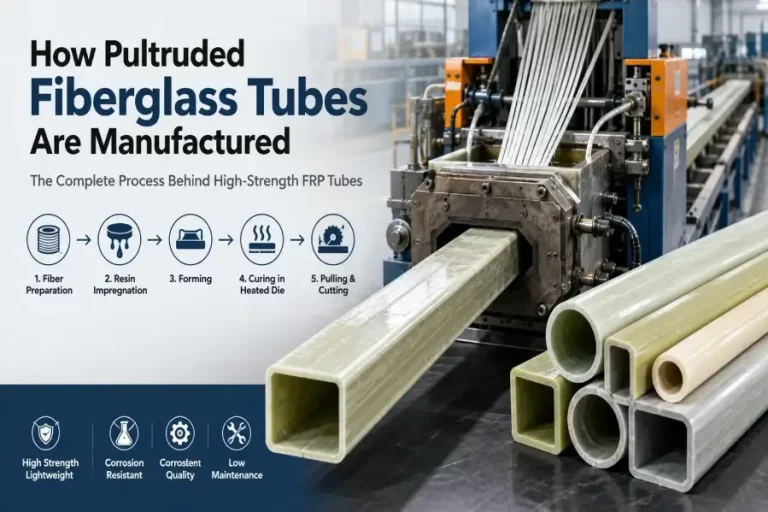
These materials are combined through processes such as pultrusion, molding, or filament winding to create structural components.
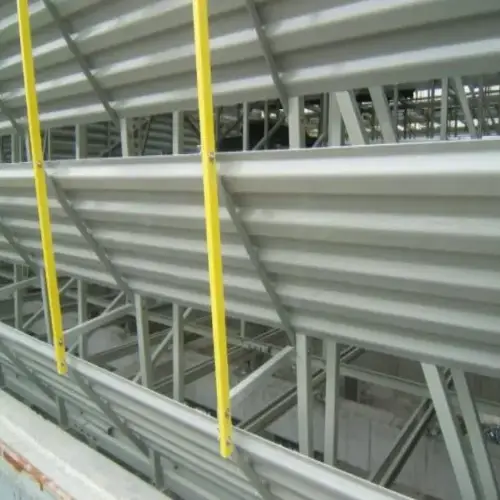
Common FRP infrastructure products include:
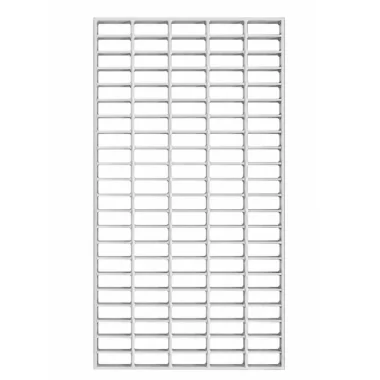
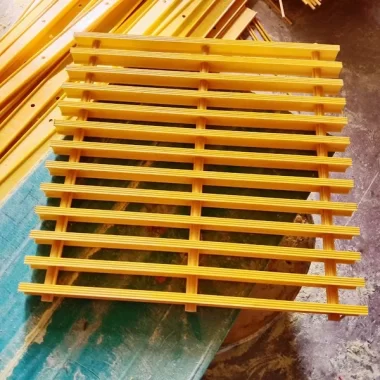
- FRP grating systems
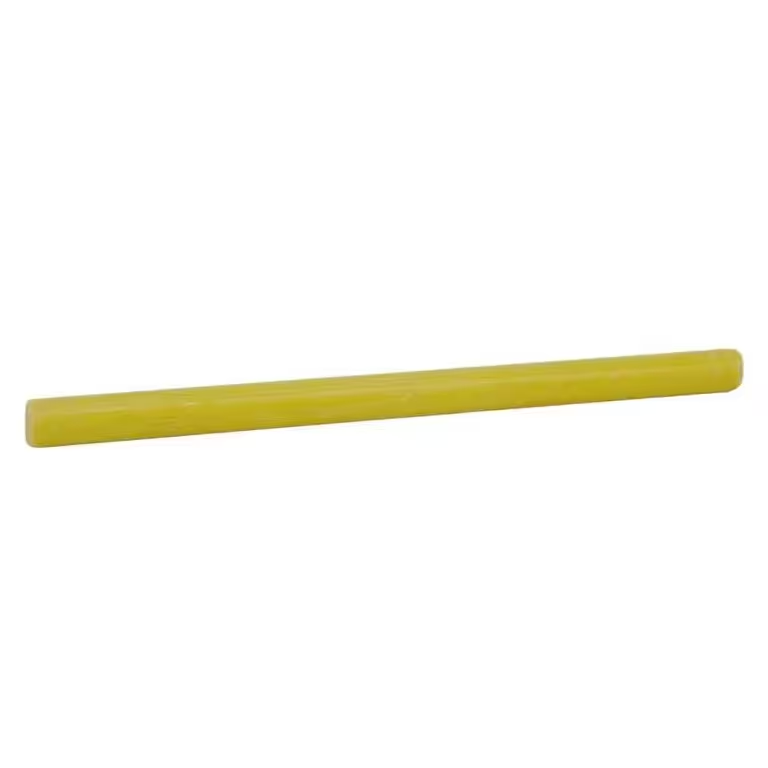
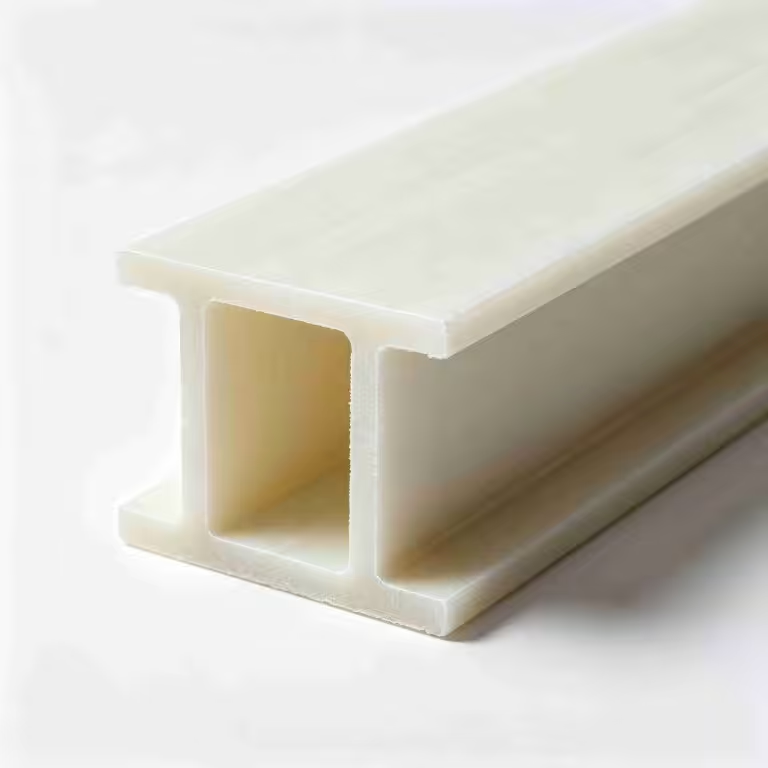
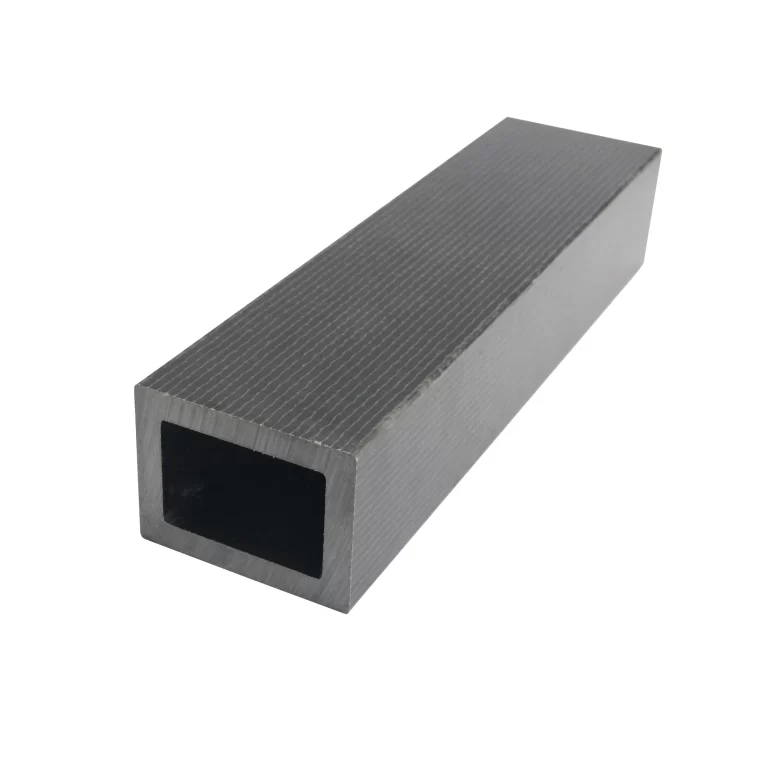
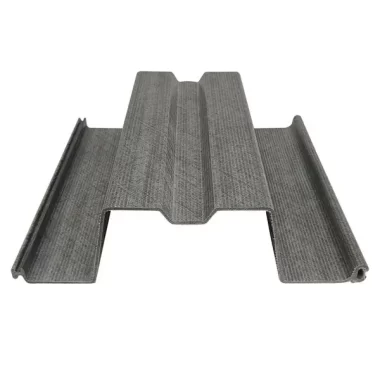
- Structural profiles (I-beams, channels, tubes)
- Handrails and guardrail systems
- Cable trays and support systems
- Walkways and platforms
Unlike traditional materials, FRP solutions are designed as complete structural systems rather than standalone raw materials.
Why FRP Solutions Are Used in Infrastructure Applications
Infrastructure environments often expose materials to moisture, saltwater, industrial chemicals, UV radiation, and continuous mechanical loads.
FRP solutions are specifically engineered to perform under these conditions where traditional materials begin to degrade.
Corrosion-Resistant Infrastructure Performance
Corrosion remains one of the primary failure mechanisms in infrastructure systems.
Steel structures in coastal or chemical environments typically require coatings, repainting, and cathodic protection systems. Even with protection, degradation is unavoidable over time.
FRP eliminates this failure mechanism entirely because:
- No oxidation occurs
- No rust formation
- Stable performance in acidic and alkaline environments
This makes FRP particularly suitable for coastal bridges, chemical plants, wastewater systems, and marine platforms.
Lightweight Structural Efficiency in Construction
FRP materials are significantly lighter than steel, typically reducing structural weight by 60–75% depending on the profile design.
This has direct engineering advantages:
- Lower load demand on foundations
- Reduced transportation cost
- Easier onsite installation
- Less reliance on heavy lifting equipment
- Faster construction cycles
For large infrastructure projects, this translates into measurable cost and time savings.
Long Service Life and Lifecycle Cost Reduction
Although FRP may have a higher initial material cost compared to steel in some cases, its lifecycle cost is significantly lower.
Typical service life ranges between 20–50 years depending on resin system and environmental conditions.
Key lifecycle advantages include:
- Minimal maintenance requirements
- No repainting or corrosion protection systems
- Reduced inspection downtime
- Lower total cost of ownership over time
Electrical Insulation and Safety Benefits
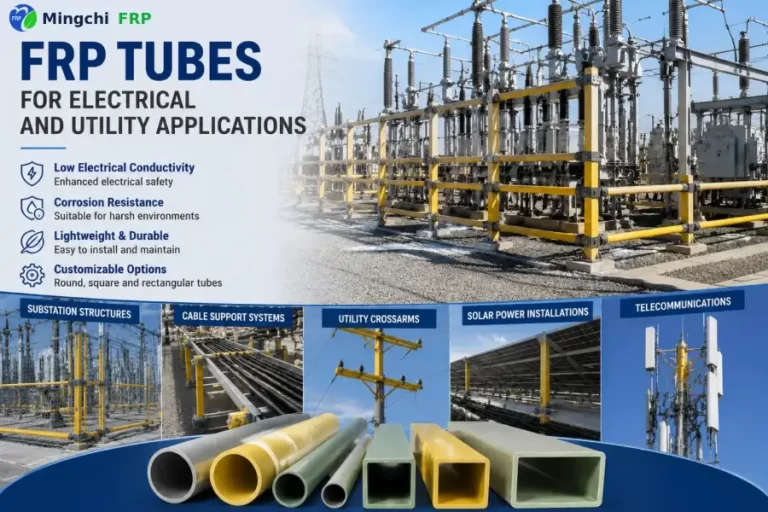
FRP is inherently non-conductive, making it highly suitable for electrical and safety-sensitive infrastructure environments.
Typical applications include power stations, substations, rail systems, and cable support structures.
Key safety benefits include:
- No electrical conductivity risk
- Reduced grounding requirements
- Improved operational safety in high-voltage environments
Key Infrastructure Applications of FRP Solutions
FRP solutions are widely used across civil, industrial, and marine infrastructure systems.
Bridge and Transportation Infrastructure
FRP is increasingly applied in pedestrian bridges, bridge deck replacement systems, and highway support walkways.
Its advantages in this sector include:
- High strength-to-weight ratio
- Resistance to de-icing salt corrosion
- Reduced load on aging bridge structures
Промышленные платформы и проходы
FRP is commonly used in petrochemical plants, offshore oil platforms, and heavy industrial facilities.
The material performs well due to:
- Slip-resistant surface options
- Corrosion-free structural behavior
- Minimal maintenance requirements in chemical exposure environments
Electrical Cable Support Systems
FRP cable trays and support systems are widely installed in power plants, data centers, and industrial automation facilities.
Their main advantages include:
- Non-conductive structure
- Lightweight installation at height
- Resistance to chemical exposure and humidity
Water and Wastewater Infrastructure
FRP is widely used in treatment plants, clarifier platforms, grating systems, and structural support components.
It performs particularly well in environments exposed to chlorine, hydrogen sulfide, and continuous moisture.
Marine and Coastal Infrastructure
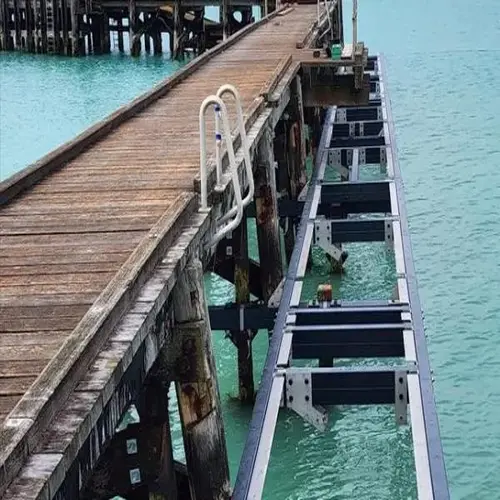
FRP solutions are commonly used in seawater desalination plants, ports, docks, and offshore platforms.
Key advantages include:
- Strong resistance to saltwater corrosion
- UV stability with proper resin selection
- Long-term durability in marine environments
FRP vs Traditional Infrastructure Materials
| Performance Factor | FRP Solutions | Steel | Concrete |
|---|---|---|---|
| Corrosion resistance | Отличный | Poor | Средний |
| Вес | Very light | Тяжелый | Very heavy |
| Installation speed | Fast | Средний | Slow |
| Maintenance requirements | Низкий | Высокий | Средний |
| Electrical conductivity | None | Высокий | None |
| Lifecycle cost | Низкий | Высокий | Средний |
FRP solutions are not designed to replace all traditional materials, but to outperform them in corrosive, weight-sensitive, and maintenance-intensive environments.
Engineering Considerations for FRP Design
FRP infrastructure design requires evaluation of:
- Load-bearing capacity under static and dynamic conditions
- Span length and deflection limits
- Environmental exposure classification
- Fire resistance requirements
- Connection design and installation method
Because FRP is anisotropic, structural performance varies depending on fiber orientation. Proper engineering design must follow manufacturer testing data and applicable structural standards.
Conclusion: The Role of FRP Solutions in Modern Infrastructure
FRP solutions for infrastructure applications are becoming an essential part of modern engineering design.
Their value lies not only in material properties, but in system-level performance advantages: lower lifecycle cost, improved durability, and safer structural behavior in aggressive environments.
As infrastructure continues to evolve, FRP is increasingly positioned as a mainstream engineering material rather than an alternative solution.
For engineering-grade FRP profiles, grating, handrail systems, and customized infrastructure components, mingchifrp provides tailored fiberglass solutions designed for industrial, marine, and civil infrastructure projects worldwide.