Fiberglass Reinforced Plastic (FRP) materials, including frp profiles and frp grating, have become indispensable in industries ranging from construction and marine to chemical processing and wastewater treatment. Renowned for their lightweight, corrosion resistance, high strength, and low maintenance requirements, FRP products outperform traditional materials like steel and wood in harsh environments. At mingchi, we specialize in high-quality FRP solutions, and in this guide, we’ll share expert tips to help you handle and store FRP materials correctly, protect your investment, and ensure optimal performance for years to come.
Why Proper Handling & Storage of FRP Materials Matters
Before diving into the steps, it’s critical to understand why proper handling and storage are non-negotiable for FRP materials. Additionally, proper handling and storage align with safety standards, reducing the risk of workplace injuries. FRP materials are lightweight, but improper lifting or stacking can lead to accidents. For businesses relying on FRP for critical applications (such as industrial platforms or chemical tanks), maintaining material integrity is not just a cost-saving measure—it’s a safety priority. As a trusted FRP manufacturer, mingchi emphasizes these practices to help our customers get the most out of theirfrp profiles, frp grating, and other FRP products.
Step-by-Step Guide to Handling FRP Materials Properly
Handling FRP materials requires care to avoid physical damage, resin contamination, and fiber breakage. Whether you’re working with frp profiles (such as FRP beams, channels, or angles) or frp grating (used for walkways, platforms, or drainage covers), follow these best practices.
1. Use the Right Protective Gear
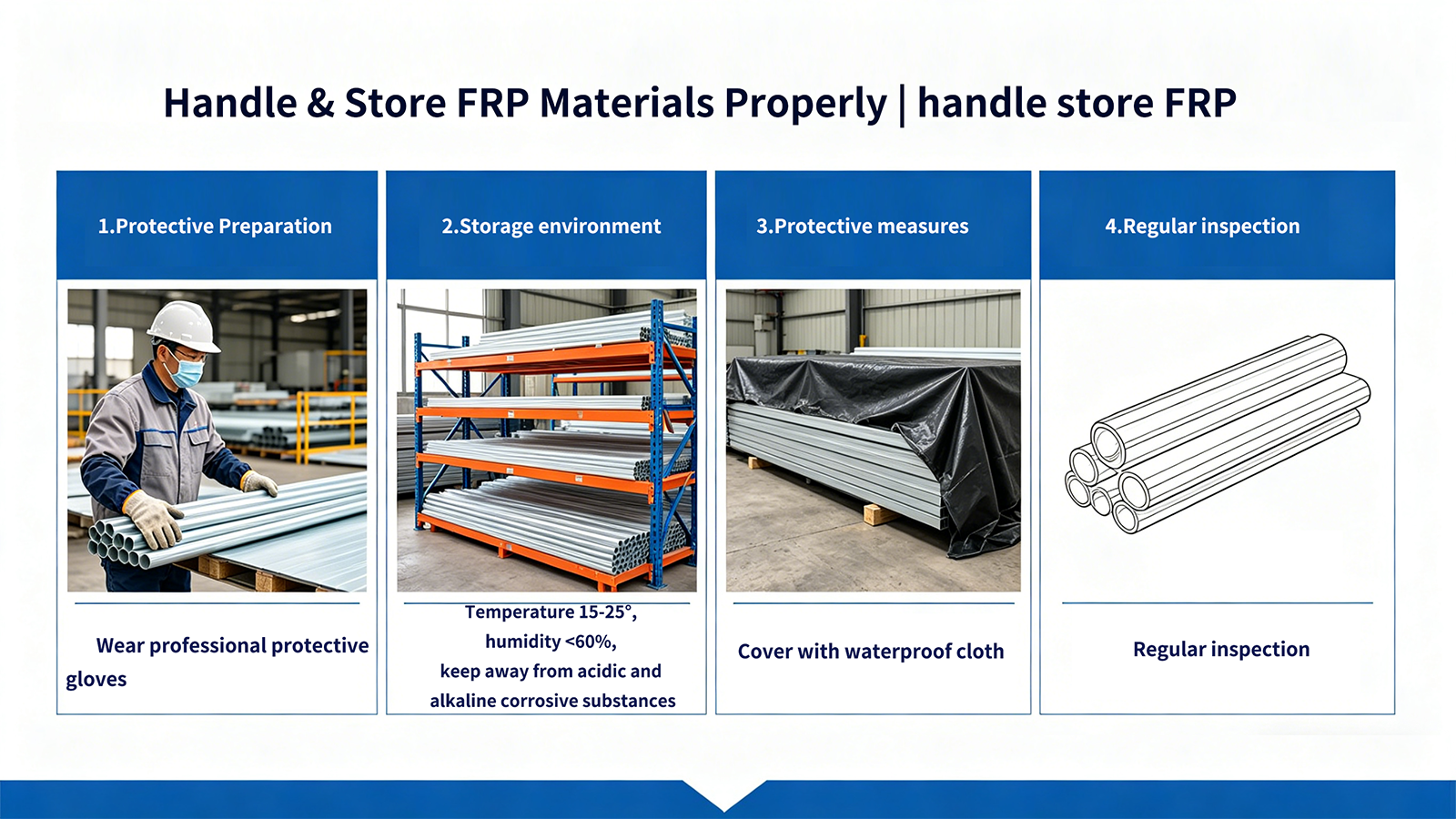
Before handling any FRP material, wear appropriate personal protective equipment (PPE). FRP fibers can irritate the skin, eyes, and respiratory system if not handled carefully—especially when cutting or drilling. We recommend wearing: non-latex gloves (to prevent resin transfer and skin irritation), safety goggles (to protect eyes from loose fibers), a dust mask or respirator (when cutting or sanding FRP), and long-sleeved shirts/pants (to cover exposed skin). This is especially important when handling frp grating, which often has sharp edges that can cause cuts if not handled with care. At mingchi, we always prioritize safety, and our team follows these PPE guidelines when manufacturing and shipping FRP products.
2. Handle FRP Profiles with Proper Support
Frp profiles (such as FRP channels, angles, and I-beams) are designed for structural use, but they can warp if not supported correctly during handling. When transporting or storing long profiles, use supports spaced every 4-6 feet to prevent sagging. Never lift a long FRP profile by one end—this can cause bending and permanent damage. For example, if you’re moving an FRP beam for a construction project, use two people to lift it at both ends, or use a forklift with a spreader bar to distribute the weight. This practice ensures the profile maintains its shape and structural integrity, which is essential for applications like industrial framing or bridge components. At mingchi, our frp profiles are manufactured with high-quality resin and glass fibers, but proper handling is still required to preserve their performance.
3. Cut and Drill FRP Materials Carefully
When cutting or drilling frp profiles or frp grating, use the right tools to avoid fiber fraying and resin damage. For cutting, use a diamond blade or a carbide-tipped saw designed for composite materials—avoid high-speed saws, which can generate excessive heat and melt the resin. When drilling, use a slow-speed drill with a carbide drill bit, and apply light pressure to prevent cracking. Always wear a respirator during cutting or drilling, as FRP dust can be harmful if inhaled. After cutting, smooth the edges with sandpaper to remove any loose fibers and prevent sharp edges. This not only protects workers but also ensures the FRP material fits properly in its intended application. For detailed guidance on cutting frp profiles and frp grating, visit mingchi for our technical resources.
Best Practices for Storing FRP Materials
Proper storage is just as important as proper handling—especially for long-term storage. FRP materials are sensitive to temperature, moisture, UV exposure, and physical pressure, so following these guidelines will help preserve their quality
1. Choose a Clean, Dry, and Well-Ventilated Storage Area
Moisture is one of the biggest threats to FRP materials, as it can cause delamination (separation of glass fibers and resin) and mold growth. Store frp profiles and frp grating in a clean, dry area with a relative humidity between 35% and 65%—avoid areas prone to leaks, condensation, or high humidity (such as basements or outdoor storage without cover). The storage area should also be well-ventilated to prevent the buildup of fumes from resin or other chemicals. If you must store FRP materials outdoors temporarily, cover them with a breathable, waterproof tarp (never use plastic sheeting, which can trap moisture) and elevate them off the ground to prevent water damage. This is especially important for frp grating, which has open spaces that can trap moisture if not properly protected.
2. Control Temperature and Avoid Extreme Fluctuations
FRP materials perform best when stored at a stable temperature between 5°C and 35°C (41°F and 95°F). Avoid storing them in areas with extreme heat (above 40°C/104°F) or extreme cold (below 0°C/32°F), as this can damage the resin. High temperatures can cause resin softening, warping, or sizing migration—where the chemical coating on glass fibers becomes mobile and creates sticky spots. Freezing temperatures can make the resin brittle, increasing the risk of cracking when handled. Additionally, avoid rapid temperature changes (e.g., moving FRP from a cold warehouse to a warm outdoor area), as this can cause condensation and moisture buildup on the surface. For businesses storing frp profiles in cold climates, consider using a heated storage area to prevent damage.
3. Store FRP Profiles and Grating Horizontally (When Possible)
For most frp profiles and frp grating, horizontal storage is ideal to prevent warping and stress on the material. Use flat, sturdy pallets or racks to support the materials, and ensure the support is evenly distributed to avoid point loads. For frp grating sheets, stack them horizontally with a non-abrasive material between each sheet to prevent scratching. For long frp profiles (such as beams or channels), use supports spaced every 4-6 feet to prevent sagging. Never store FRP materials vertically for extended periods, as this can cause bending or warping—especially for longer profiles. If vertical storage is necessary (e.g., for space constraints), use a sturdy rack that supports the entire length of the profile to distribute weight evenly.
4. Protect Against UV Exposure
UV radiation from sunlight can degrade the resin in FRP materials, causing yellowing, brittleness, and reduced strength over time—even for UV-resistant FRP products. Store frp profiles and frp grating in a dark area or cover them with a UV-protective tarp if stored outdoors. Avoid placing FRP materials near windows or other sources of direct sunlight for extended periods. For frp grating used in outdoor applications, our team at mingchi offers UV-resistant options, but proper storage before installation still helps preserve their lifespan.
5. Avoid Overstacking and Weight Pressure
Overstacking frp profiles or frp grating can cause excessive pressure, leading to warping, cracking, or delamination. Follow the manufacturer’s guidelines for stacking limits—typically, no more than 4-6 layers of frp grating or 3-4 layers offrp profiles should be stacked at once. Use sturdy pallets and ensure the stack is stable to prevent tipping. Never place heavy objects on top of FRP materials, as this can cause permanent damage. For example, stacking heavy tools or equipment on frp grating sheets can crack the surface or weaken the structural integrity. By following stacking limits, you can protect your FRP materials from unnecessary stress.
Common Mistakes to Avoid When Handling & Storing FRP Materials
Even with the best intentions, it’s easy to make mistakes that damage FRP materials. Here are the most common errors to avoid:
- Dragging FRP materials across rough surfaces: This causes scratches and fiber damage, especially to frp grating and gel-coated frp profiles.
- Storing FRP in humid or damp areas: Moisture leads to delamination and mold, which ruins the structural integrity of FRP products.
- Overstacking: Excessive weight causes warping and cracking, even for strong frp profiles and frp grating.
- Exposing FRP to extreme temperatures: High heat softens resin, while cold makes it brittle—both lead to damage.
- Handling FRP without PPE: Loose fibers can irritate skin, eyes, and lungs, posing a safety risk.
- Using the wrong tools for cutting/drilling: High-speed tools or improper blades cause fiber fraying and resin damage.
Final Tips for Long-Term FRP Material Care
Proper handling and storage are ongoing processes—even after installation, regular maintenance can extend the lifespan of your frp profiles and frp grating. Inspect FRP materials regularly for signs of damage (cracks, scratches, delamination) and address issues promptly. Clean FRP surfaces with a mild detergent and water—avoid harsh chemicals that can damage the resin. For frp grating used in industrial settings.
cleaning also prevents debris buildup, which can cause stress on the material.
At mingchi,we’re committed to helping our customers get the most out of their FRP products. Whether you need frp profiles for structural framing, frp grating for industrial platforms, or expert advice on handling and storage, our team is here to help. By following the tips in this guide, you can protect your FRP investment, ensure optimal performance, and avoid costly replacements.
Remember: Proper handling and storage start from the moment your FRP materials arrive. By taking the time to follow these best practices, you’ll maximize the lifespan of your frp profiles, frp grating, and other FRP products, and enjoy the full benefits of this versatile, high-performance material.