
1. Introduction:Which Resin Should You Use?
When selecting materials for FRP (Fiber Reinforced Plastic) products, one of the most common questions is:
Should you choose polyester resin or vinyl ester resin?
Both are widely used in fiberglass manufacturing, but they perform very differently in terms of:
- Corrosion resistance
- Mechanical strength
- Cost efficiency
- Long-term durability
Choosing the wrong resin can lead to premature failure, especially in chemical, marine, or outdoor environments.This guide breaks down the key differences and helps you make the right decision.
2. Quick Comparison Table (Key Decision Section)
| Feature | Polyester Resin | Vinyl Ester Resin |
|---|---|---|
| Cost | Lower | Higher |
| Corrosion Resistance | Moderate | Excellent |
| Strength | Medium | High |
| Chemical Resistance | Limited | Strong |
| Durability | Medium | High |
| Best Use | General FRP products | Chemical / marine / industrial FRP |
3. What is Polyester Resin?
Polyester resin is one of the most commonly used resins in FRP manufacturing due to its low cost and easy processing.
Advantages:
- Low material cost
- Fast curing time
- Easy to mold and produce
- Suitable for mass production
Limitations:
- Lower corrosion resistance
- Not suitable for harsh chemical environments
- Shorter service life under extreme conditions
Typical Applications:
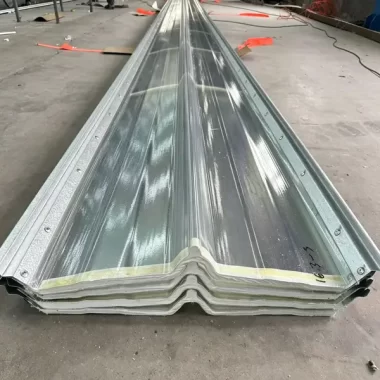
- FRP panels
- Decorative fiberglass products
- Non-corrosive structural parts
4. What is Vinyl Ester Resin?
Vinyl ester resin is a higher-performance resin designed for demanding environments where chemical resistance is critical.
Advantages:
- Excellent corrosion resistance
- High mechanical strength
- Better fatigue resistance
- Longer service life
Limitations:
- Higher cost
- Slightly more complex processing
Typical Applications:
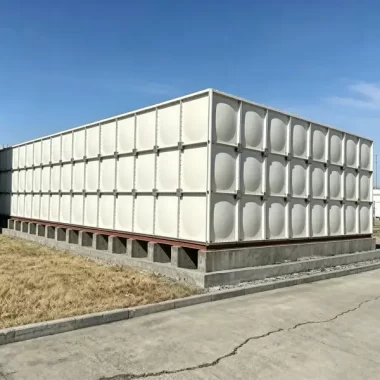
- Chemical storage tanks
- Marine FRP structures
- Industrial pipelines
- Offshore platforms
5. Key Differences Explained (Practical View)
1. Corrosion Resistance
Vinyl ester significantly outperforms polyester in acidic, alkaline, and saltwater environments.
2. Strength & Durability
Vinyl ester provides better bonding between fibers and resin matrix, improving:
- Impact resistance
- Fatigue life
- Structural stability
3. Cost vs Performance
Polyester wins in cost efficiency, making it ideal for:
- Budget projects
- Non-critical structures
Vinyl ester is an investment for long-term durability.
4. Manufacturing Considerations
- Polyester: easier and faster processing
- Vinyl ester: requires more controlled production conditions
6. Application-Based Recommendation
- Construction FRP panels → Polyester resin
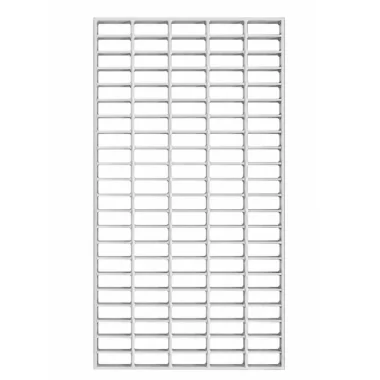
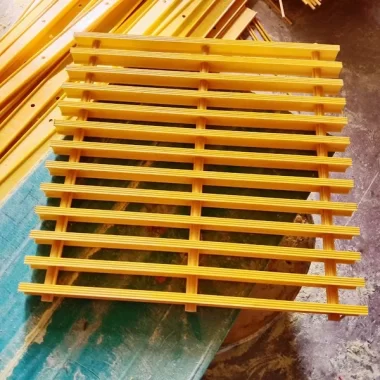
- FRP grating for industrial use → Vinyl ester (recommended)
- Marine structures → Vinyl ester
- General fiberglass products → Polyester
7. FAQ
Q1: Is vinyl ester always better than polyester?
Not always. Polyester is sufficient for general applications, while vinyl ester is better for harsh environments.
Q2: Why is vinyl ester more expensive?
Because it offers higher chemical resistance and improved mechanical properties.
Q3: Can polyester resin be used in FRP corrosion environments?
Only in mild conditions. It is not recommended for strong acids or marine exposure.
8. Conclusion
Choosing between polyester and vinyl ester resin depends entirely on your application environment and performance requirements.
If you are working on FRP structural products, corrosion-resistant systems, or industrial applications, selecting the right resin directly affects product lifespan and safety.
For professional FRP solutions, material selection guidance, and custom fiberglass profiles, you can contact:
👉 Mingchi FRP
Mingchi FRP Official Website
We provide customized FRP profiles, pultruded fiberglass products, and engineering support for industrial applications worldwide.