
FRP grating and structural profiles are widely used in industrial walkways, platforms, stairs and trench covers. Many of these areas are exposed to water, oil, chemicals or loose debris, making surface traction an important part of product selection.
An effective FRP anti-slip surface treatment should match the operating environment, pedestrian traffic, cleaning requirements and expected wear. There is no single surface finish suitable for every project.
Why Does the FRP Surface Matter?
Water, grease, dust and process residues can reduce traction on walking surfaces. Selecting the right finish helps provide more secure footing while preserving the corrosion resistance and lightweight properties of FRP.
Surface texture is only one part of walkway safety. Drainage, grating mesh, installation, cleaning frequency, footwear and the type of contamination should also be considered.
Common FRP Anti-Slip Surface Treatments
1. Meniscus Surface
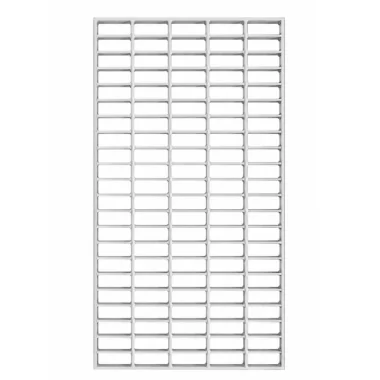
A meniscus surface is commonly found on molded FRP grating. During molding, the resin forms a slightly concave surface along the top of each bar, creating defined edges that improve foot contact.
This option is suitable for:
- General industrial walkways
- Water treatment facilities
- Drainage platforms
- Areas with occasional water or light contamination
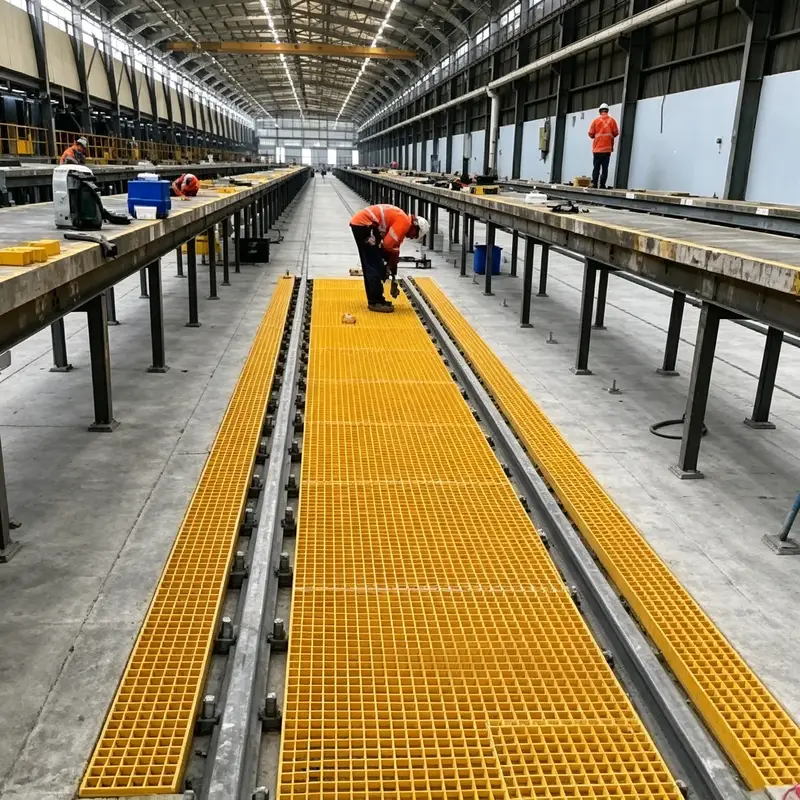
Meniscus grating offers practical slip resistance without adding a separate abrasive layer. However, its relatively aggressive edges may not be suitable for barefoot traffic. Meniscus and integrally applied grit are widely used surface options for molded FRP grating.
2. Grit-Top Surface
A grit-top finish uses abrasive particles, such as quartz or aluminum oxide, bonded and sealed into the resin surface. It normally provides a more aggressive walking surface than a smooth or lightly textured finish.
Grit-top FRP is commonly selected for:
- Stair treads and stair nosings
- Wet industrial platforms
- Marine and offshore walkways
- Chemical processing facilities
- Areas exposed to oil or frequent traffic

Different grit sizes can be used depending on the required traction and cleaning conditions. Coarse grit can improve grip but may be less comfortable and more difficult to clean than a finer surface.
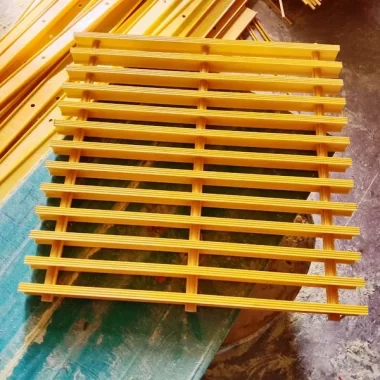
Grit finishes are available for both molded and pultruded FRP grating, although the available options depend on the product design and manufacturing process.
3. Molded or Embossed Texture
A textured pattern can be formed directly into an FRP plate, cover or profile during production. The pattern may include raised lines, shallow grooves or an embossed surface.
Compared with coarse grit, a molded texture is generally easier to clean and more comfortable for frequent pedestrian use. It is suitable for:
- Indoor walkways
- Light- to medium-traffic areas
- Equipment access platforms
- Architectural and municipal applications
- Locations requiring a balance between traction and cleanability
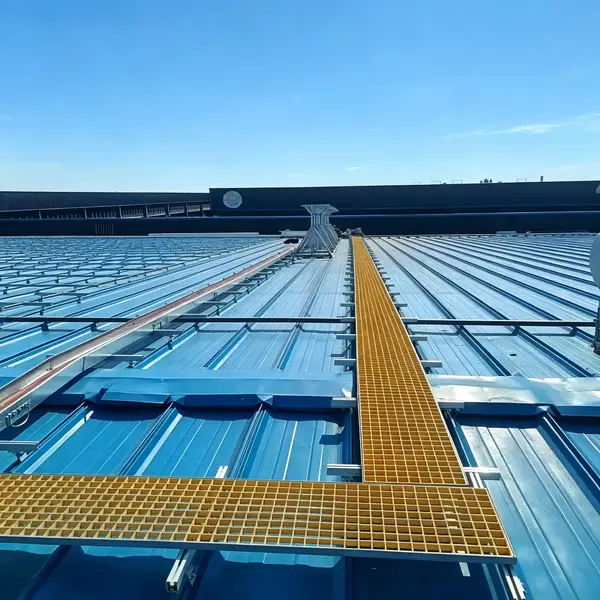
The pattern, resin system and product thickness should be selected according to the project environment.
4. Post-Applied Anti-Slip Coating
An anti-slip coating can be applied to finished FRP plates, profiles or existing installations. The coating normally combines a compatible resin with abrasive particles.
This method is useful when:
- An existing FRP surface requires improved traction
- Only selected walking areas need treatment
- Worn surfaces need localized repair
- A custom grit grade or color is required
Performance depends heavily on surface preparation, resin compatibility, coating thickness and curing conditions. Existing surfaces should therefore be inspected before recoating.
How to Select the Right Surface
| Operating condition | Recommended option | Main consideration |
|---|---|---|
| General wet industrial area | Meniscus or medium grit | Balance of traction and maintenance |
| Oil, mud or heavy traffic | Coarse grit top | More aggressive surface required |
| Frequent cleaning | Fine grit or molded texture | Easier removal of residue |
| Barefoot or comfort-sensitive area | Fine, less aggressive texture | Avoid sharp or coarse surfaces |
| Existing FRP installation | Compatible anti-slip coating | Surface preparation and adhesion |
| Stair treads and access platforms | Grit top with visible nosing | Foot contact and edge visibility |
The anti-slip finish should not be selected independently from the grating structure. Load capacity, support span, resin type, chemical exposure, UV exposure, drainage and fastening method must also be reviewed.
Maintenance of Anti-Slip FRP Surfaces
Even an aggressive anti-slip surface can lose traction when covered by oil, mud or debris. Regular maintenance should include:
- Removing accumulated dirt and process residue
- Cleaning with water or a compatible neutral detergent
- Inspecting high-traffic areas for worn or loose grit
- Checking stair edges, fasteners and support conditions
- Repairing damaged coating before the affected area expands
Wax, oily cleaners and products that leave a smooth film should be avoided unless they have been confirmed as suitable for the surface.
Typical Applications
Anti-slip FRP grating and profiles are commonly used in:
- Wastewater treatment plants
- Chemical processing facilities
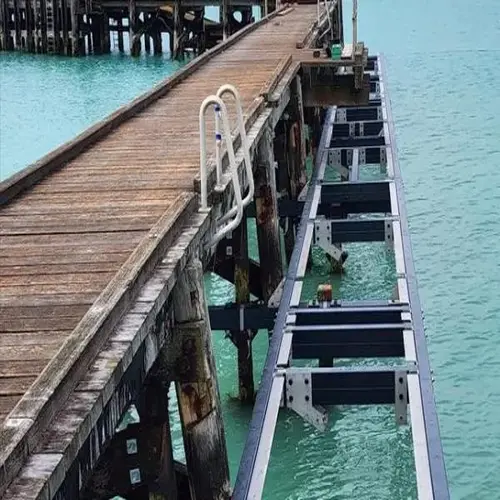
- Marine and coastal structures
- Industrial platforms and catwalks
- Stairways and access systems
- Trench covers and drainage areas
- Food and beverage facilities
- Municipal and infrastructure projects
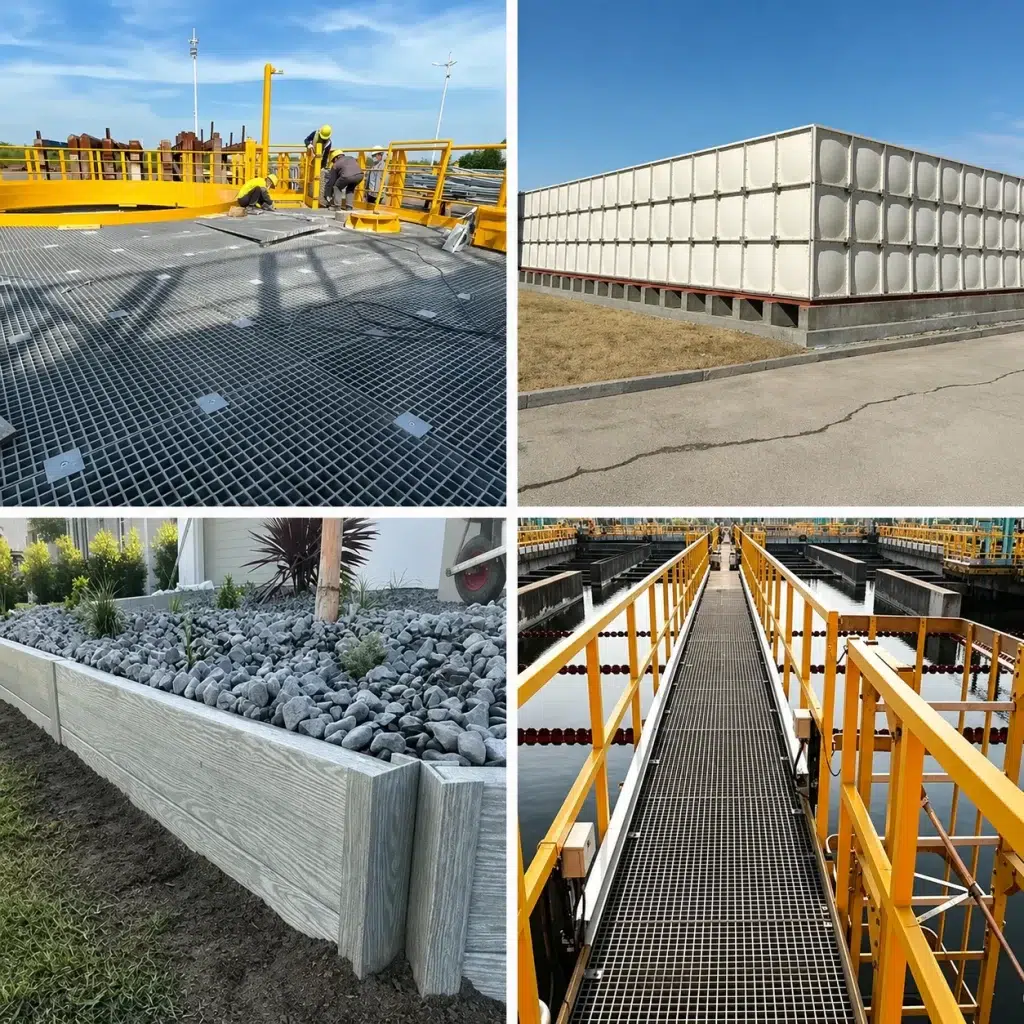
The best finish depends on the actual contaminants, traffic level and maintenance conditions rather than the application name alone.
Zusammenfassung
FRP anti-slip surface treatments improve walking-surface performance in wet, corrosive and high-traffic environments. Meniscus surfaces provide a practical option for molded grating, while grit-top finishes are better suited to locations requiring more aggressive traction. Molded textures support easier cleaning, and post-applied coatings can upgrade or repair existing surfaces.
Before ordering, provide the supplier with the installation environment, expected contaminants, traffic level, cleaning method, required load and applicable testing standard. This information makes it easier to select an FRP surface that balances traction, durability and maintenance.
Mingchi FRP supplies molded and pultruded FRP grating with different surface options for industrial, marine, wastewater and infrastructure applications. Custom resin systems, colors, panel sizes and grit finishes are available according to project requirements.