
Electrical substations, power plants and utility facilities require materials that can perform around moisture, corrosive environments and energized equipment.
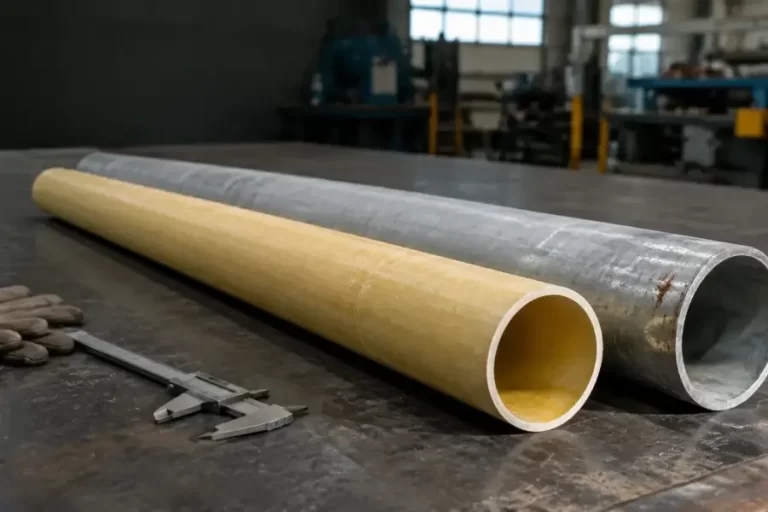
Steel tubing offers structural strength, but it conducts electricity and may require painting, galvanizing or regular corrosion maintenance. Wood can absorb moisture, rot or split over time.
For these reasons, FRP tubes for electrical applications are increasingly used as lightweight, corrosion-resistant and low-conductivity structural components.
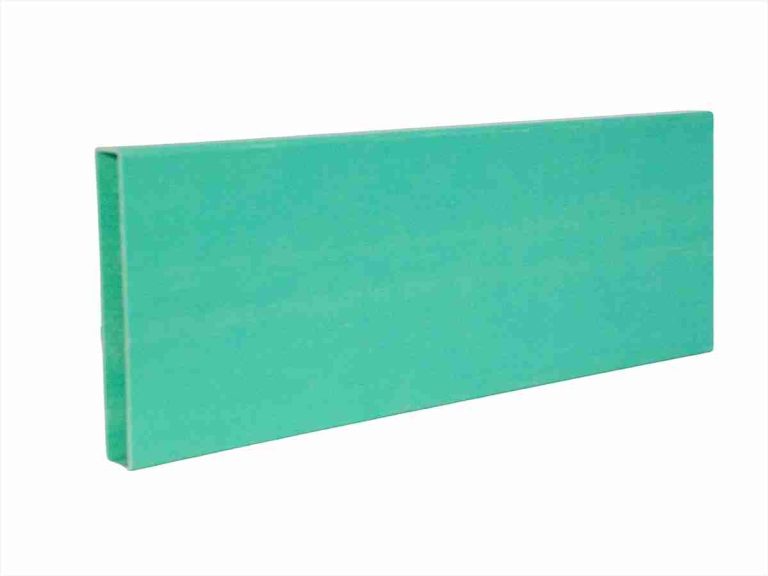
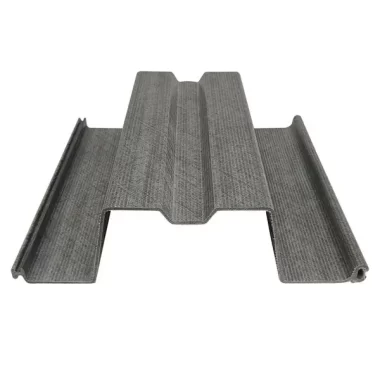
Pultruded fiberglass tubes are available in round, square and rectangular shapes. They can be used in electrical substations, utility support structures, cable systems, renewable-energy facilities and telecommunications projects.
Why Use FRP Tubes in Electrical Infrastructure?
Low Electrical Conductivity
One of the main advantages of non-conductive fiberglass tubing is its low electrical conductivity compared with steel and aluminum.
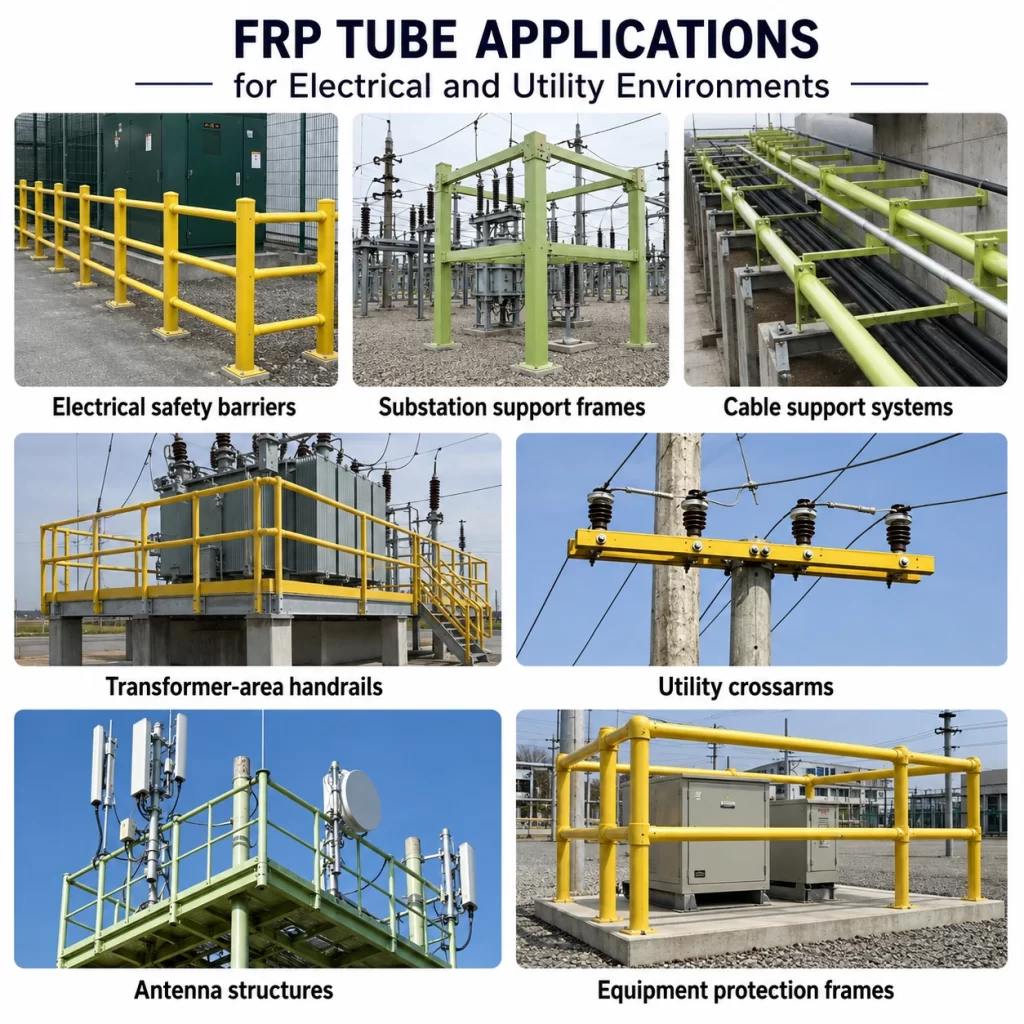
This makes FRP tubes suitable for applications such as:
- Electrical safety barriers
- Substation support frames
- Cable support systems
- Transformer-area handrails
- Versorgungsquerarme
- Antenna structures
- Equipment protection frames
However, FRP should not automatically be described as completely shockproof. The electrical performance of the complete structure also depends on moisture, contamination, operating voltage, fasteners and installation conditions.
Korrosionsbeständigkeit
Electrical and utility structures are often exposed to rain, humidity, coastal salt, chemicals and industrial pollution.
Unlike steel, FRP does not rust. Properly selected corrosion-resistant utility support tubes can be used in:
- Coastal substations
- Wastewater treatment facilities
- Chemical plants
- Power-generation facilities
- Outdoor transformer yards
- Solar power installations
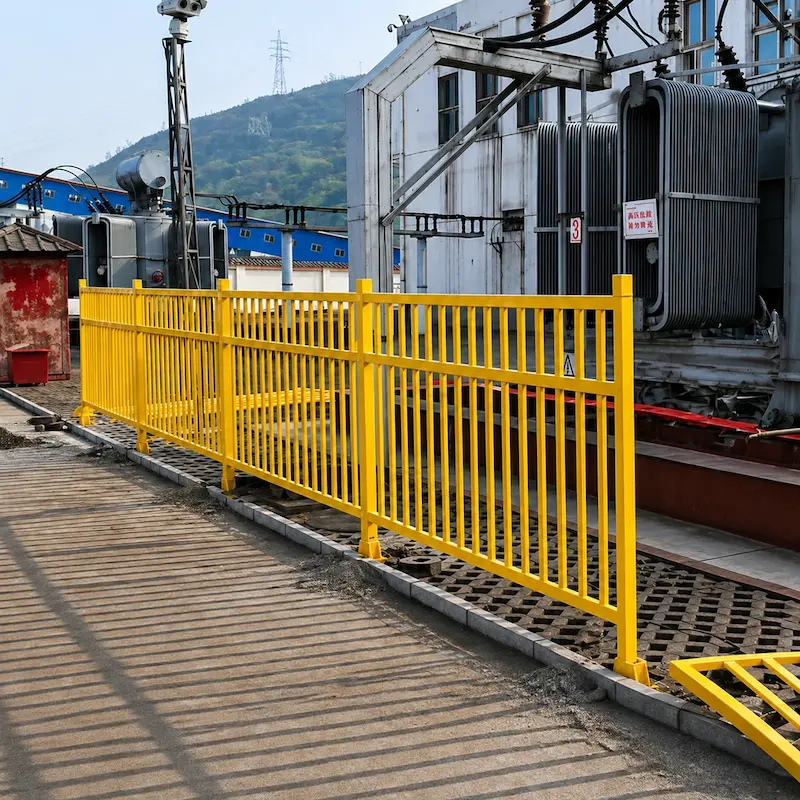
This can reduce repainting, rust removal and other maintenance work.
Lightweight Installation
Pultruded FRP tubes are lighter than steel tubes, making them easier to transport, cut and install.
This is particularly useful for:
- Remote utility sites
- Elevated structures
- Retrofit projects
- Restricted installation areas
- Prefabricated support frames
The lighter weight may also reduce the need for heavy lifting equipment.
Non-Magnetic Properties
Fiberglass reinforced plastic is non-magnetic and can be used around communication equipment, antennas, monitoring systems and sensitive electrical instruments.
Common Applications of FRP Tubes
Electrical Substation Structures
An FRP tube for electrical substations can be used as a post, support member, barrier frame or access structure component.
Typical applications include:
- Equipment protection barriers
- Safety fencing
- Transformer-area handrails
- Cable support frames
- Instrument mounting structures
- Secondary containment posts
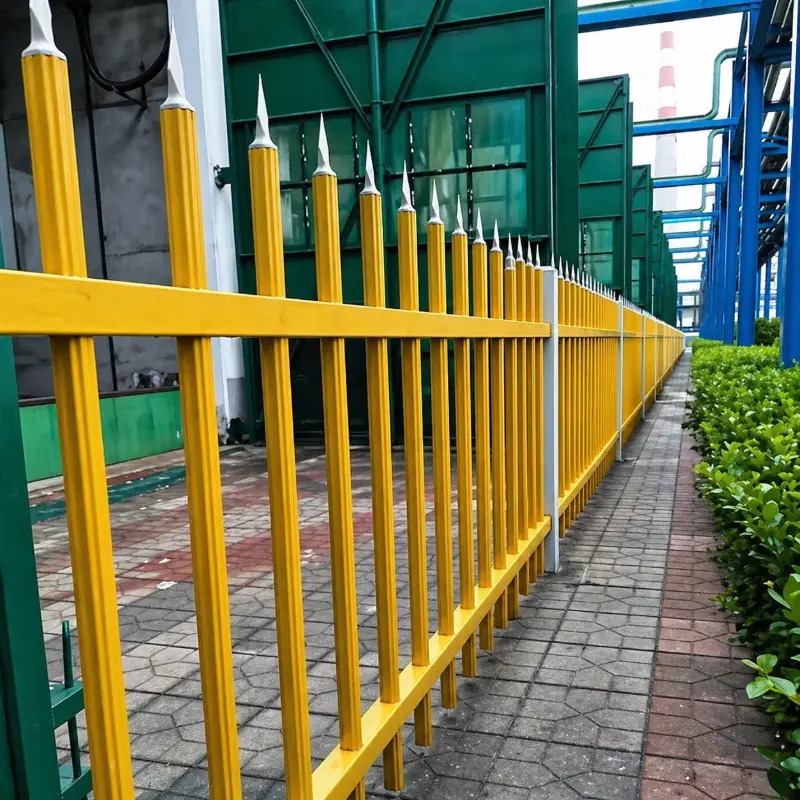
Square and rectangular fiberglass tubes are often preferred because their flat surfaces make bolting and bracket installation easier.
Utility Crossarms
A fiberglass rectangular tube for utility crossarms can provide directional stiffness while avoiding the corrosion of steel and the rot or splitting associated with wood.
Selection should consider:
- Conductor loads
- Wind and ice loads
- Hardware spacing
- Drilled-hole positions
- Freie Spannweite
- Zulässiges Durchbiegen
- Outdoor UV exposure
A general structural tube should not be used as a utility crossarm without engineering verification.
Power Plant Access Structures
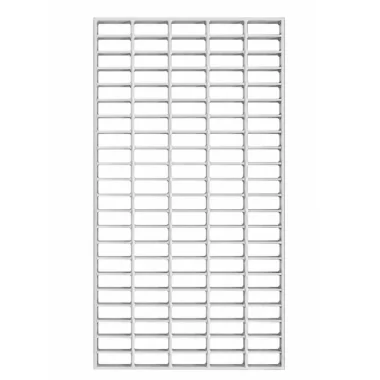
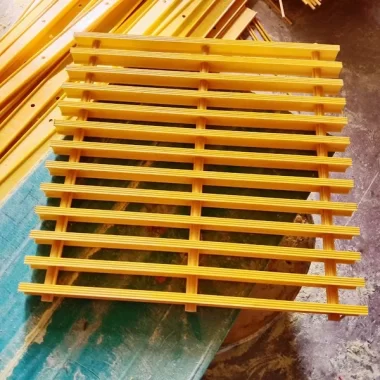
FRP structural tubes for power plants can be used together with FRP grating and handrail systems.
Häufige Anwendungen sind:
- Handrails
- Sicherheitsbarrieren
- Ladder rails
- Maintenance platforms
- Equipment access frames
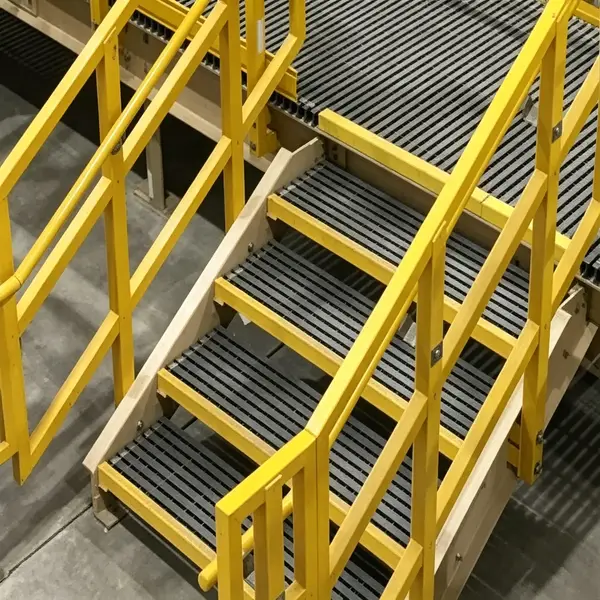
Their corrosion resistance is particularly useful around cooling systems, chemical treatment areas and outdoor facilities.
Which FRP Tube Shape Should You Choose?
Rundrohr aus FRP
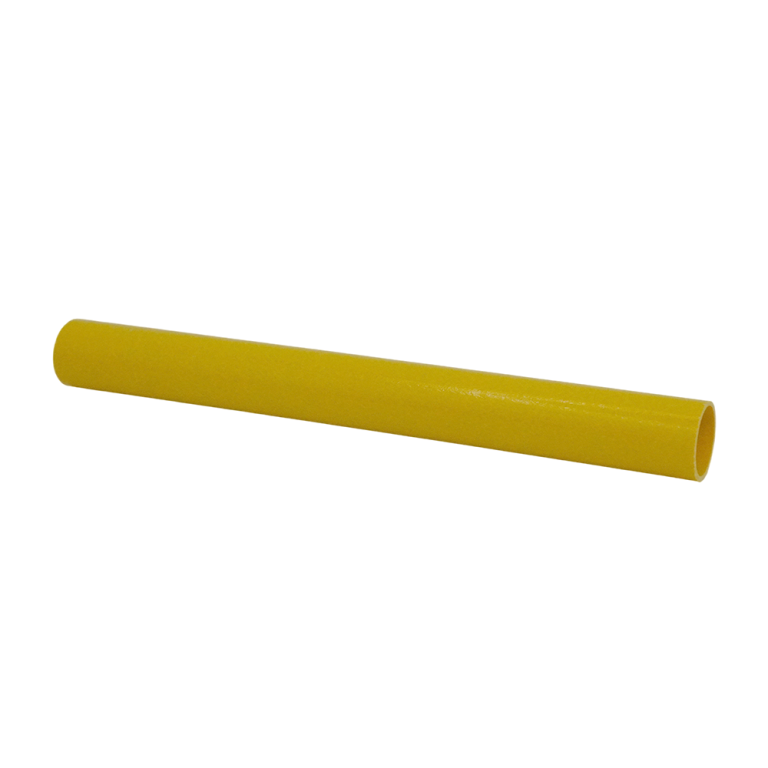
An FRP round tube for electrical safety barriers is suitable for:
- Handrails
- Barrier rails
- Antenna supports
- Pole-like components
- Clamp connections
- Internal sleeve connections
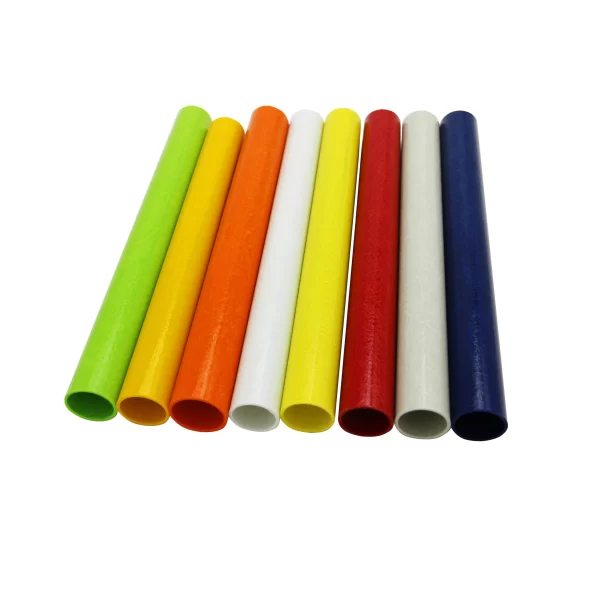
Its smooth surface also makes it comfortable for handrail applications.
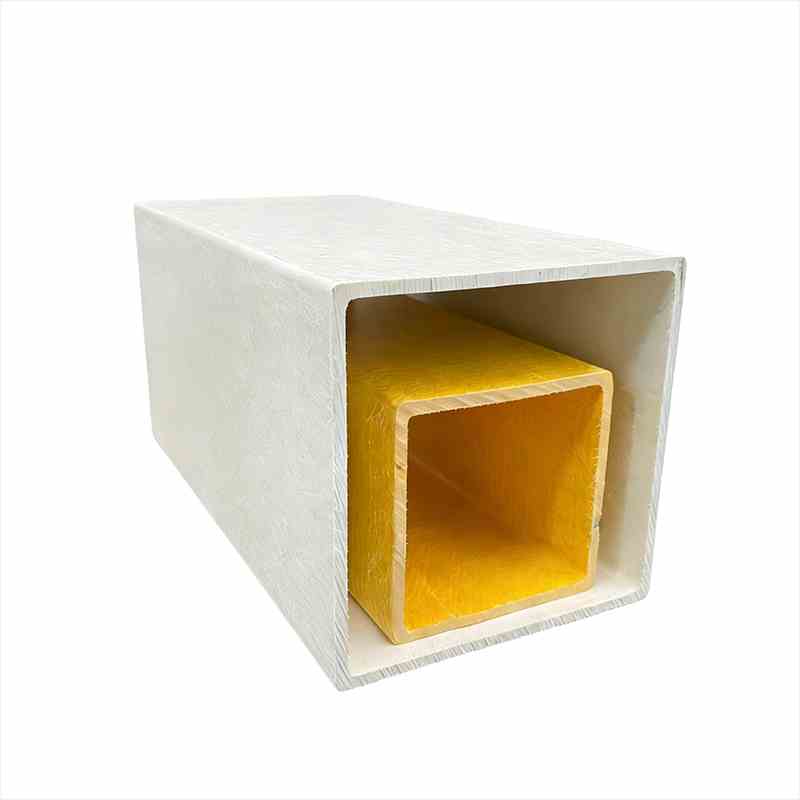
Quadratrohr aus FRP
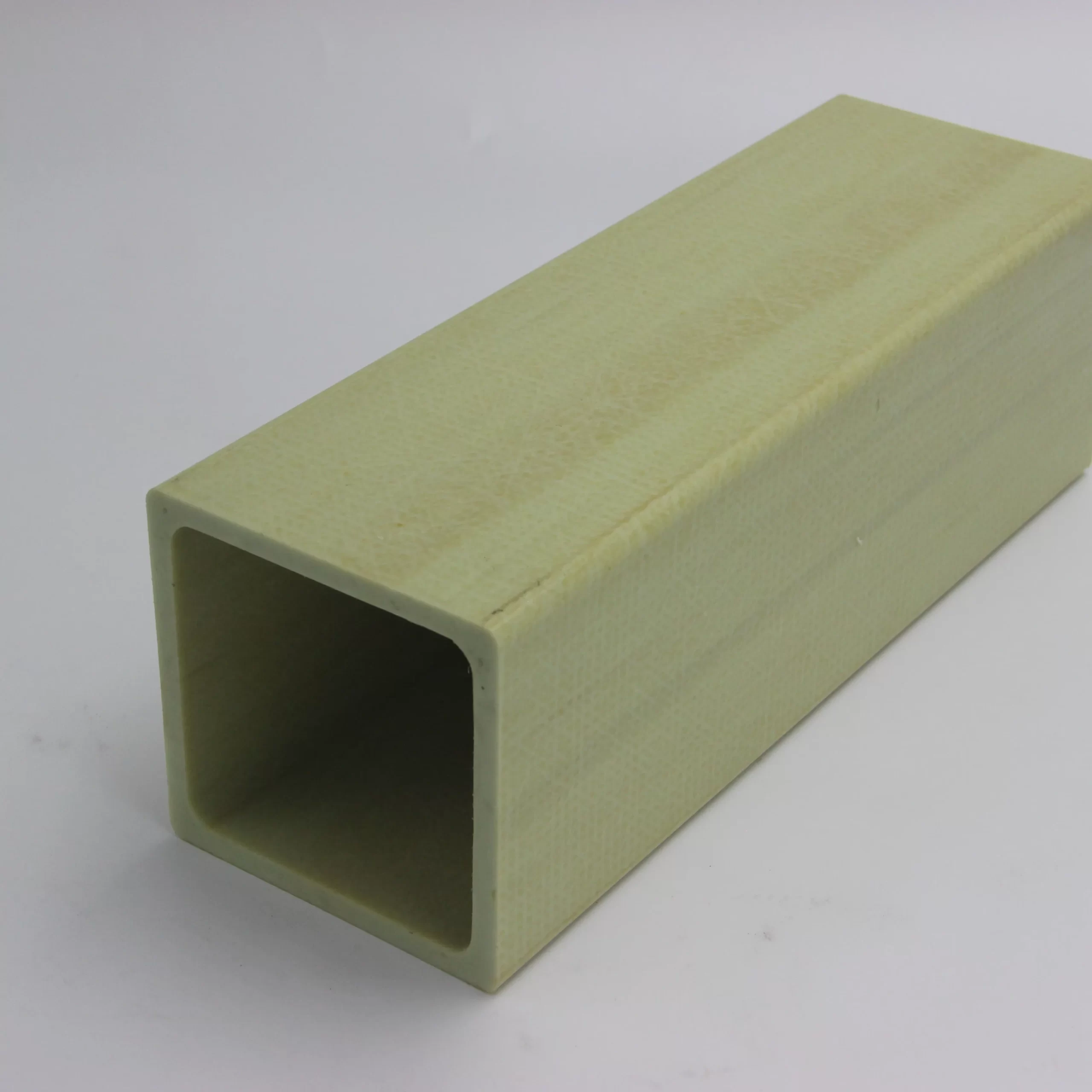
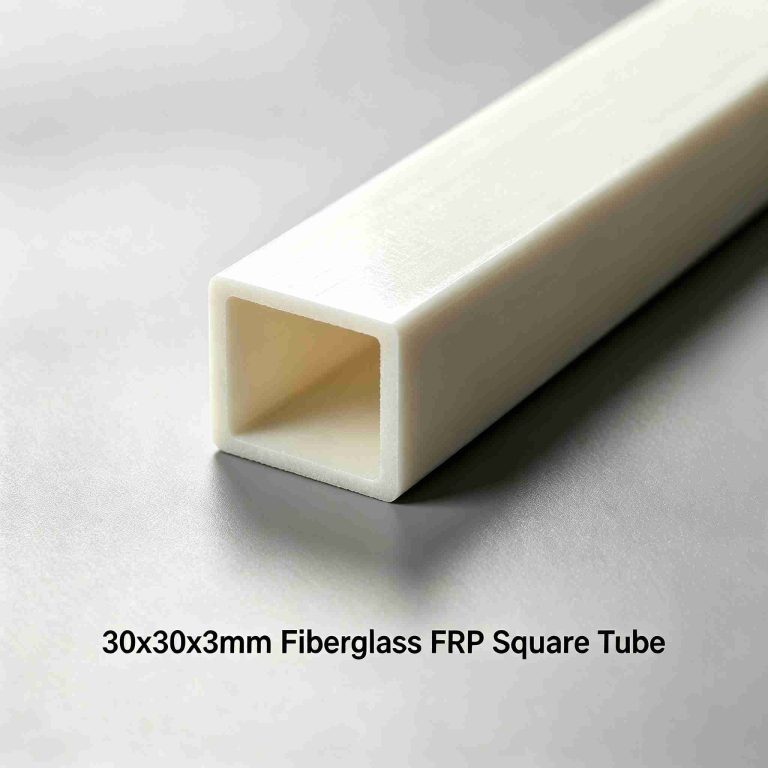
A fiberglass square tube for utility structures provides flat surfaces for drilling, bolting and connecting brackets.
It is commonly used for:
- Gerätegestelle
- Safety fencing
- Cable support frames
- Vertical posts
- Transformer-area structures
- Modular utility frames
Rechteckrohr aus FRP
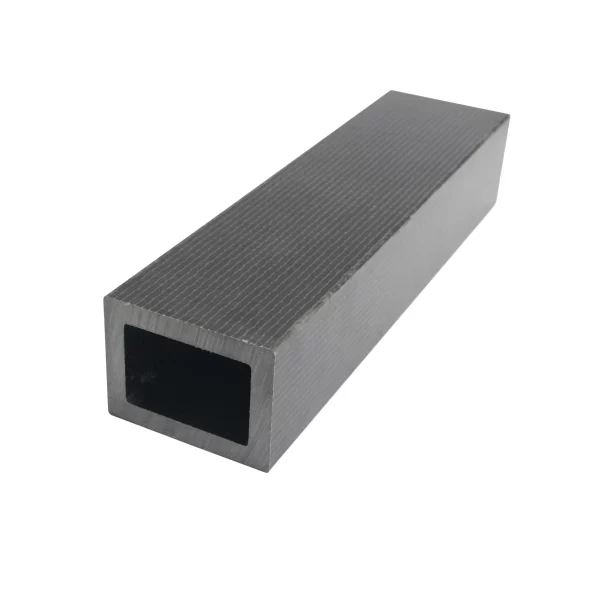
Rectangular fiberglass tubing offers greater stiffness in one direction and is suitable for:
- Versorgungsquerarme
- Horizontale Stützträger
- Cable support members
- Long-span equipment frames
- Directionally loaded structures
| Tube shape | Main advantage | Typical applications |
|---|---|---|
| Round tube | Smooth and balanced shape | Handrails, barriers and antennas |
| Square tube | Easy bolting and assembly | Frames, posts and fencing |
| Rectangular tube | Directional stiffness | Crossarms and support beams |
How to Select FRP Tubes for Utility Projects
Define the Application
First identify whether the tube will be used as a beam, post, barrier, handrail, crossarm, cable support or equipment frame. Different applications require different dimensions, wall thicknesses and reinforcement designs.
Select the Resin System
Common options include:
- Polyester resin for general utility applications
- Vinyl ester resin for coastal and chemical environments
- Fire-retardant resin for projects with flame and smoke requirements
- Custom resin systems for specific electrical or temperature conditions
Outdoor products should also include suitable UV resistance.
Check Structural Loads
Tube selection should consider:
- Freie Spannweite
- Concentrated or distributed load
- Wind load
- Equipment weight
- Lastrichtung
- Zulässiges Durchbiegen
- Verbindungsabstand
- Safety factor
FRP is an anisotropic material, so steel-design assumptions should not be directly applied to fiberglass structural tubes.
Design the Connections
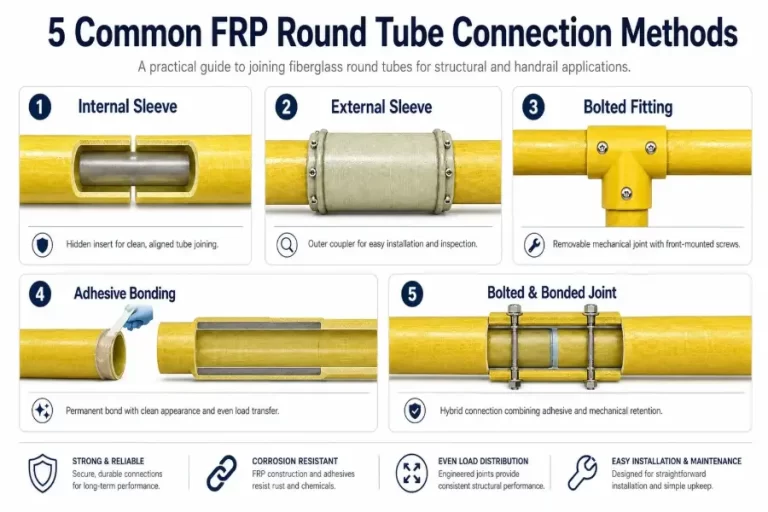
FRP tubes may be connected using:
- Bolts
- Brackets
- Internal sleeves
- Adhesive bonding
- Bolted-and-bonded joints
- Clamp systems
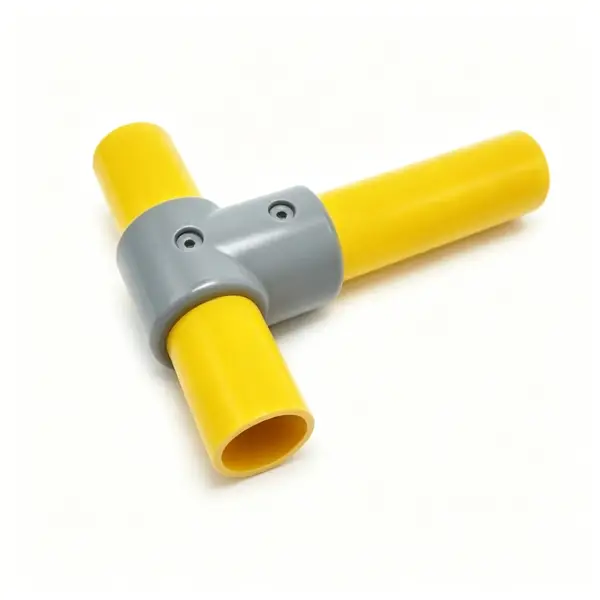
Avoid placing holes too close to profile edges and do not overtighten bolts, as this may damage the tube wall.
Häufig gestellte Fragen
Are FRP tubes completely non-conductive?
FRP has much lower electrical conductivity than metal, but actual performance depends on the resin, moisture, contamination and test conditions. Safety-critical projects should request relevant test data.
Can FRP tubes replace steel near electrical equipment?
They can replace steel in some barriers, supports, frames and access structures, but structural loads, electrical requirements, fire performance and connections must be reviewed.
Are structural FRP tubes the same as fiberglass conduit?
No. Structural fiberglass tubes are designed as support profiles. Electrical conduit is specifically designed and tested to protect electrical cables.
Can FRP tubes be used outdoors?
Yes. The product should use a suitable resin system, UV protection and surface treatment for long-term outdoor exposure.
Can fiberglass square tubes be drilled?
Yes. FRP square tubes can be cut and drilled using appropriate tools. Hole position, edge distance and bolt torque should be controlled.
Zusammenfassung
FRP tubes provide a practical combination of low electrical conductivity, corrosion resistance, low weight and structural performance for electrical and utility projects.
Round tubes are suitable for handrails, barriers and antenna structures. Square tubes are commonly used for frames and posts, while rectangular tubes are suitable for crossarms and directional support beams.
Successful selection depends on tube shape, wall thickness, resin system, structural loads, electrical requirements, outdoor exposure and connection design.
Mingchi FRP manufactures round, square and rectangular pultruded fiberglass tubes for substations, power plants, cable support systems, solar installations and other utility applications. Custom dimensions, colors, resin systems, cutting and drilling services are available according to project requirements.