

Choisir le bon FRP grating mesh size is not just about comparing hole dimensions. The opening affects foot traffic, small wheels, drainage, falling-object protection, panel weight and installation.
“Standard,” “mini” and “micro” mesh are useful product categories, but their exact dimensions can vary between manufacturers. Always compare the actual mesh spacing, clear opening and panel depth before ordering.
What Does FRP Grating Mesh Size Mean?
Mesh size usually describes the spacing or pattern formed by the grating bars. However, suppliers do not always measure or label it in the same way.
A complete FRP grating specification should separate these dimensions:
| Term | Recommended Meaning |
|---|---|
| Mesh spacing | Center-to-center distance between corresponding points on adjacent load-bearing bars |
| Clear opening | Unobstructed distance between the inner edges of adjacent bars |
| Panel depth | Overall depth or nominal thickness of the grating |
| Taille du panneau | Overall length and width of the grating panel |
| Open area | Percentage of the total grating surface that consists of open space |
Standard, Mini and Micro Mesh Are Not Universal Sizes
The terms standard mesh, mini mesh and micro mesh are not universal dimensional standards. Two suppliers may use different names for similar opening patterns.
For accurate comparison, request:
- Nominal mesh spacing
- Clear opening
- Bar thickness
- Panel depth
- Open-area percentage
- Product drawing
Mingchi currently lists several mesh options across its FRP grating range, including common square patterns and small-opening designs. Final dimensions should be confirmed from the product drawing.
Standard Mesh FRP Grating
Standard mesh normally has larger openings than mini or micro mesh. It provides good drainage, airflow and light transmission while keeping panel weight manageable.
Les applications courantes incluent :
- Industrial walkways
- Equipment platforms
- Wastewater facilities
- Chemical processing areas
- Trench and drainage covers
- General maintenance access
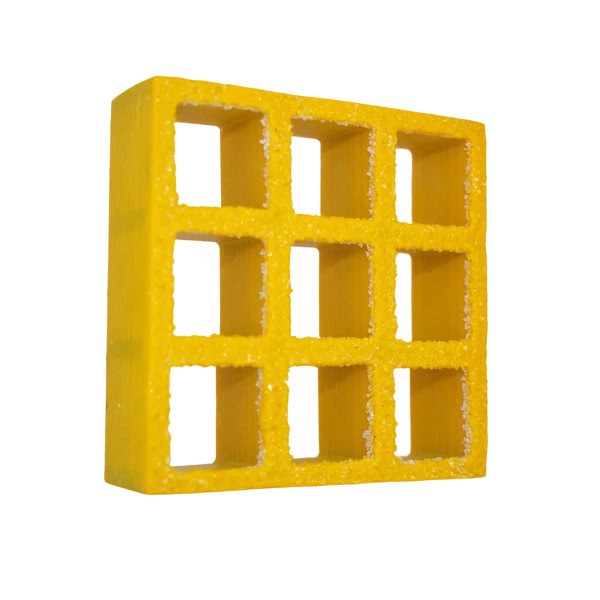
Molded FRP grating commonly uses square mesh and distributes loads in two directions. This makes it practical for platforms that require cuts around pipes, tanks or equipment.
Standard mesh may not be the best option where workers use narrow-wheeled carts or handle small tools above equipment.
Mini Mesh FRP Grating
Mini mesh uses smaller top openings to provide a more continuous walking surface. It can reduce the chance of small tools, debris or footwear passing through the panel.
FRP mini mesh grating is commonly considered for:
- Elevated walkways
- Stair treads
- Maintenance platforms
- Docks and marine access
- Drainage covers
- Small-wheeled carts
- Areas with falling-object concerns
Mingchi lists nominal mini-mesh options within a 19 × 19 mm to 38 × 38 mm range. The actual clear opening must still be checked because nominal spacing and usable aperture are not necessarily the same.
Benefits of Mini Mesh
- Better support for small wheels
- Improved protection against dropped objects
- More continuous surface for pedestrians
- Good drainage compared with a solid cover
- Suitable for complex molded-grating layouts
What Is Micro Mesh FRP Grating?
Micro mesh generally refers to an even smaller opening at the top surface. However, some manufacturers use “mini mesh” and “micro mesh” for similar products.
Micro mesh may be considered for:
- Public walkways
- Wheelchairs and small casters
- Pool and marina access
- Barefoot areas
- Locations with strict falling-object control
Do not choose it by name alone. Compare the clear opening, surface finish and product drawing.
Square vs Rectangular FRP Grating Mesh
Square Mesh
Square mesh is common in molded grating. Its geometry supports loads in two directions and allows flexible cutting around equipment.
It is often selected for platforms, walkways and drainage covers.
Rectangular Mesh
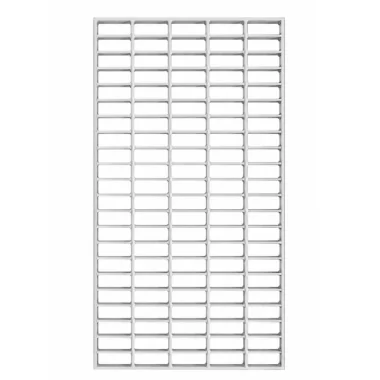
Rectangular mesh has a longer opening in one direction. It may suit trench covers, directional walkways or projects requiring a higher open area.
The orientation must match the support layout. For accessible walking surfaces in the United States, elongated openings may also need to run perpendicular to the main direction of travel.
How Mesh Size Affects Performance
Drainage and Airflow
Larger openings generally provide more open area for water, air and debris to pass through. Smaller openings offer more surface coverage but may reduce flow.
The exact difference depends on bar width and panel geometry.
Small Wheels and Foot Traffic
Small wheels can sink into or become caught in larger openings. Mini or micro mesh may provide a smoother path for carts, wheelchairs and similar traffic.
Wheel width and diameter should be checked before selection.
Falling-Object Protection
Smaller openings reduce the size of objects that can pass through the grating. This can be important above machinery, tanks, work areas or pedestrian routes.
However, no open grating can prevent every object from falling. The required opening should match the actual tools or materials used on the platform.
Capacité de charge
A smaller mesh does not automatically provide a higher safe load. Load performance also depends on:
- Panel depth
- Bar geometry
- Clear support span
- Load type
- Conditions de support
- Flèche admissible
Use the load table for the exact product. The FRP grating load capacity guide explains how thickness, span and deflection work together.
How to Choose the Right FRP Grating Mesh Size
Use the following table as a starting point, not as final engineering approval.
| Project condition | Mesh option to consider |
|---|---|
| General industrial walkway | Standard mesh |
| Strong drainage requirement | Standard mesh with verified open area |
| Small tools used above equipment | Mini or micro mesh |
| Narrow-wheeled carts | Smaller clear opening |
| Public accessible route | Verify opening and orientation requirements |
| Dock or barefoot area | Small opening with a suitable surface |
| High load or long span | Check product-specific load table |
| No open drainage required | Covered or solid-top grating |
The broader FRP grating application guide can help match grating types with industrial environments.
Molded or Pultruded Grating?
Most mini-mesh products use molded construction because it can form closely spaced openings and provide strength in two directions.
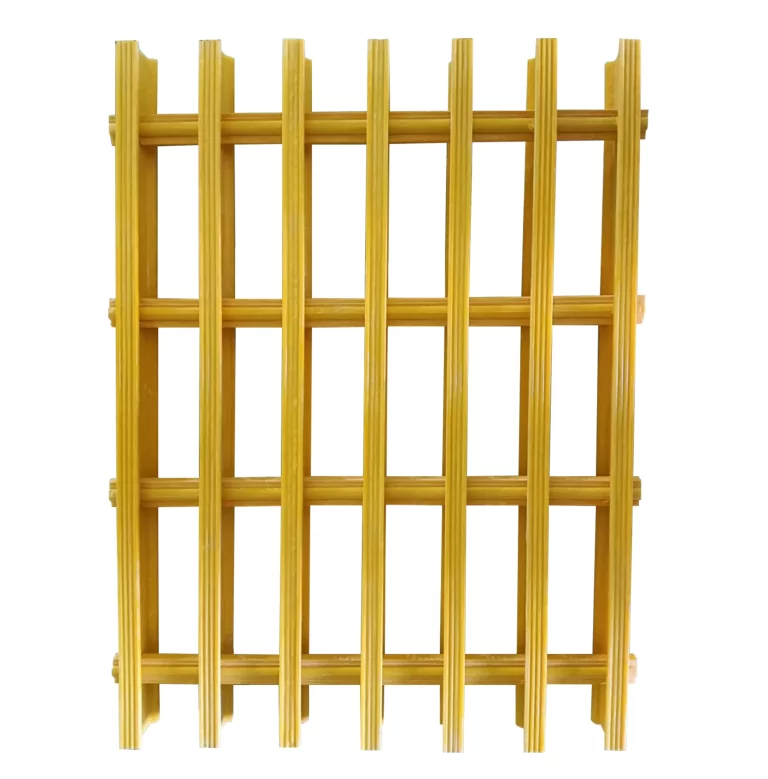
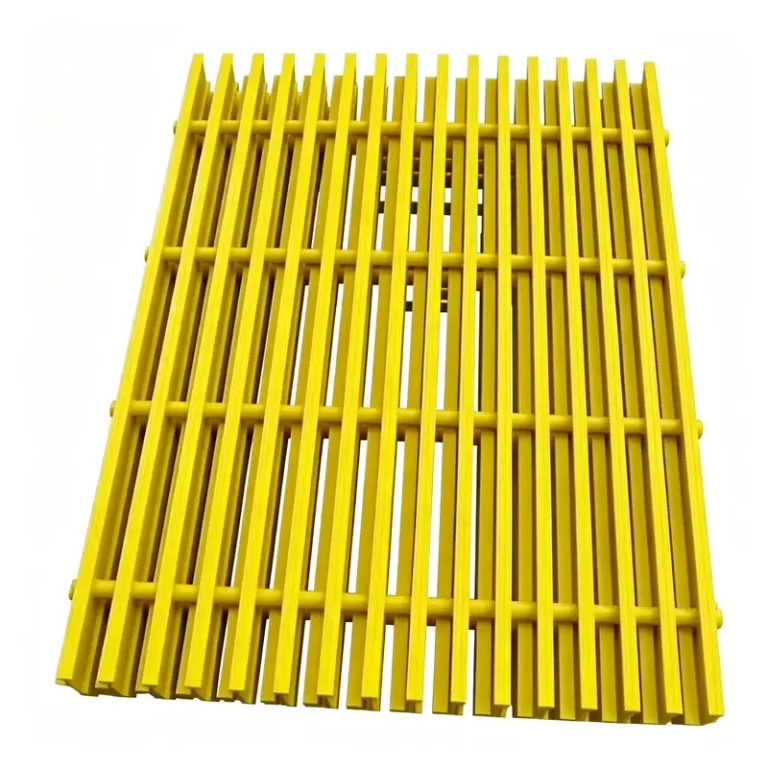
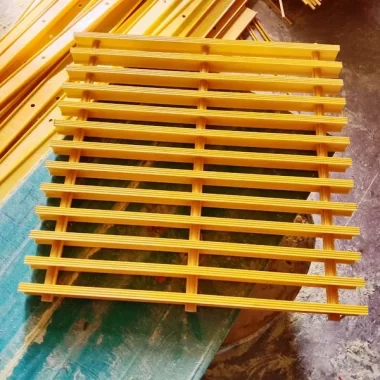
Pultruded grating uses parallel bearing bars and works differently. It is often selected when longer spans or greater directional stiffness matter.
Le molded vs pultruded FRP grating guide explains these structural differences in more detail.
Questions fréquentes
What is the difference between mesh size and clear opening?
Mesh size may describe center-to-center bar spacing. Clear opening is the actual space between the bars.
What is the difference between mini mesh and micro mesh?
Both describe small-opening grating, but the terms are not standardized across all manufacturers. Compare actual dimensions instead of relying only on the product name.
Is smaller mesh stronger?
Not necessarily. Mesh geometry can affect stiffness and weight, but load capacity also depends on panel depth, span, reinforcement and support conditions.
Which mesh is best for small wheels?
A smaller clear opening normally provides better support for small casters. Check the wheel width and diameter against the actual opening.
Does mini mesh reduce drainage?
It may have less open area than standard mesh. The actual effect depends on the complete grid geometry and should be checked using product data.
Is mini-mesh grating suitable for accessible routes?
It may meet the required opening size, but accessibility depends on the actual clear opening, opening orientation and complete installed route. Verify the applicable local requirements.
Which mesh is suitable for docks and barefoot areas?
Mini or micro mesh may provide better foot support. Surface finish also matters because coarse grit can be uncomfortable for bare feet.
Conclusion
The right FRP grating mesh size depends on traffic, wheel dimensions, falling-object risk, drainage, load and support span.
Do not compare products using “standard,” “mini” or “micro” alone. Check the nominal spacing, clear opening, panel depth and product-specific load data.
Send Mingchi FRP your required opening, panel size, load, span, traffic type and working environment. These details help identify a suitable standard, mini-mesh or custom grating solution.