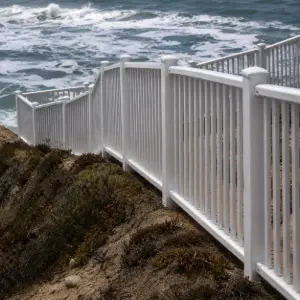
Pedestrian railing dimensions vary by standard and application. Common reference sizes include:
Standard / Application
Hauteur
UK Building Regulations (buildings)
1100 mm
UK HSE guidance (non-construction)
minimum 950 mm
UK Work at Height Regulations (construction)
minimum 950 mm
British Standard 6180 (internal stairs/landings)
minimum 900 mm
British Standard 6180 (external balconies/roof terraces)
minimum 1100 mm
OSHA (US general industry)
42 inches ± 3 inches (approx. 107 cm)
AASHTO (US bridges)
minimum 3 feet 6 inches (approx. 107 cm)
CHBDC (Canada bridges)
1050–1100 mm
Typical UK commercial pedestrian guardrail
1050 mm above ground
Please note: These are reference values only. The final dimensions must be determined based on the specific project’s applicable local building codes and standards.
What is the full form of FRP in safety?
FRP stands for Fiber Reinforced Polymer (or Fibre-Reinforced Polymer). In the context of safety products, FRP is a composite material made of a polymer resin matrix reinforced with fibers (typically glass, carbon, or aramid). It is also commonly referred to as fiberglass ou GRP (Glass Reinforced Polymer)
What is the full form of FRP railing?
FRP railing stands for Fiber Reinforced Polymer Railing. It is a railing system manufactured from FRP composite materials, often also called fiberglass reinforced plastic (FRP) pipe and tube railings
What are the four general types of guardrails?
The four general types of guardrails commonly referenced for roadside applications are:
Cable with wood posts
Steel with wood or metal posts (the most common is galvanized steel W-beam guardrail)
Steel box-beam
Concrete barriers (typically installed in medians)
Alternatively, guardrails can be categorized by their deflection characteristics upon impact:
Flexible (e.g., cable barriers)
Semi-rigid (e.g., W-beam guardrail)
Rigid (e.g., concrete or steel bridge barriers)
What is the classification of a guardrail?
Guardrails can be classified in several ways:
By deflection characteristics:
Flexible – e.g., cable barriers
Semi-rigid – e.g., W-beam guardrails
Rigid – e.g., concrete barriers
By structural type (e.g., Missouri DOT standard):
Type A – single W-beam rail
Type B – double W-beam rail (for medians)
Type D – single W-beam rail with wider post spacing
Type E – single thrie-beam rail
By protection class (temporary edge protection, DIN EN 13374):
Class A – for static loads (leaning, holding, running against)
Class B/C – for static and minor dynamic loads
What are a safe pedestrian barriers?
Safe pedestrian barriers are physical barriers installed along the edges of pedestrian facilities (walkways, bridges, platforms, etc.) to prevent falls and protect pedestrians from hazards. A safe pedestrian barrier typically must:
Be of sufficient height – generally not less than 1.10 m
Have adequate structural strength – capable of resisting specified loads (e.g., as per BS 6399)
Have appropriate spacing – gaps should not allow passage of a small child (e.g., no gap allowing passage of a 100 mm sphere in UK domestic settings)
Be made of durable, low-maintenance materials – such as FRP, which does not rust or rot
What are the current guardrail standards?
Current guardrail standards vary by region and application. Key standards include:
UK / Europe:
BS EN ISO 14122-3:2016 – Fixed guardrails for machinery access
BS 6180 – Barriers in and around buildings
BS EN 13374 – Temporary edge protection
BS 13700:2021 – Permanent weighted barrier systems
Work at Height Regulations 2005 – legal requirements for fall protection
US:
OSHA 29 CFR 1910.29 – General industry guardrail requirements
OSHA 29 CFR 1926.502 – Construction guardrail requirements
A standard guardrail (or standard railing) is a barrier system erected along unprotected or exposed sides of a walking/working surface to prevent falls.
A standard guardrail typically consists of:
A top rail – smooth-surfaced throughout
An intermediate rail (midrail) – located approximately midway between top rail and walking surface
Must withstand a force of at least 200 pounds applied at the top edge
In the UK context, a standard guardrail must comply with relevant height and spacing requirements (see Q9 above), typically featuring a top rail at 1100 mm (buildings) or 950 mm (construction) with intermediate rails spaced to prevent falls
Excellentes propriétés du produit
Résistant à la corrosion
Conçu avec des matériaux PRF de qualité supérieure pour résister à l'humidité, aux produits chimiques et aux environnements extérieurs rigoureux avec une durabilité longue durée.
Haute capacité de charge
Conçu avec une résistance structurelle renforcée pour supporter des charges lourdes tout en conservant stabilité et performance dans le temps.
Surface antidérapante
La finition antidérapante texturée renforce la sécurité en offrant une traction fiable dans des environnements humides, huileux ou à fort trafic.
Installation facile
La conception légère et modulaire permet une installation rapide, réduisant le temps de main‑d’œuvre et les coûts de maintenance.
Applications
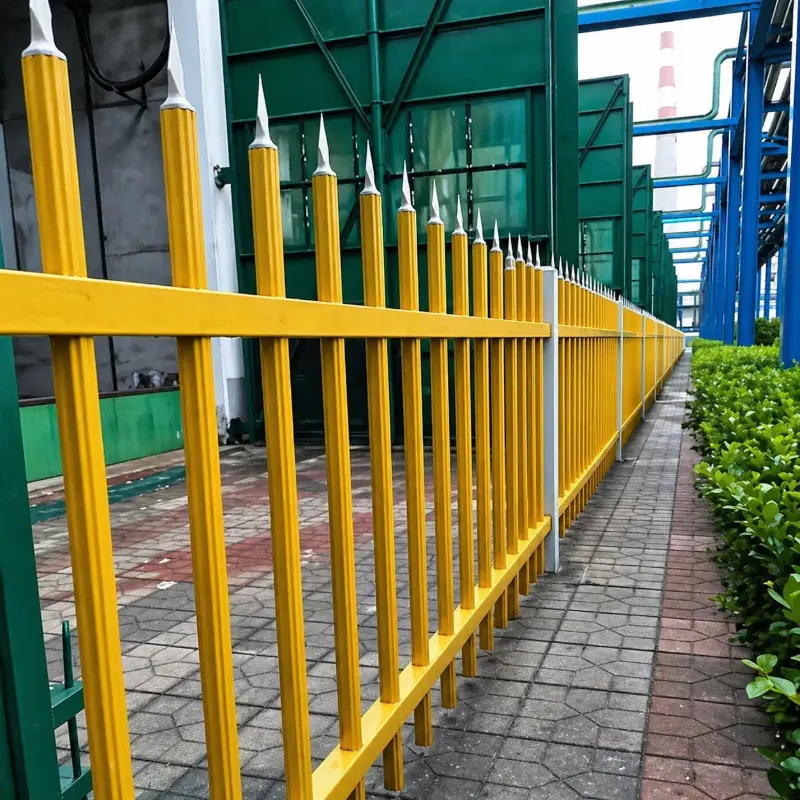
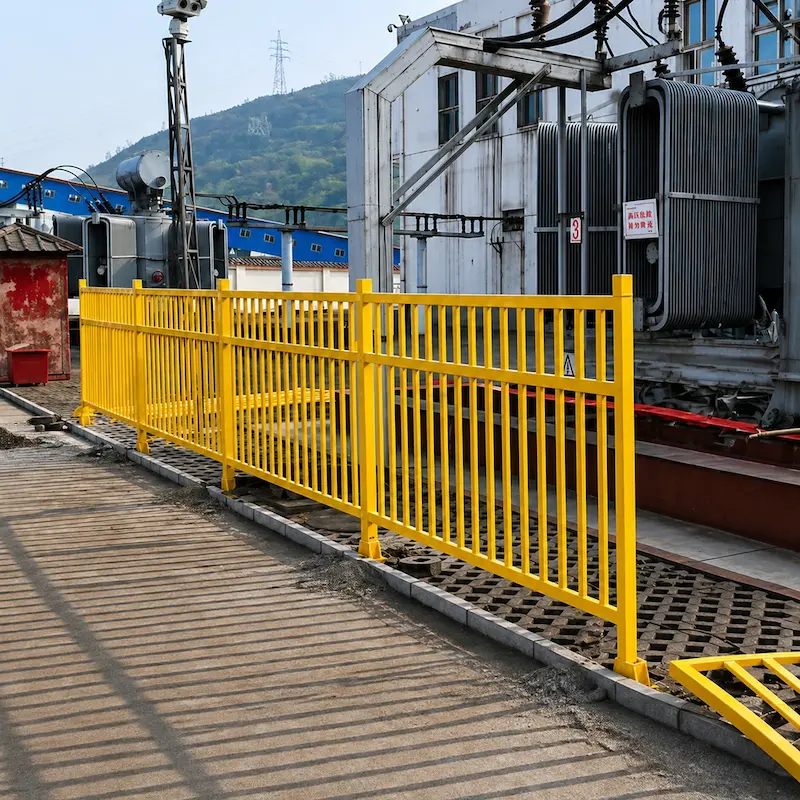
Clôture de sécurité pour équipements électriques
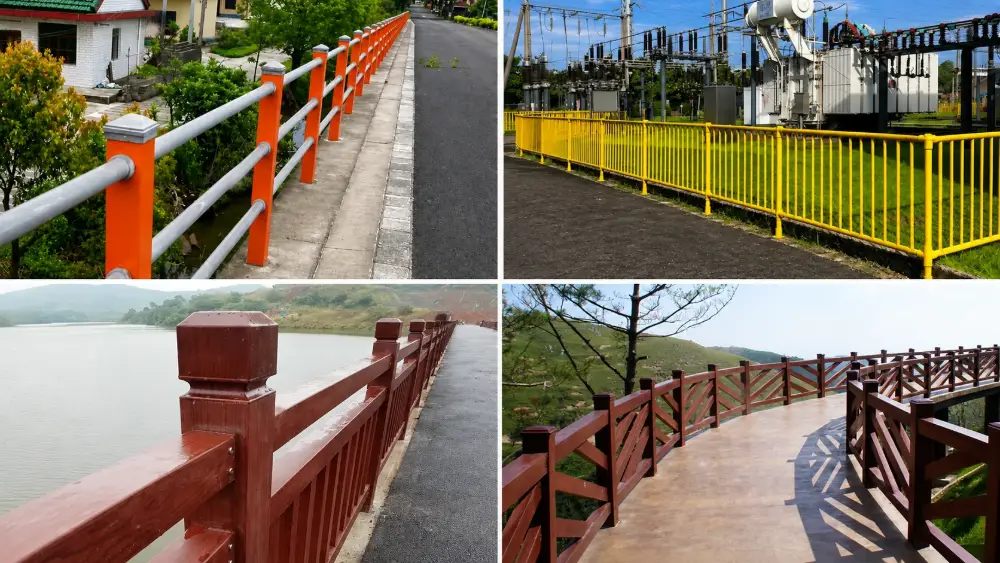
Coastal Guardrail
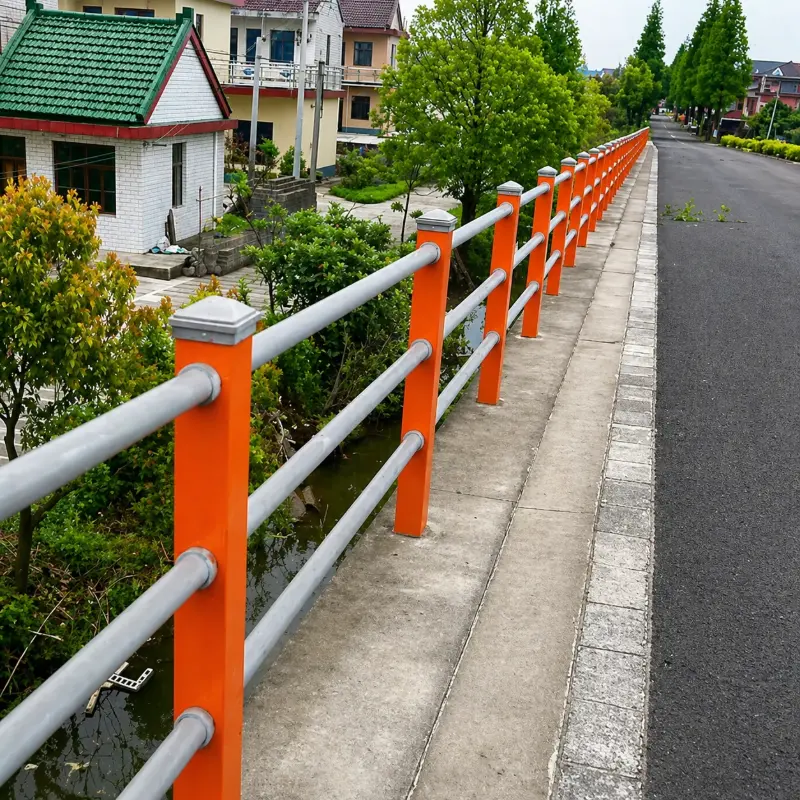
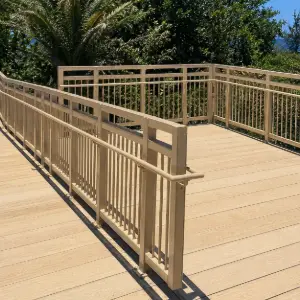
Garde-corps PRFV pour la sécurité des piétons
Clôture de protection en PRFV pour champ pétrolier
Garde-corps PRFV pour voiries municipales
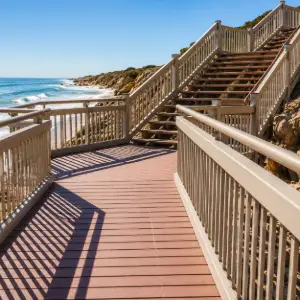
Coastal Walkway Guardrail
Seaside Deck Guardrail
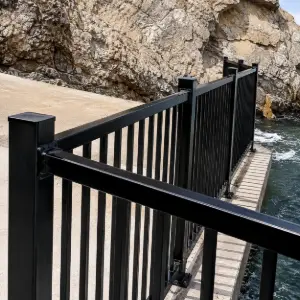
Coastal Cliff Guardrail
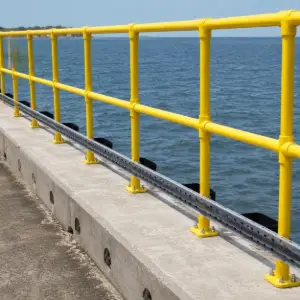
Pier Safety Guardrail
Seaside Guardrail
Pourquoi nous choisir ?
Durabilité sans corrosion
Solutions FRP durables pour des environnements industriels difficiles.
Fabrication sur mesure
Grilles et profils sur mesure adaptés aux besoins de votre projet.
Installation facile et rapide
Conception légère réduisant le temps et les coûts d'installation.
Exportateur mondial de confiance
Chaîne d'approvisionnement fiable et support client dédié.
Nos certifications
Trusted FRP Profiles Manufacturer
Nous sommes un fabricant professionnel doté d’équipements de production avancés. lignes de production, contrôle qualité strict et riche expérience d’exportation.
15000+
Superficie de l'usine
20+
Lignes de production
20+
Pays d'exportation
20+
Années d'expérience
Obtenez dès maintenant le prix des caillebotis en PRF
Retour en haut
✓
Thank You for Your Inquiry!
We have successfully received your inquiry.
Our team will review your request carefully and respond as soon as possible.
If your project is urgent, please contact us directly by email or WhatsApp.