
FRP grating works well for walkways, platforms, trench covers, stair treads, and floors. It is light, corrosion-resistant, non-conductive, and easy to install.
Molded FRP grating is strong in both directions, while pultruded FRP grating is stronger in one direction and can cover longer spans.
This guide explains the key differences between molded and pultruded FRP grating to help you choose the right type.
What Is Molded FRP Grating?
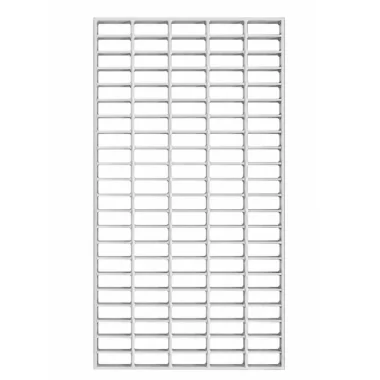
Molded FRP grating is made by placing fiberglass in different directions inside a mold. Resin is added and cured to form a solid grid panel.
Its square mesh supports loads from both directions. The high resin content also provides good corrosion and impact resistance.
Les applications courantes incluent :
- Chemical processing areas
- Wastewater treatment plants
- Trench and drainage covers
- Industrial walkways
- Tank access platforms
- Marine and coastal facilities
What Is Pultruded FRP Grating?
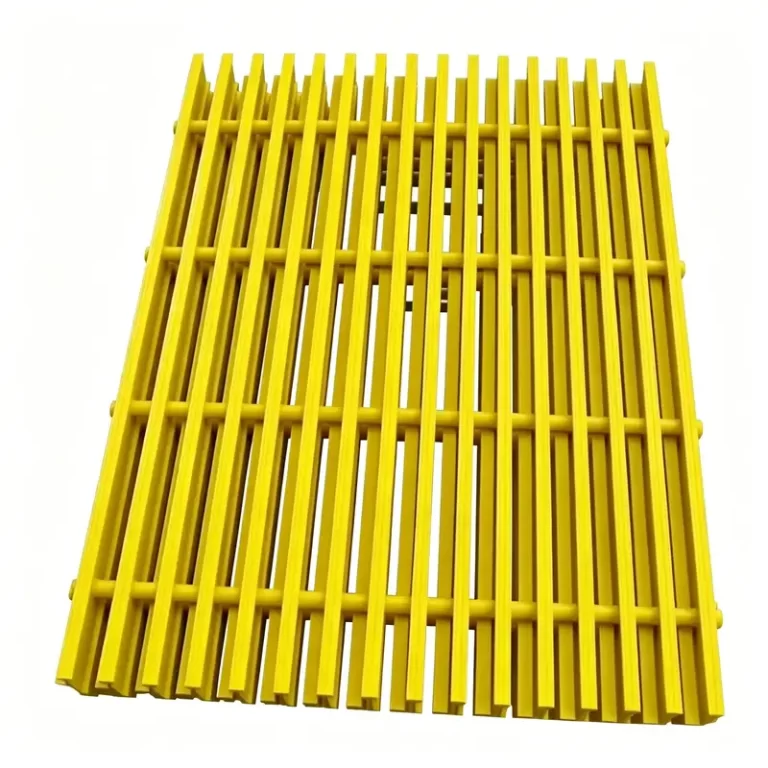
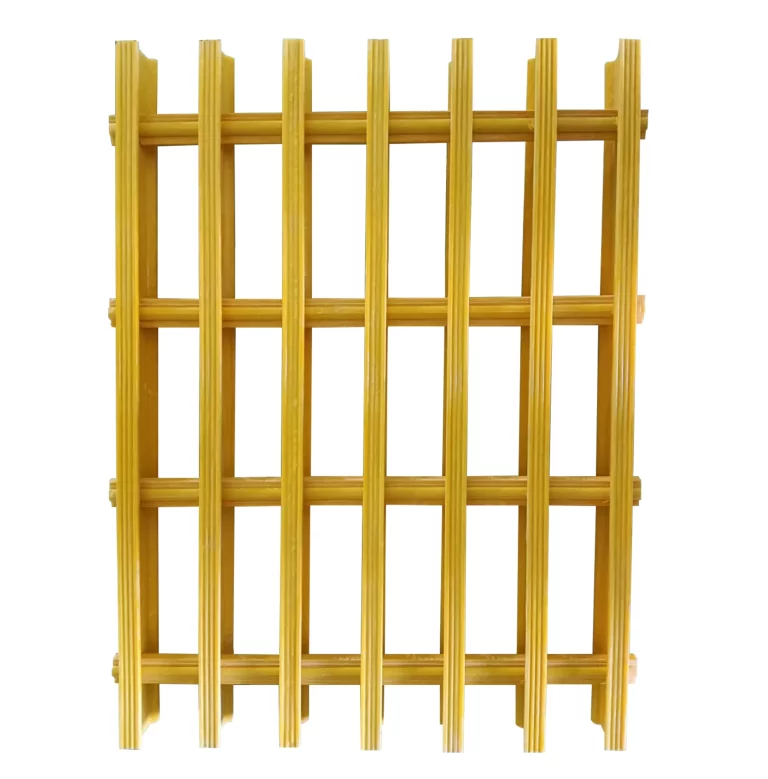
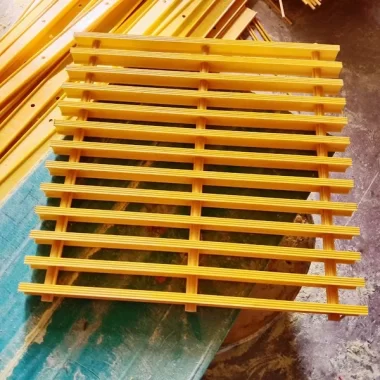
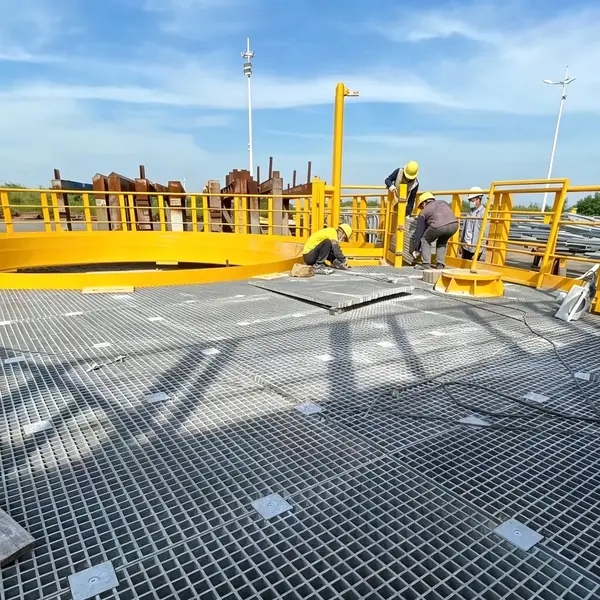
Pultruded FRP grating is made from strong fiberglass bearing bars joined by cross rods. The bearing bars carry most of the load.
This design provides greater strength in one direction. It is a good choice for heavy loads and longer spans.
Typical applications include:
- Long-span industrial walkways
- Heavy-load access platforms
- Elevated maintenance platforms
- Bridge and infrastructure walkways
- High-traffic industrial flooring
- Applications replacing steel bar grating
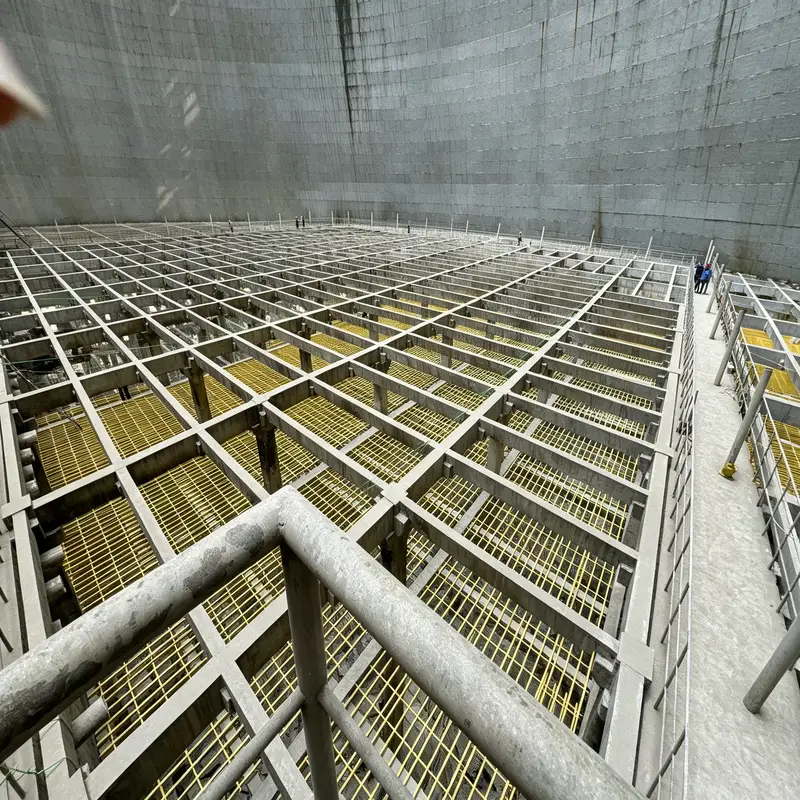
The grating must be installed with the bearing bars spanning between the structural supports.
Molded vs Pultruded FRP Grating: Key Differences
| Comparison | Molded FRP Grating | Pultruded FRP Grating |
|---|---|---|
| Manufacturing | Formed as a one-piece molded panel | Assembled from pultruded bearing bars |
| Strength direction | Bidirectional | Mainly unidirectional |
| Fiberglass content | Generally lower | Generally higher |
| Resin content | Generally higher | Generally lower |
| Span capability | Suitable for short to moderate spans | Better for longer spans |
| Corrosion resistance | Excellent | Excellent, depending on resin |
| Impact resistance | Strong | Strong but more directional |
| Panel cutting | Flexible around openings | Must consider bearing-bar direction |
| Capacité de charge | Suitable for common pedestrian and industrial loads | Suitable for higher loads and longer spans |
| Typical cost | Usually more economical | Generally higher |
| Best use | Corrosive areas and complex layouts | Structural platforms and long-span applications |
Strength and Load Direction
The most important difference is how each type carries a load.
The square mesh construction of molded FRP grating distributes loads in two directions. This provides flexibility when the panel requires openings, irregular cuts or support on several sides.
Pultruded FRP grating is strongest along the bearing bars. It is less strong across the cross rods.
Check the bearing bar direction before cutting or installation. Installing the grating in the wrong direction can greatly reduce its load capacity.
The final selection should always consider:
- Uniform distributed load
- Concentrated or point load
- Clear support span
- Maximum permitted deflection
- Pedestrian, equipment or vehicle traffic
- Required safety factor
Corrosion Resistance and Resin Selection
Both molded et pultruded FRP grating resist moisture, saltwater, and many industrial chemicals. The level of corrosion resistance mainly depends on the resin type.
Common resin options include:
- Polyester resin: Suitable for general industrial and outdoor environments.
- Vinyl ester resin: Recommended for stronger acids, alkalis and highly corrosive chemical environments.
- Phenolic resin: Used where stricter flame, smoke and fire-performance requirements apply.
Molded FRP grating is a good choice for chemical plants and wastewater facilities. Its high resin content provides strong protection in harsh conditions.
Pultruded FRP grating also offers good chemical resistance. The resin must suit the chemical, concentration, and working temperature.
Surface and Mesh Options
Both types are available with different surfaces and openings.
Common surface options include:
- Gritted surface for strong slip resistance
- Concave surface for general industrial walkways
- Smooth surface for low-slip-risk areas
- Covered top for controlled drainage or odor containment
Molded FRP grating comes in square mesh, rectangular mesh, and mini-mesh designs. Mini-mesh has smaller openings for safer walking and support for small objects.
Pultruded FRP grating uses parallel I-shaped or T-shaped bearing bars. Bar spacing and panel depth can be adjusted for different loads and spans.
When to Choose Molded FRP Grating
Choose molded FRP grating when your project requires:
- Excellent resistance to chemicals or saltwater
- Strength in two directions
- Multiple cutouts around pipes and equipment
- Short or moderate support spans
- Economical industrial walkway flooring
- Trench covers or drainage systems
- Mini-mesh or small-opening panels
Molded FRP grating is a good fit for chemical plants, wastewater sites, marine areas, and complex platform layouts.
When to Choose Pultruded FRP Grating
Choose pultruded FRP grating when your project requires:
- Higher directional strength and stiffness
- Longer distances between structural supports
- Heavy-duty industrial platforms
- Frequent pedestrian or equipment traffic
- Replacement of steel bar grating
- Reduced deflection under service loads
- A high strength-to-weight ratio
Pultruded FRP grating suits structural platforms that need longer spans and higher load capacity.
How to Choose the Right FRP Grating
Before requesting a quotation, provide the supplier with the following project information:
- Application and operating environment
- Required panel size and thickness
- Clear distance between supports
- Expected uniform and concentrated loads
- Chemical exposure and temperature
- Preferred mesh and surface type
- Required fire-retardant performance
- Quantity and custom cutting requirements
Do not choose FRP grating by thickness or price alone. Thicker molded grating is not always better, and pultruded grating is not needed for every walkway.
Consider the load, span, corrosion resistance, surface safety, and budget before choosing.
Questions fréquentes
Is molded or pultruded FRP grating stronger?
Pultruded grating normally provides higher strength and stiffness in the bearing-bar direction. Molded grating provides more balanced strength in two directions. The right choice depends on the load direction and support layout.
Which FRP grating is better for chemical plants?
Molded vinyl ester grating suits highly corrosive chemical areas. Choose the resin based on the chemical, concentration, and working temperature.
Which grating is better for long spans?
Pultruded FRP grating is better for longer spans because its bearing bars provide greater strength in one direction.
Can FRP grating replace steel grating?
The right Caillebotis FRP can replace steel in many walkways, platforms, and trench covers. It is a good choice when corrosion, electrical safety, weight, or maintenance matters.
What information is needed to select FRP grating?
Send us your application, span, load, panel size, surface, and mesh size. Also include any chemical, temperature, or fire requirements.
Conclusion
There is no universal winner in the molded vs pultruded FRP grating comparison.
Molded FRP grating suits corrosive areas, complex layouts, and loads from different directions. Pultruded FRP grating suits longer spans, heavier loads, and structural platforms.
Mingchi FRP supplies both molded FRP grating et pultruded FRP grating for industrial projects.
Send us your span, load, panel size, and working conditions. We will recommend the right Caillebotis FRP and provide a quotation.