
Fiberglass tubes are one of the most widely used pultruded fiberglass profiles in modern industries. From chemical plants and construction projects to electrical systems and marine engineering, fiberglass tubes offer a lightweight, corrosion-resistant, and long-lasting alternative to traditional steel, aluminum, and wood materials.
As industries continue to demand materials with better durability and lower maintenance costs, fiberglass reinforced plastic (FRP) tubes are gaining popularity across global markets. In this guide, we’ll explore the different types of fiberglass tubes, their industrial applications, and the key advantages that make them the preferred choice for harsh environments.
What Is a Fiberglass Tube?
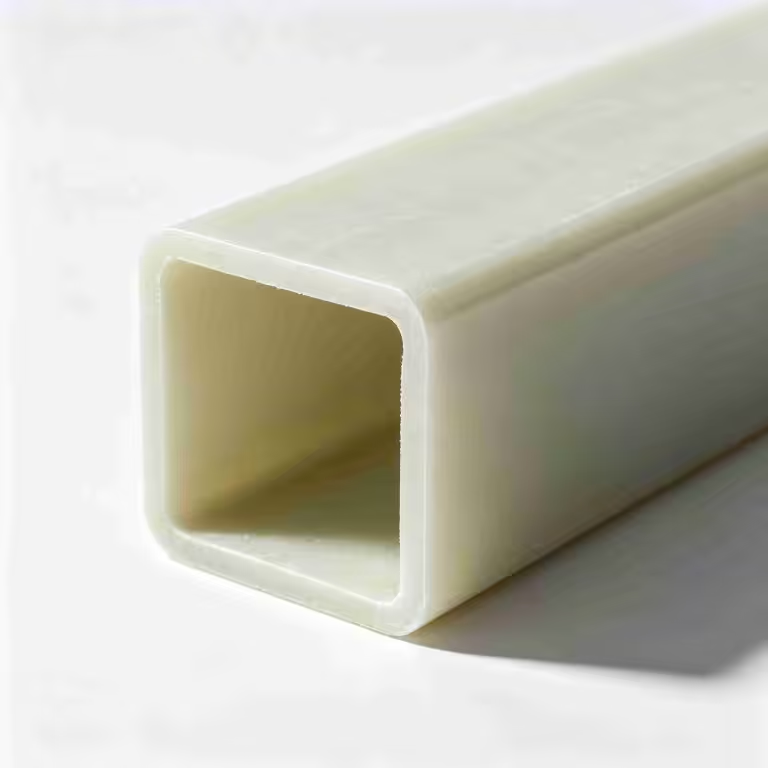
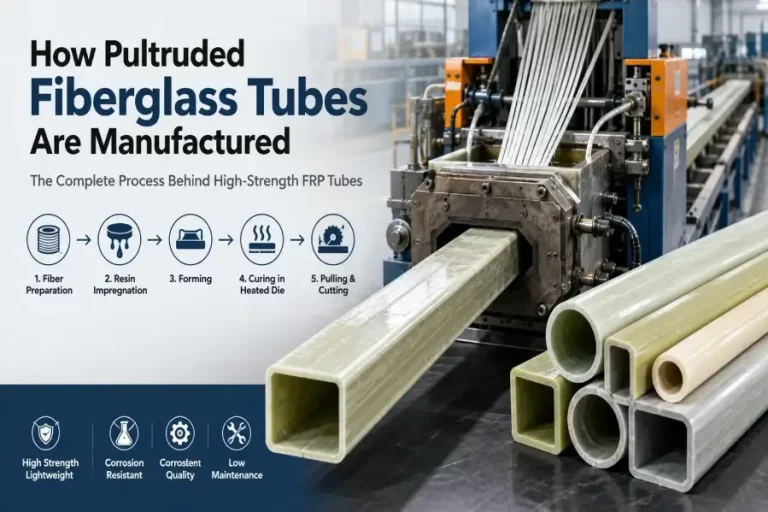
A fiberglass tube is a composite structural profile made from glass fiber reinforcements combined with thermosetting resins such as polyester, vinyl ester, or epoxy resin. These tubes are commonly manufactured using the pultrusion process, which produces strong, lightweight, and dimensionally stable profiles.
Compared with traditional metal tubes, fiberglass tubes provide:
- Excellente résistance à la corrosion
- High strength-to-weight ratio
- Isolation électrique
- UV and weather resistance
- Faible entretien
- Longue durée de vie
Because of these advantages, fiberglass tubes are widely used in industries where moisture, chemicals, saltwater, or electrical conductivity create problems for conventional materials.
Main Types of Fiberglass Tubes
Different industrial projects require different tube shapes and performance characteristics. Below are the most common fiberglass tube types used in industrial applications.
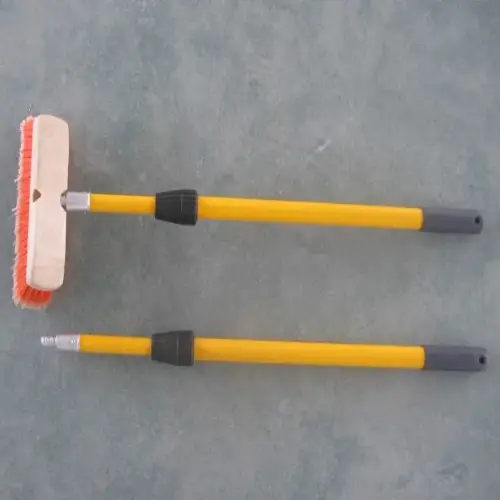
Round Fiberglass Tube
Round fiberglass tubes are the most common type and are widely used for:
- Structural supports
- Handrails
- Tool handles
- Electrical insulation systems
- Marine frameworks

Their circular design provides balanced strength and excellent load distribution.
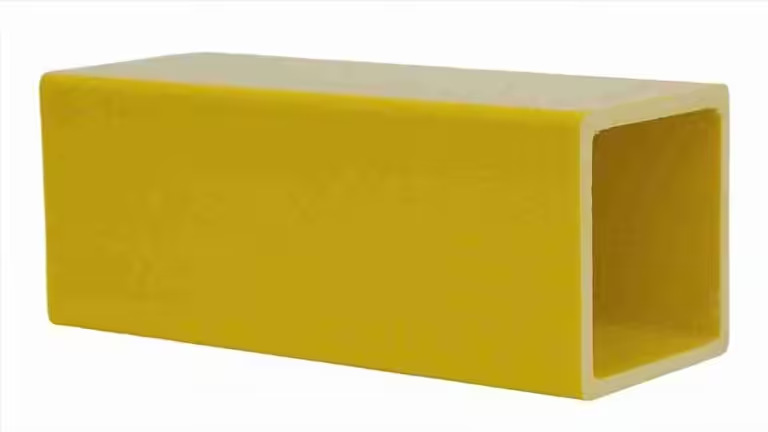
Square Fiberglass Tube
Fiberglass square tubes offer excellent rigidity and are ideal for:
- Plates‑formes industrielles
- Châssis d'équipements
- Construction structures
- Walkway supports
- Machine guarding systems

The flat surfaces make installation easier when joining with brackets and connectors.
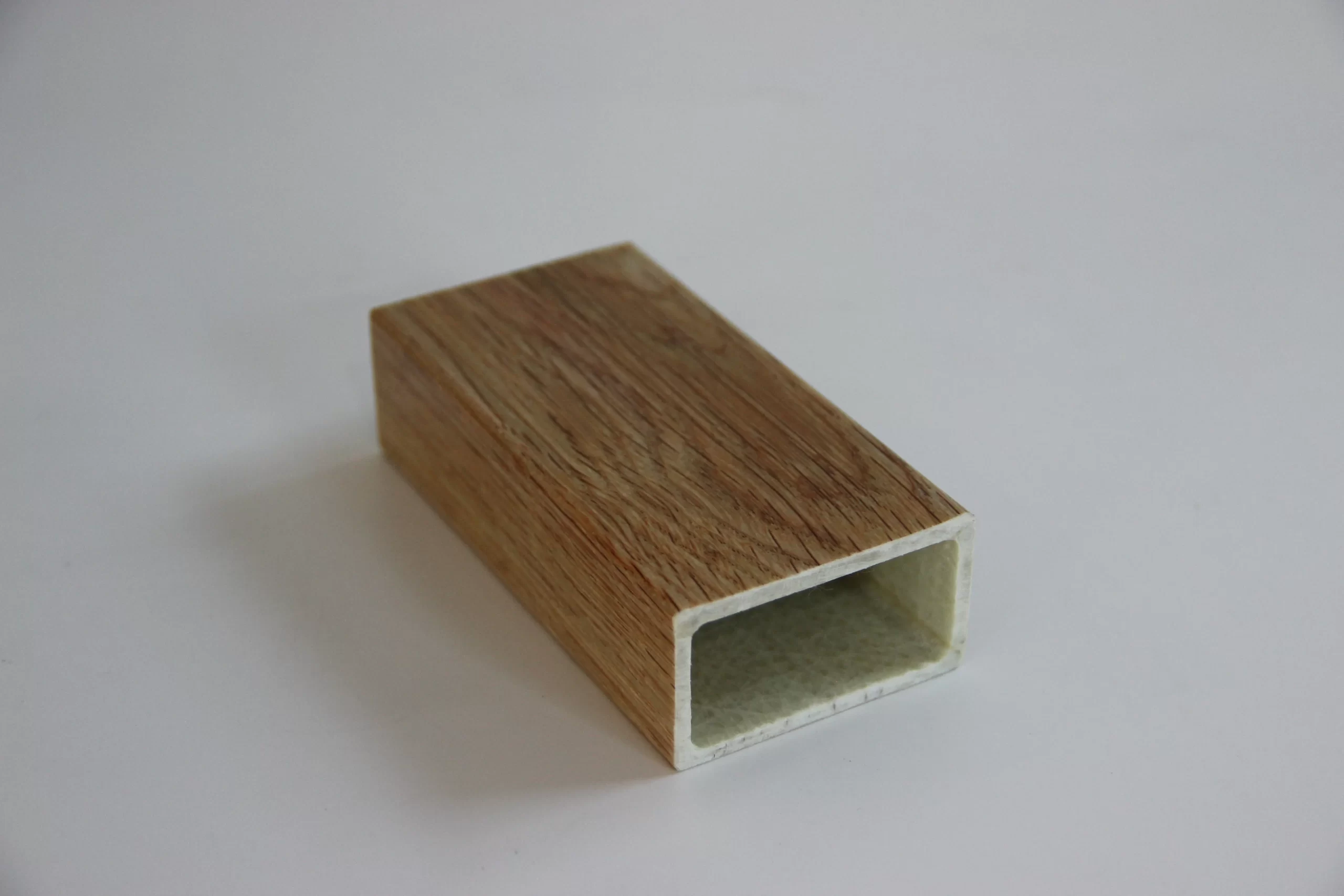
Rectangular Fiberglass Tube
Rectangular fiberglass tubes are commonly used when higher directional strength is needed. These tubes are often selected for:
- Bridge components
- Ladder rails
- Structural beams
- Transportation infrastructure
- Heavy-duty industrial supports

Their design provides improved bending resistance along one axis.
Industrial Applications of Fiberglass Tubes
Fiberglass tubes are used across many industries because they perform well in environments where steel and aluminum often fail.
Chemical Processing Industry
Chemical plants frequently use fiberglass tubes due to their excellent resistance to acids, alkalis, and corrosive chemicals. Common applications include:
- Pipe support systems
- Structures résistantes à la corrosion
- Chemical storage facilities
- Cooling tower frameworks
Unlike steel, fiberglass does not rust or corrode when exposed to aggressive chemicals.
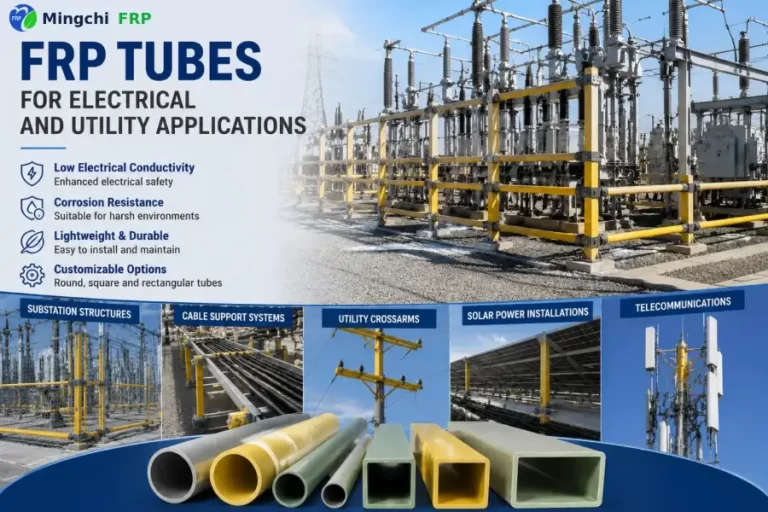
Electrical & Utility Industry
Because fiberglass is non-conductive, it is widely used in electrical applications such as:
- Cable management systems
- Supports de transformateurs
- Insulated structural components
- Utility poles
- Electrical ladders and handrails
This makes fiberglass tubes safer than metal alternatives in high-voltage environments.
Marine & Offshore Applications
Saltwater environments rapidly corrode traditional metals. Fiberglass tubes are commonly used in:
- Dock structures
- Marine walkways
- Offshore platforms
- Boat components
- Coastal infrastructure
Their resistance to moisture and salt exposure significantly extends service life.
Bâtiment et infrastructures
Modern construction projects increasingly use fiberglass structural tubes because they are lightweight and easy to install. Applications include:
- Pedestrian bridges
- Safety railings
- Roofing supports
- Modular structures
- Industrial access platforms
The reduced weight lowers transportation and installation costs.
Key Benefits of Fiberglass Tubes
1. Superior Corrosion Resistance
One of the biggest advantages of fiberglass tubes is their resistance to corrosion. Unlike steel, fiberglass does not rust, rot, or degrade in wet or chemical-heavy environments.
This makes FRP tubing ideal for outdoor and industrial applications.
2. Lightweight but Strong
Fiberglass tubes are significantly lighter than steel while still providing excellent structural strength. This allows:
- Easier transportation
- Faster installation
- Lower labor costs
- Reduced structural load
The high strength-to-weight ratio is a major reason industries switch from metal to FRP.
3. Electrical Insulation
Fiberglass materials are naturally non-conductive, making them suitable for electrical safety applications.
This property reduces the risk of electrical accidents in utility and power industries.
4. Low Maintenance Costs
Fiberglass tubes require minimal maintenance compared to steel or wood structures. They do not need:
- Rust protection
- Frequent repainting
- Anti-corrosion coatings
- Intensive repairs
Over time, this significantly reduces operational costs.
5. Long Service Life
With proper resin selection and manufacturing quality, fiberglass tubes can last for decades even in harsh industrial environments.
Their resistance to UV exposure, chemicals, and moisture ensures long-term performance.
Fiberglass Tube vs Steel Tube
| Caractéristique | Tube en fibre de verre | Steel Tube |
|---|---|---|
| Résistance à la corrosion | Excellent | Poor in harsh environments |
| Poids | Lightweight | Lourd |
| Electrical Conductivity | Non-conductive | Conductive |
| Maintenance | Faible | Élevé |
| Installation | Easy | More difficult |
| Lifespan | Long | Can rust over time |
How to Choose the Right Fiberglass Tube
When selecting fiberglass tubes for industrial projects, consider the following factors:
Type de résine
- Polyester resin for general applications
- Vinyl ester resin for high corrosion resistance
- Epoxy resin for high mechanical performance
Structural Load
Choose wall thickness and tube dimensions based on load-bearing requirements.
Environmental Conditions
Prendre en compte :
- UV exposure
- Chemical contact
- Moisture levels
- Temperature range
Manufacturing Quality
High-quality pultruded fiberglass tubes offer better consistency, strength, and durability.
Why More Industries Are Switching to FRP Tubes
As industries focus more on long-term performance and reduced maintenance costs, FRP structural materials continue replacing traditional metals in many applications.
Fiberglass tubes help companies:
- Reduce downtime
- Improve safety
- Lower lifecycle costs
- Increase corrosion resistance
- Simplify installation
These benefits make fiberglass tubing a practical investment for modern industrial infrastructure.
Conclusion
Fiberglass tubes have become an essential material in industrial construction, marine engineering, chemical processing, and electrical infrastructure. Their combination of corrosion resistance, lightweight strength, electrical insulation, and low maintenance makes them an ideal replacement for traditional metal tubing.
Whether you need round, square, or rectangular fiberglass tubes, choosing high-quality FRP profiles can significantly improve the durability and efficiency of your project.
For industrial-grade pultruded fiberglass tubes and custom FRP structural solutions, companies like Mingchi FRP provide a wide range of corrosion-resistant fiberglass products designed for demanding industrial environments.