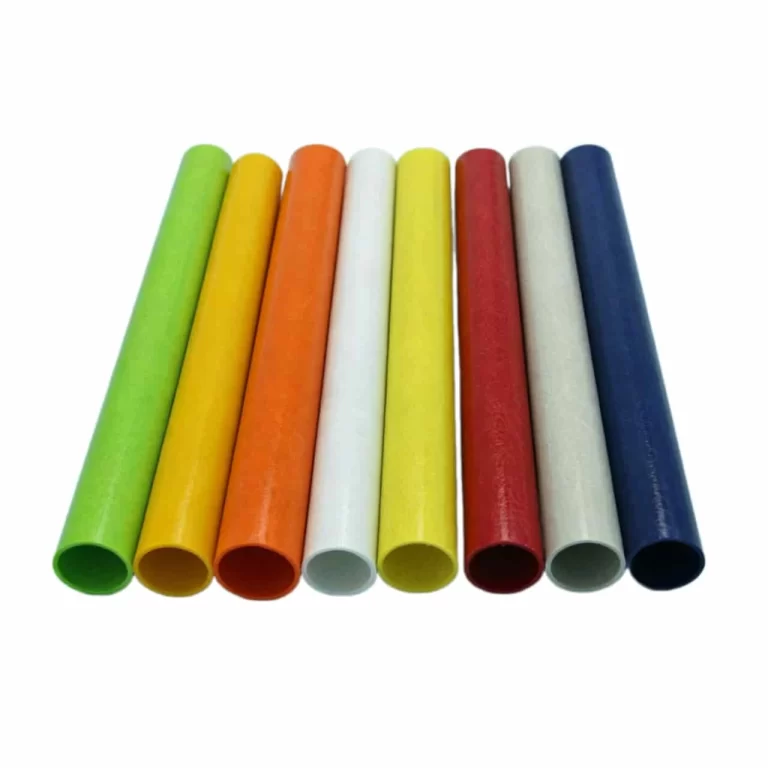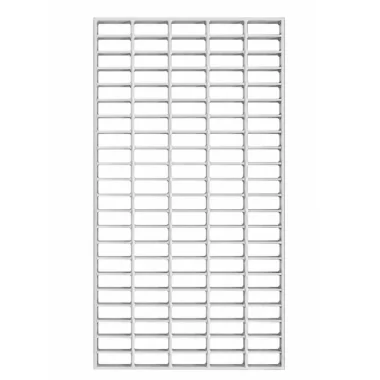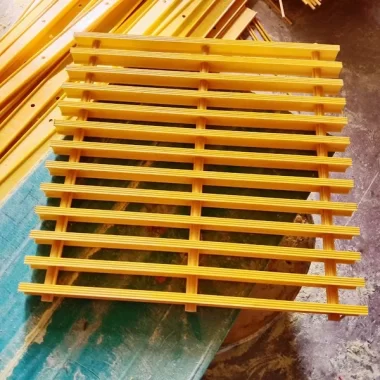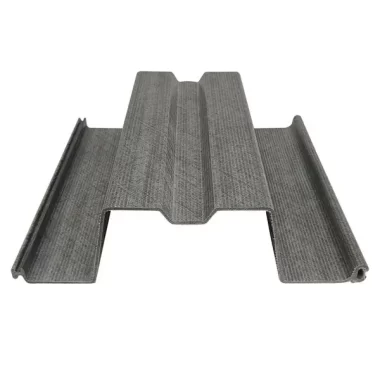

Fiber Reinforced Plastic (FRP) products are widely used in industrial structures, chemical processing systems, wastewater facilities and infrastructure projects because of their corrosion resistance, lightweight structure and long service life. However, one of the most important factors affecting FRP performance is resin content.
The balance between fiberglass reinforcement and resin directly influences strength, durability, corrosion resistance and long-term stability. Whether for FRP profiles, fiberglass pipes, gratings or structural components, understanding the ideal FRP resin ratio helps engineers and buyers choose the right material for different environments.
This guide explains FRP resin content, fiber-to-resin ratio, typical percentage ranges and how resin levels affect industrial applications.
What Is FRP Resin Content?
FRP resin content refers to the percentage of resin contained within a fiberglass composite product. In FRP manufacturing, resin acts as the binding matrix that surrounds fiberglass reinforcements and protects the structure from environmental exposure.
The resin system commonly includes:
- Polyester resin
- Vinyl ester resin
- Epoxy resin
- Phenolic resin
Fiberglass reinforcement provides mechanical strength, while resin contributes to:
- Corrosion resistance
- Moisture protection
- Chemical durability
- Surface protection
- UV resistance
The balance between fiberglass and resin is critical for achieving stable structural performance.
Why FRP Resin Ratio Matters
The fiber-to-resin ratio significantly affects the physical and chemical properties of FRP products.
Higher Resin Content Benefits
Higher resin content generally improves:
- Corrosion resistance
- Water resistance
- Chemical protection
- UV durability
- Surface smoothness
This is especially important in:
- Chemical plants
- Wastewater treatment systems
- Marine environments
- Cooling towers
However, excessive resin may reduce structural strength and stiffness.
Higher Fiber Content Benefits
Higher fiberglass reinforcement improves:
- Résistance à la traction
- Résistance à la flexion
- Capacité de charge
- Structural rigidity
This is commonly required for:
- Structural FRP beams
- Pultruded profiles
- Plates‑formes industrielles
- Bridge components
Too little resin, however, can create dry fibers, weak bonding and premature cracking.
Typical FRP Resin Content Percentage
Different FRP products require different resin content levels depending on application requirements.
| FRP Product | Typical Resin Content |
|---|---|
| Pultruded FRP Profiles | 25–35% |
| Molded FRP Grating | 35–45% |
| FRP Pipes | 30–40% |
| FRP Chemical Tanks | 60–70% liner layer |
| FRP Handrails | 30–40% |
| Structural FRP Beams | 25–35% |
These ranges may vary based on resin type, manufacturing method and engineering requirements.
How Resin Content Affects FRP Performance
Résistance à la corrosion
Resin acts as the protective barrier against chemicals, moisture and environmental exposure.
Higher resin-rich surfaces help improve resistance to:
- Acid exposure
- Saltwater corrosion
- Chemical splashes
- Moisture penetration
Vinyl ester resin is commonly used for highly corrosive environments due to its superior chemical resistance.
Mechanical Strength
Fiberglass reinforcement primarily determines the structural strength of FRP products.
An optimized glass-to-resin ratio improves:
- Impact resistance
- Résistance à la traction
- Compression strength
- Stabilité structurelle
Excessive resin can make FRP more brittle under heavy loads.
Water Absorption
Insufficient resin content may leave exposed fibers and voids inside the composite structure, increasing the risk of:
- Moisture absorption
- Delamination
- Osmotic blistering
- Surface degradation
Proper resin saturation helps extend product lifespan in outdoor and wet environments.
Surface Durability
Resin-rich outer layers improve:
- UV resistance
- Color stability
- Surface smoothness
- Weather resistance
This is particularly important for outdoor infrastructure applications.
FRP Manufacturing and Resin Control
Resin content is carefully controlled during the manufacturing process to ensure consistent product quality.
Pultrusion Process
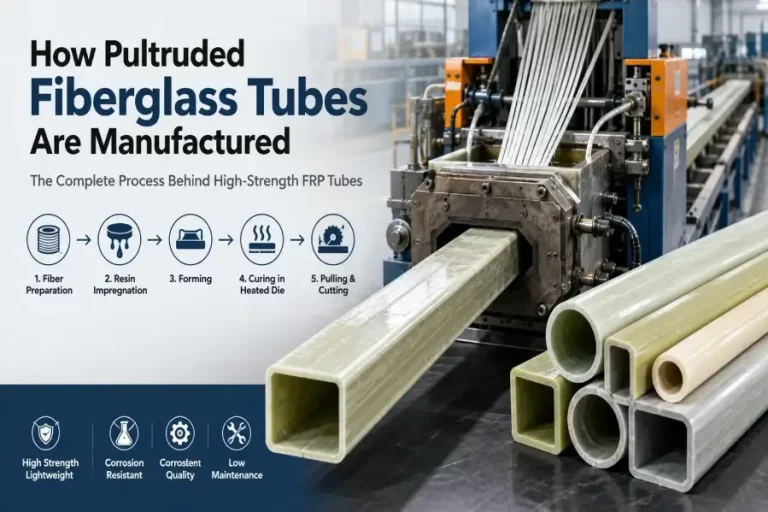
In pultruded FRP profiles, fiberglass reinforcements are pulled through a resin bath before entering a heated die for curing.
Key production factors affecting resin ratio include:
- Resin viscosity
- Fiber wet-out quality
- Pulling speed
- Curing temperature
- Reinforcement density
A balanced resin system ensures both structural performance and corrosion protection.
Molded FRP Manufacturing
Molded FRP products such as gratings typically contain slightly higher resin levels to improve:
- Surface protection
- Résistance chimique
- Anti-slip durability
This makes molded FRP suitable for aggressive industrial environments.
Common Resin Types Used in FRP
Polyester Resin
Widely used for general industrial applications because of its cost efficiency and good mechanical performance.
Applications include:
- FRP panels
- Cable trays
- General structural profiles
Vinyl Ester Resin
Offers superior chemical and corrosion resistance.
Commonly used in:
- Chemical plants
- Marine structures
- Wastewater treatment facilities
- Desulfurization systems
Epoxy Resin
Provides high bonding strength and excellent fatigue resistance.
Typically used for:
- High-performance structural applications
- Aerospace components
- Specialized industrial systems
FRP Resin Content in Different Applications
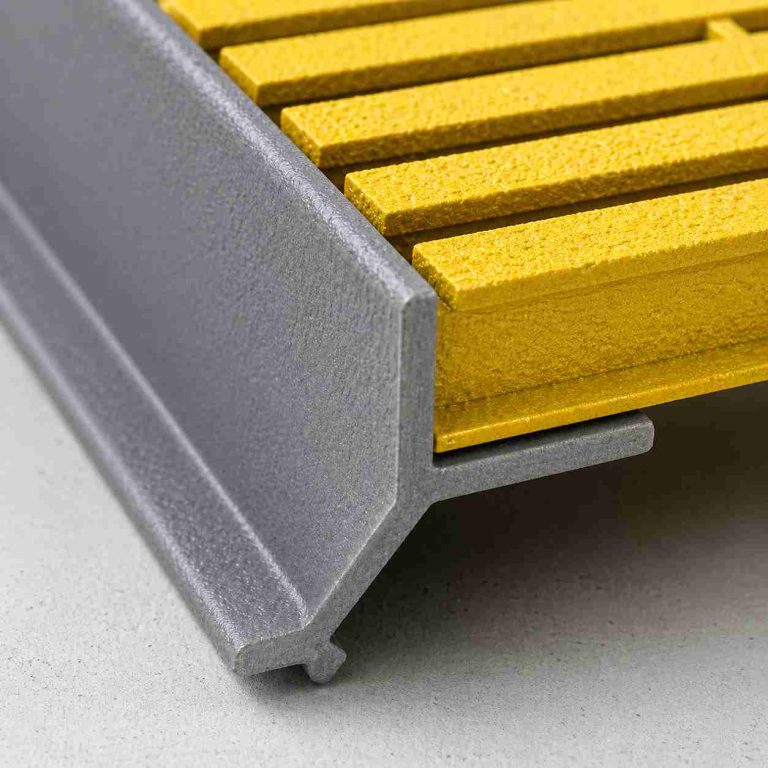
Grille FRP
Molded FRP gratings usually contain higher resin-rich surface layers to improve:
- Slip resistance
- Chemical protection
- UV durability
This makes them ideal for chemical walkways and offshore platforms
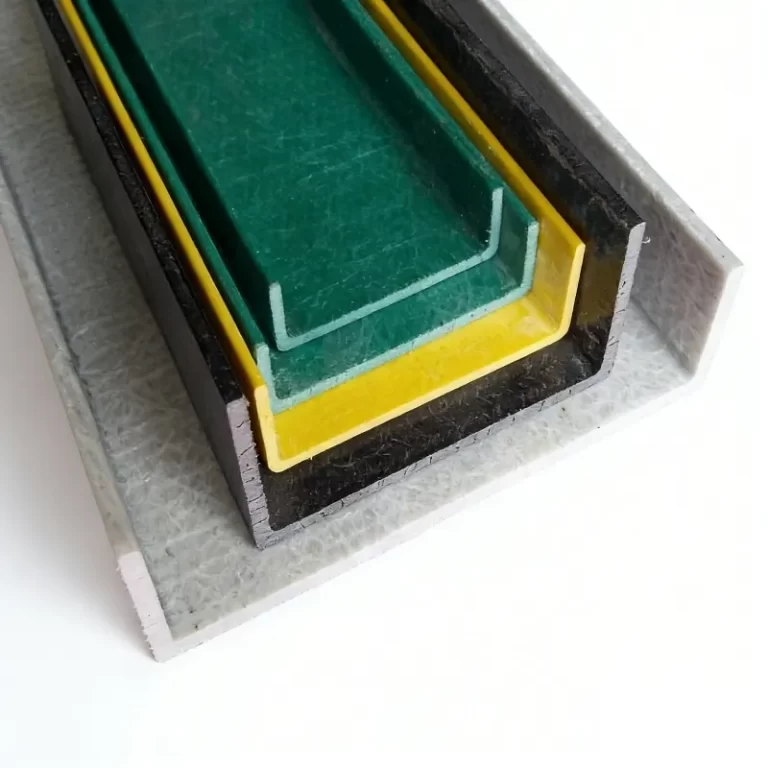
FRP Structural Profiles
Pultruded FRP beams and channels typically use higher fiberglass reinforcement ratios for improved:
- Load-bearing strength
- Structural rigidity
- Dimensional stability
These are commonly used in industrial structures and infrastructure systems.
Fiberglass Pipes
FRP pipe systems require balanced resin distribution to prevent:
- Permeation
- Cracking
- Internal corrosion
- Long-term leakage
Vinyl ester resin is often selected for highly corrosive fluid transportation systems.
Industry Standards for FRP Resin Evaluation
Several testing standards are commonly used to evaluate FRP resin quality and composite performance.
Common Standards
- ASTM D2584 — Ignition loss testing for resin content
- ASTM D790 — Flexural properties testing
- ASTM D638 — Tensile strength testing
- ASTM D256 — Impact resistance testing
These standards help ensure reliable product consistency and engineering performance.
Does Higher Resin Content Mean Better FRP Quality?
Not necessarily.
Excessively high resin content may lead to:
- Lower structural strength
- Increased brittleness
- Reduced stiffness
- Higher material cost
The ideal FRP resin ratio depends on the intended application, environmental conditions and load requirements.
A properly engineered balance between fiberglass and resin delivers the best long-term performance.
Questions Fréquentes
What is the ideal resin content for FRP?
The ideal resin content depends on the product type and application. Pultruded structural profiles typically contain 25–35% resin, while molded FRP gratings may contain 35–45%.
Does higher resin content improve corrosion resistance?
Yes. Higher resin-rich surfaces generally improve resistance to chemicals, moisture and environmental exposure.
What happens if FRP has too little resin?
Insufficient resin may cause exposed fibers, weak bonding, moisture penetration and premature structural failure.
Which resin is best for chemical environments?
Vinyl ester resin is commonly considered one of the best options for corrosive industrial environments because of its excellent chemical resistance.
Conclusion
FRP resin content plays a critical role in determining the durability, strength and corrosion resistance of fiberglass composite products. A properly optimized fiber-to-resin ratio helps achieve stable mechanical performance while protecting FRP structures from harsh industrial environments.
At Mingchi PRV, resin formulation is adjusted based on application environments, structural loads and corrosion exposure. Whether for pultruded structural profiles, FRP handrails or chemical processing systems, proper resin-to-fiber balance helps ensure long-term durability and stable mechanical performance.