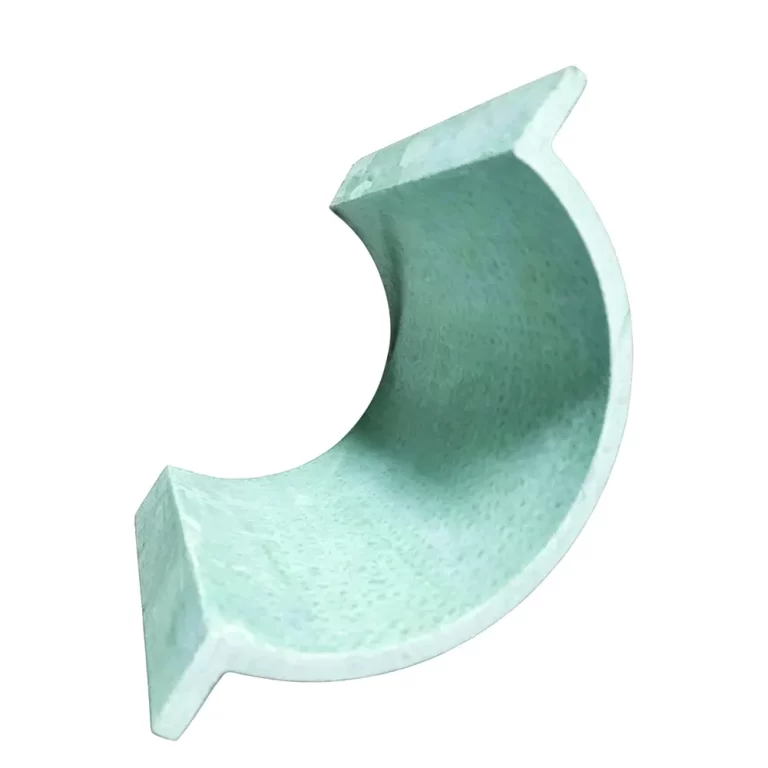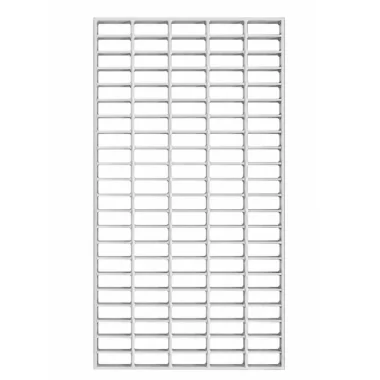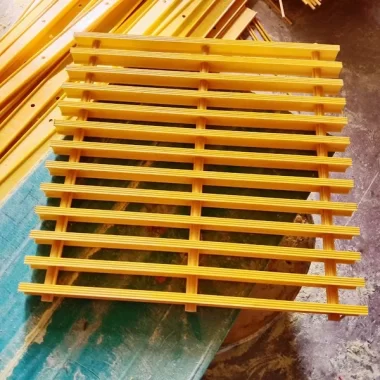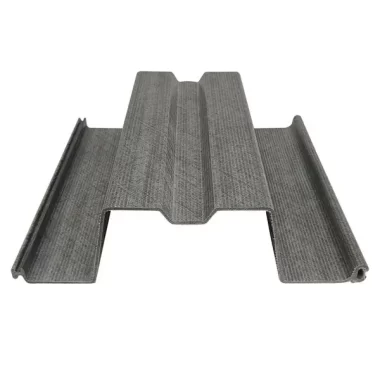

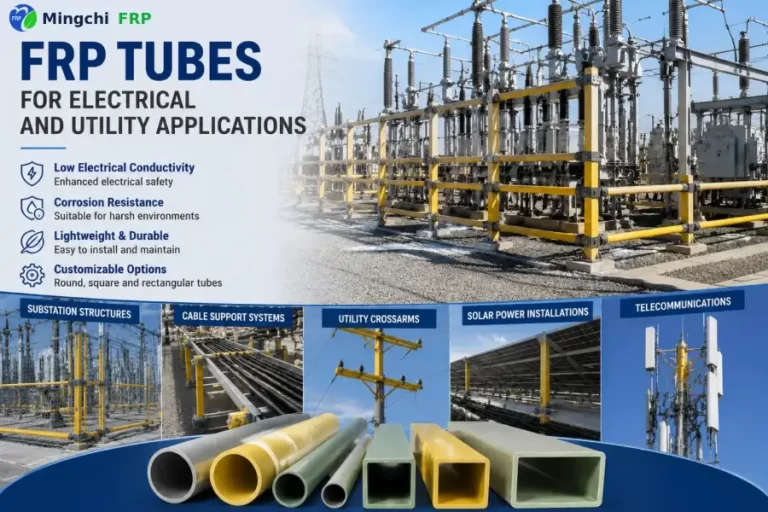
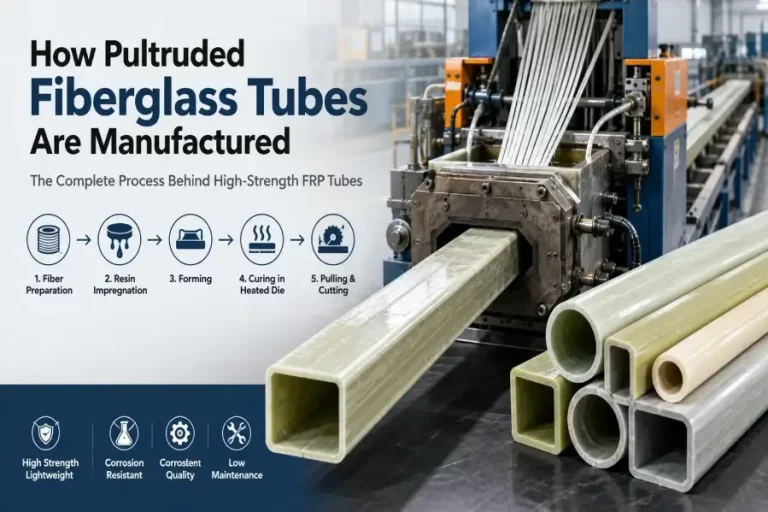
FRP structural profiles are available in a wide range of cross-section shapes, and each shape is designed for different load conditions, installation requirements and industrial applications.
Compared with traditional steel or aluminum structures, FRP profiles offer excellent corrosion resistance, lightweight performance and low maintenance costs. Because of these advantages, pultruded FRP profiles are widely used in chemical plants, wastewater treatment facilities, electrical systems, marine environments and infrastructure projects.
Understanding the differences between FRP profile cross section shapes can help engineers, contractors and buyers select the most suitable fiberglass structural profile for long-term performance and cost efficiency.
Common FRP Profile Shapes and Their Uses
| FRP Shape | Main Feature | Typical Applications | 耐荷重 |
|---|---|---|---|
| FRP アングル | Corner reinforcement | Frames, supports, brackets | 中程度 |
| FRP チャンネル | Easy structural installation | Cable trays, walkways | Medium-High |
| FRP I Beam | Strong bending resistance | Platforms, bridges | 高い |
| FRP角パイプ | Balanced structural support | Railings, frames | 中程度 |
| メニュー | Lightweight tubular design | Handrails, ladders | 中程度 |
| FRP Flat Bar | Surface reinforcement | Covers, supports | Low-Medium |
FRP Angle Profiles
Structural Characteristics
FRP angle profiles feature an L-shaped cross section that provides reliable corner support and structural reinforcement. These pultruded fiberglass profiles are lightweight while maintaining good mechanical strength.
Common Applications
FRP angle sections are commonly used in:
- Structural framing
- 機器支持架
- Stair structures
- Handrail systems
- Cable support systems
Advantages of FRP Angle Profiles
- Corrosion resistant in chemical environments
- 電気を通さない
- Lightweight and easy to install
- Lower maintenance than steel structures
Because of their versatility, fiberglass angle profiles are among the most widely used FRP structural shapes in industrial projects.
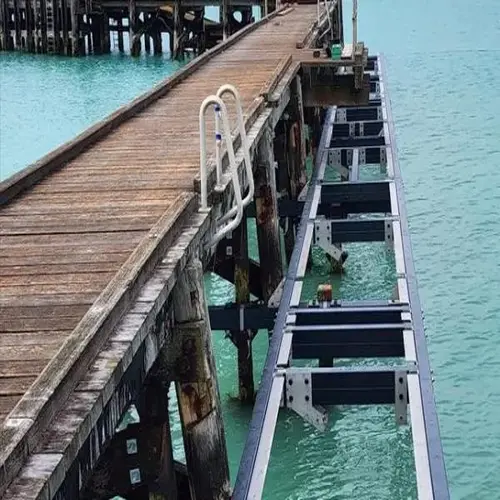
FRP Channel Profiles
Structural Characteristics
FRP channel profiles are designed with a U-shaped cross section that provides excellent support for horizontal installations and modular structural systems.
Compared with standard steel channels, FRP channels offer improved corrosion resistance and reduced structural weight.
Typical Uses of FRP Channel Shapes
一般的な用途:
- Cable trays
- Walkway structures
- Platform framing
- Equipment bases
- Cooling tower support systems
Why FRP Channels Are Popular
FRP channel profiles are often selected for corrosive environments where traditional steel channels may rust or require frequent maintenance.
Industries such as wastewater treatment, marine engineering and chemical processing frequently use fiberglass channel profiles for long-term durability.
FRP I Beam Profiles
Structural Characteristics
FRP I beams are designed for higher load-bearing applications. Their cross-section shape improves bending resistance while maintaining a lightweight structure.
These profiles are commonly used when stronger structural performance is required.
Common Applications
FRP I beam profiles are widely used for:
- 工業用プラットフォーム
- Structural walkways
- Bridge systems
- Offshore structures
- Heavy-duty support frames
Benefits of FRP I Beams
- High strength-to-weight ratio
- 優れた耐食性
- Reduced installation costs
- Lower long-term maintenance requirements
For projects requiring larger spans and higher structural loads, pultruded FRP I beams are often one of the best choices.
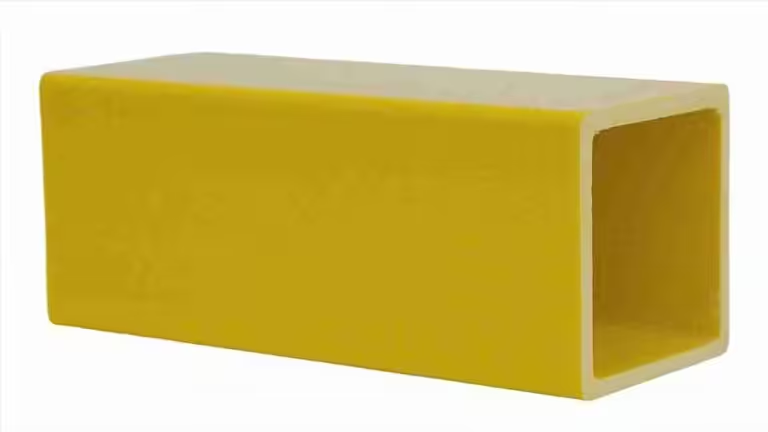
FRP Square Tube Profiles
Structural Characteristics
FRP square tubes provide balanced strength in multiple directions and are commonly used in modular structural systems.
The enclosed shape also improves torsional stability compared with open-profile designs.
Common Applications
Typical applications include:
- Guardrail systems
- Safety fencing
- 構造フレーム
- Architectural structures
- Outdoor support systems
Advantages of Fiberglass Square Tubes
- Clean appearance
- Good structural balance
- 軽量で施工が容易
- Corrosion and moisture resistance
Fiberglass square tube profiles are especially suitable for outdoor and coastal environments.
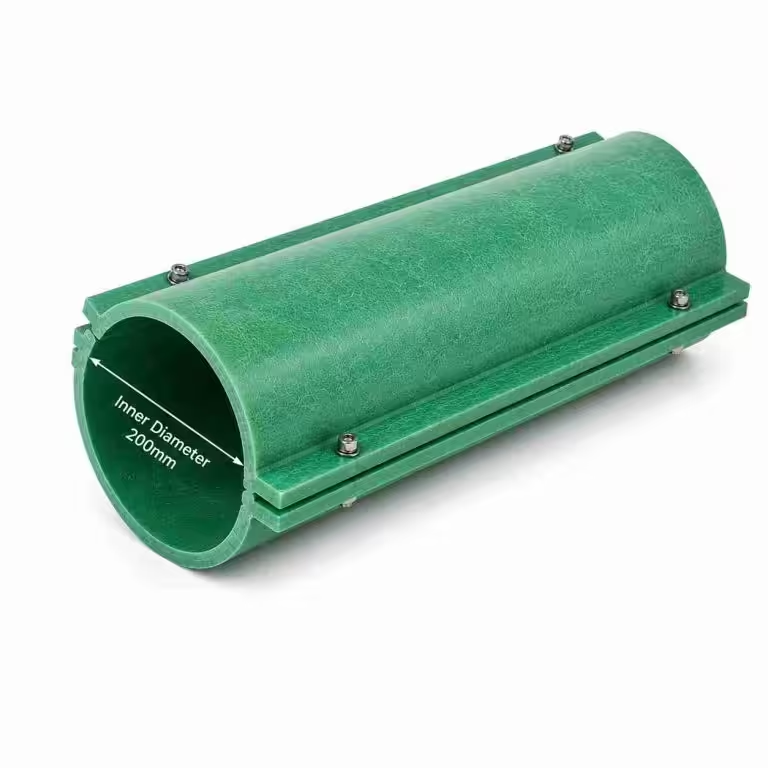
FRP Round Tube Profiles
Structural Characteristics
FRP round tubes are lightweight tubular profiles designed for applications requiring smooth surfaces and simplified handling.
Typical Applications
Common uses include:
- Handrail systems
- Ladder rails
- Utility structures
- Pipe protection systems
- Electrical insulation supports
Why Use FRP Round Tubes
Compared with metal tubing, fiberglass round tubes offer:
- Better corrosion resistance
- Electrical insulation properties
- Reduced structural weight
- Long service life in harsh environments
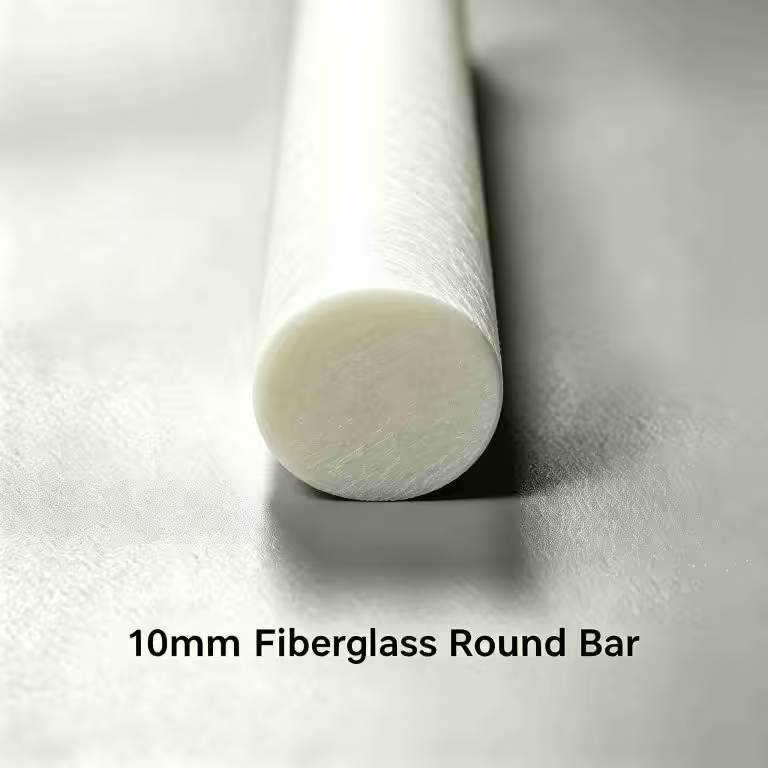
FRP Flat Bars
Structural Characteristics
FRP flat bars are simple solid-section profiles commonly used for reinforcement and secondary support applications.
Applications of FRP Flat Bars
Typical uses include:
- Cover supports
- Structural reinforcement
- Mounting systems
- Spacer components
- Industrial assembly structures
Although flat bars generally support lighter loads than I beams or channels, they remain important components in many FRP structural systems.
How to Choose the Right FRP Profile Shape
Selecting the correct FRP profile shape depends on several engineering factors, including load requirements, environmental exposure and installation methods.
For Heavy Structural Loads
FRP I beams and wide flange profiles are typically the best option for larger spans and higher load capacities.
For Modular Structural Systems
FRP square tubes and channel profiles provide flexible installation and balanced support.
For Corrosive Environments
All pultruded FRP profiles offer corrosion resistance, but vinyl ester resin systems generally provide better chemical resistance in aggressive industrial environments.
For Electrical Insulation Applications
FRP angle and channel profiles are widely used in electrical facilities because fiberglass materials are non-conductive.
Advantages of Pultruded FRP Structural Profiles
Compared with traditional materials such as steel, aluminum and wood, FRP structural shapes provide several long-term advantages.
耐食性
Fiberglass reinforced plastic profiles resist moisture, chemicals and salt exposure, making them suitable for marine and chemical industries.
Lightweight Installation
FRP profiles are significantly lighter than steel, reducing transportation and installation costs.
Low Maintenance
Unlike steel structures, FRP structural profiles do not rust and require minimal maintenance over time.
長寿命
Pultruded fiberglass profiles are designed for long-term outdoor and industrial use.
Industries That Use FRP Structural Shapes
FRP profile cross section shapes are widely used across multiple industries, including:
- Chemical processing plants
- Wastewater treatment facilities
- Marine engineering
- Infrastructure projects
- Electrical power systems
- Transportation facilities
- Industrial manufacturing plants
Because of their corrosion resistance and structural efficiency, fiberglass structural profiles continue to replace traditional metal structures in demanding environments.
FAQ About FRP Profile Shapes
What is the strongest FRP profile shape?
FRP I beams and wide flange profiles generally provide the highest load-bearing capacity among standard pultruded FRP shapes.
Are FRP profiles better than steel?
FRP profiles offer better corrosion resistance and lower weight than steel, although steel may provide higher absolute strength in some applications.
Which FRP profile is best for outdoor environments?
FRP square tubes, channels and I beams are commonly used outdoors because they resist corrosion, moisture and UV exposure.
Can FRP structural profiles be customized?
Yes. Pultruded fiberglass profiles can be manufactured in custom sizes, colors and cross-section shapes for specific engineering requirements.
What industries commonly use FRP structural shapes?
Industries such as wastewater treatment, marine engineering, infrastructure and chemical processing widely use FRP structural profiles.
結論
Different FRP profile cross section shapes are designed for different structural and environmental requirements. Understanding the load conditions, installation methods and corrosion exposure of your project can help you select the most suitable fiberglass structural profile.
As the demand for lightweight and corrosion-resistant materials continues to grow, pultruded FRP profiles are becoming an increasingly popular alternative to traditional steel structures in industrial and infrastructure applications.
ミンチ FRP provides a wide range of standard and custom pultruded FRP structural profiles for industrial, marine, infrastructure and electrical applications.