
When selecting a railing system for industrial projects, engineers and contractors often compare FRP railings (Fiberglass Reinforced Plastic) with traditional metal railings such as steel, aluminum and stainless steel.
While metal railings have been widely used for decades, they can face challenges in harsh environments, including corrosion, heavy weight and regular maintenance requirements.
FRP handrail systems are becoming an increasingly popular alternative because they provide excellent corrosion resistance, lightweight installation, electrical insulation and long service life.
So, which one is better for your project?
The answer depends on the working environment, safety requirements and long-term maintenance expectations.
FRP vs Metal Railing Comparison
| Feature | FRP Railing System | Metal Railing System |
|---|---|---|
| Corrosion Resistance | Excellent resistance to moisture, chemicals and saltwater | Depends on material and protective coating |
| Weight | Lightweight and easy to install | Heavier, especially steel |
| Maintenance | Minimal maintenance required | Requires painting, coating or rust prevention |
| Electrical Safety | Non-conductive | Conductive |
| Installation | Easy cutting and assembly | Welding and heavy equipment may be required |
| Outdoor Durability | Excellent for harsh environments | Depends on protection method |
1. Corrosion Resistance: FRP vs Steel Railing
Corrosion resistance is one of the biggest advantages of fiberglass railing systems.
Traditional steel railings can corrode when exposed to:
- Water and humidity
- Chemical substances
- Salt spray
- Wastewater environments
- Industrial gases
Although galvanized steel and coated metal railings can improve corrosion resistance, protective layers may eventually wear, exposing the metal underneath.
FRP railings use fiberglass reinforcement combined with a corrosion-resistant polymer resin matrix. This structure prevents rust and provides long-term durability in aggressive environments.
For this reason, corrosion resistant FRP railing systems are widely used in:
- Wastewater treatment plants
- Chemical processing facilities
- Marine structures
- Offshore platforms
- Coastal projects
2. Lightweight Installation: Fiberglass Railing vs Metal Railing
One of the major advantages of FRP handrails is their lightweight design.
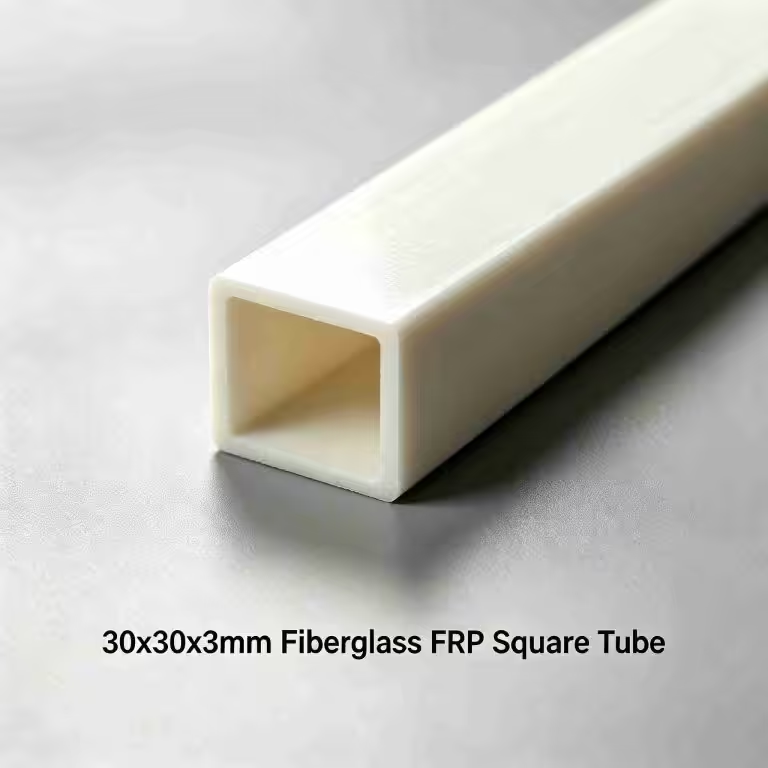
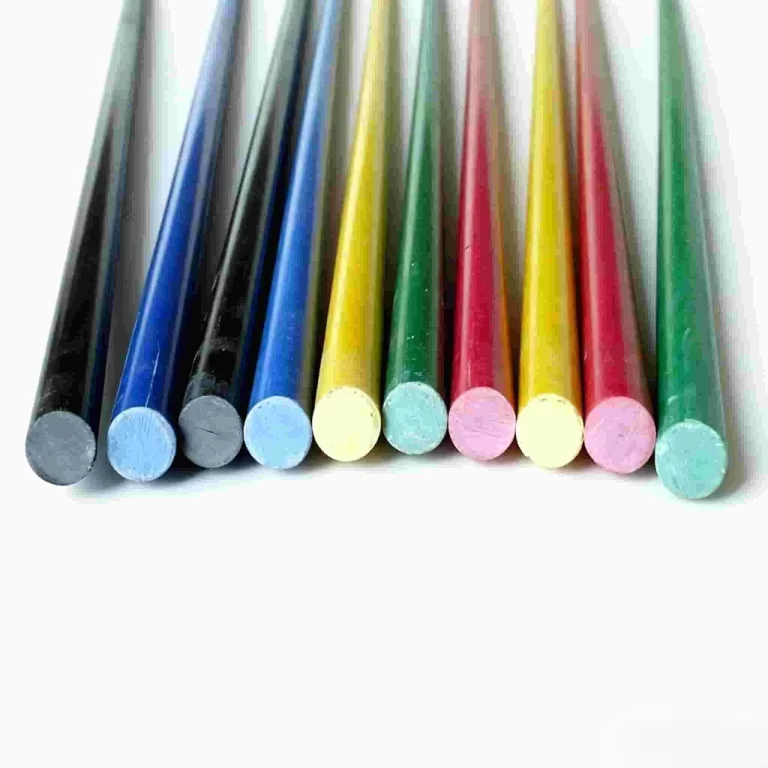
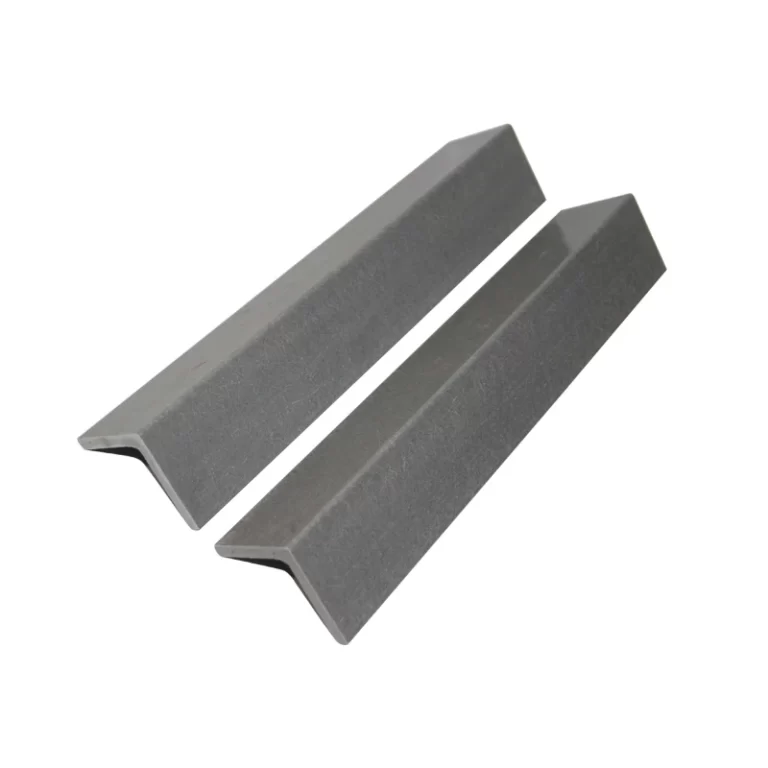
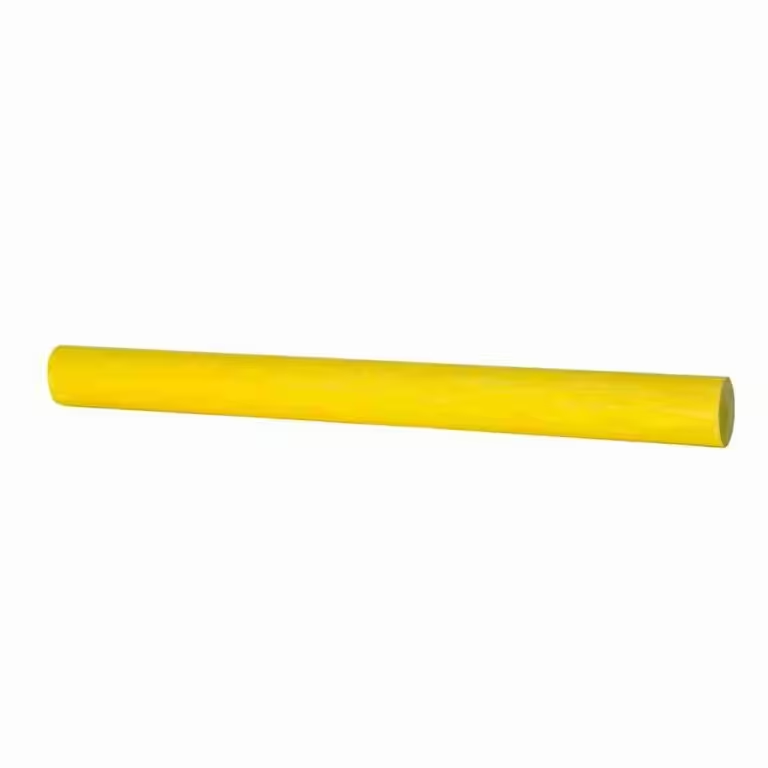
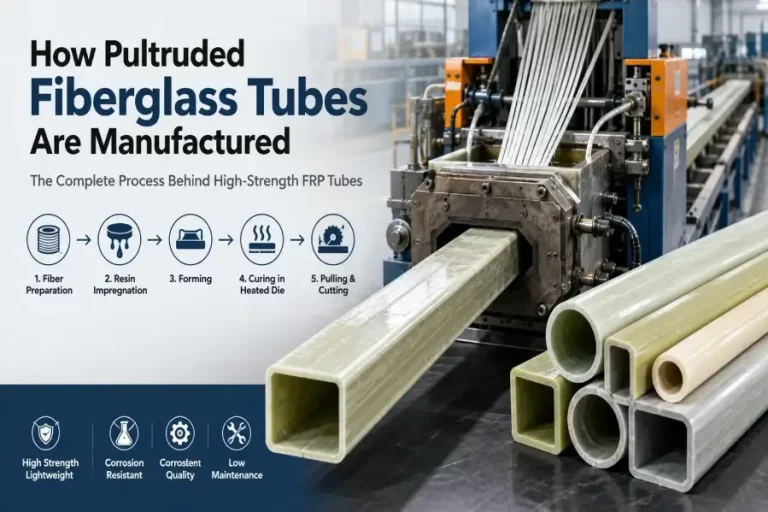
Compared with traditional metal railings, FRP railings are lightweight and easier to install. Many FRP railing systems are manufactured using pultruded fiberglass profiles, which provide excellent strength-to-weight performance and long-term durability.
- Transport
- Cut
- Assemble
- Install on-site
This reduces labor requirements and installation time.
For projects in remote locations, offshore facilities or areas with limited access, lightweight FRP railing systems can provide significant installation advantages.
3. Maintenance Cost Comparison
Long-term maintenance is an important factor when choosing industrial railing systems.
Metal railings often require:
- Regular painting
- Rust inspection
- Anti-corrosion treatment
- Surface repair
Over years of operation, these maintenance tasks increase operating costs.
FRP railings do not rust and usually require only basic cleaning.
For industrial facilities operating in harsh environments, fiberglass handrail systems can help reduce:
- Maintenance frequency
- Downtime
- Repair costs
4. Electrical Safety: Non-Conductive FRP Handrails
Another important advantage of FRP railings is electrical insulation.
Unlike metal railings, FRP materials are naturally non-conductive.
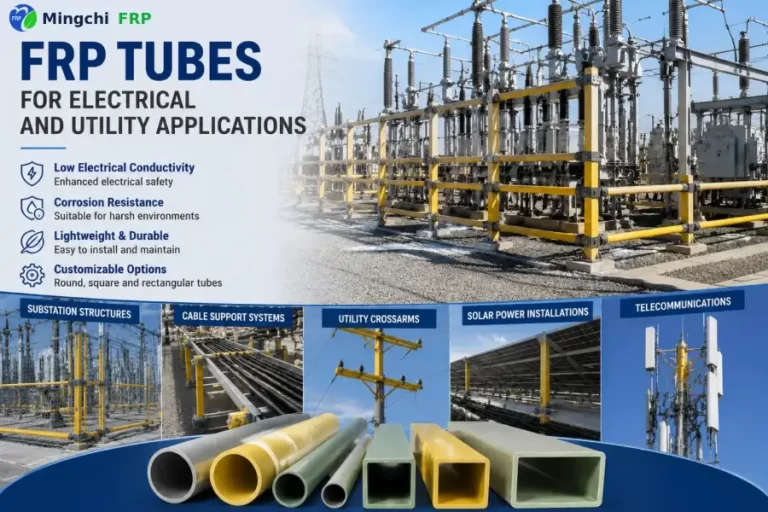
This makes fiberglass handrails suitable for applications near electrical equipment, including:
- Power plants
- Substations
- Electrical platforms
- Cable maintenance areas
For projects where electrical safety is a concern, non-conductive FRP handrails provide an additional safety benefit compared with steel or aluminum railings.
Common Applications of FRP Handrail Systems
FRP railing systems are widely used in industrial environments where traditional metal railings may experience corrosion, maintenance problems or difficult installation.
1. Wastewater Treatment Plants
Wastewater treatment facilities are one of the most common applications for FRP handrail systems.
These environments often contain:
- Moisture
- Chemicals
- Sewage gases
- Corrosive substances
Steel railings installed around wastewater tanks and treatment areas may require frequent maintenance.
FRP railings are commonly used for:
- Treatment basin platforms
- Pump station walkways
- Inspection platforms
- Access stairs
- Maintenance areas
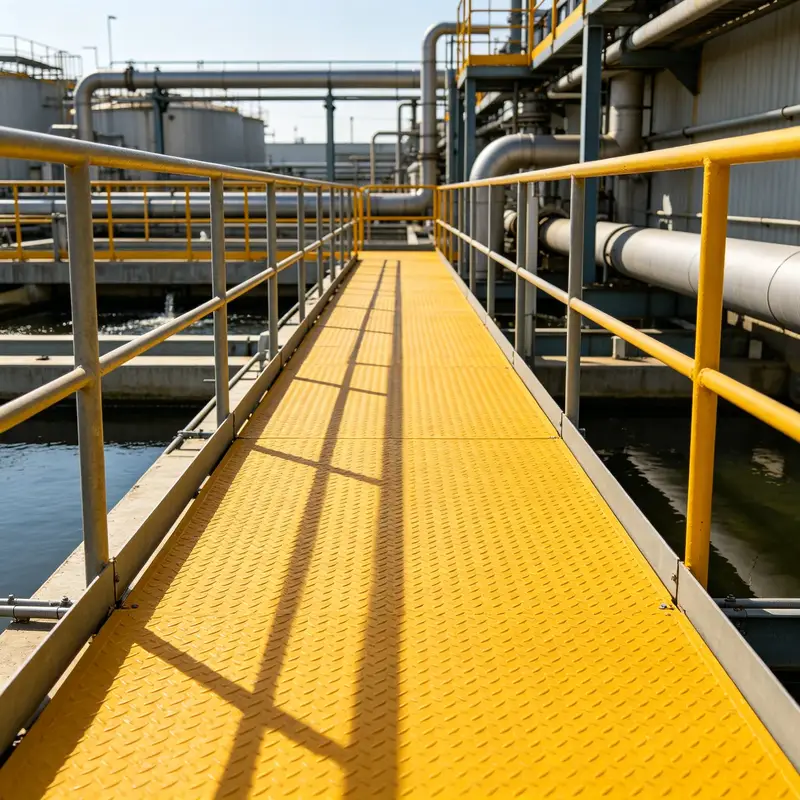
Combined with FRP grating walkways, fiberglass railing systems create complete corrosion-resistant access solutions for wastewater facilities.
2. Chemical Processing Plants
Chemical plants require railing systems that can withstand aggressive environments.
Exposure to:
- Acids
- Alkalis
- Chemical vapors
- Cleaning chemicals
FRP handrails are widely used in:
- Chemical storage areas
- Processing platforms
- Equipment access areas
- Maintenance walkways
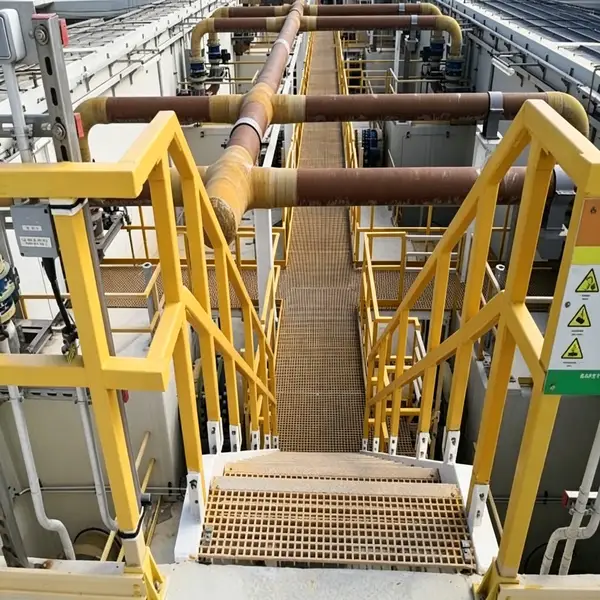
Their corrosion resistance helps extend service life and reduce maintenance requirements.
3. Marine and Offshore Facilities
Marine environments are extremely challenging for metal structures because saltwater accelerates corrosion.
FRP railing systems are commonly installed in:
- Offshore platforms
- Shipyards
- Ports and docks
- Coastal facilities
- Marine engineering projects
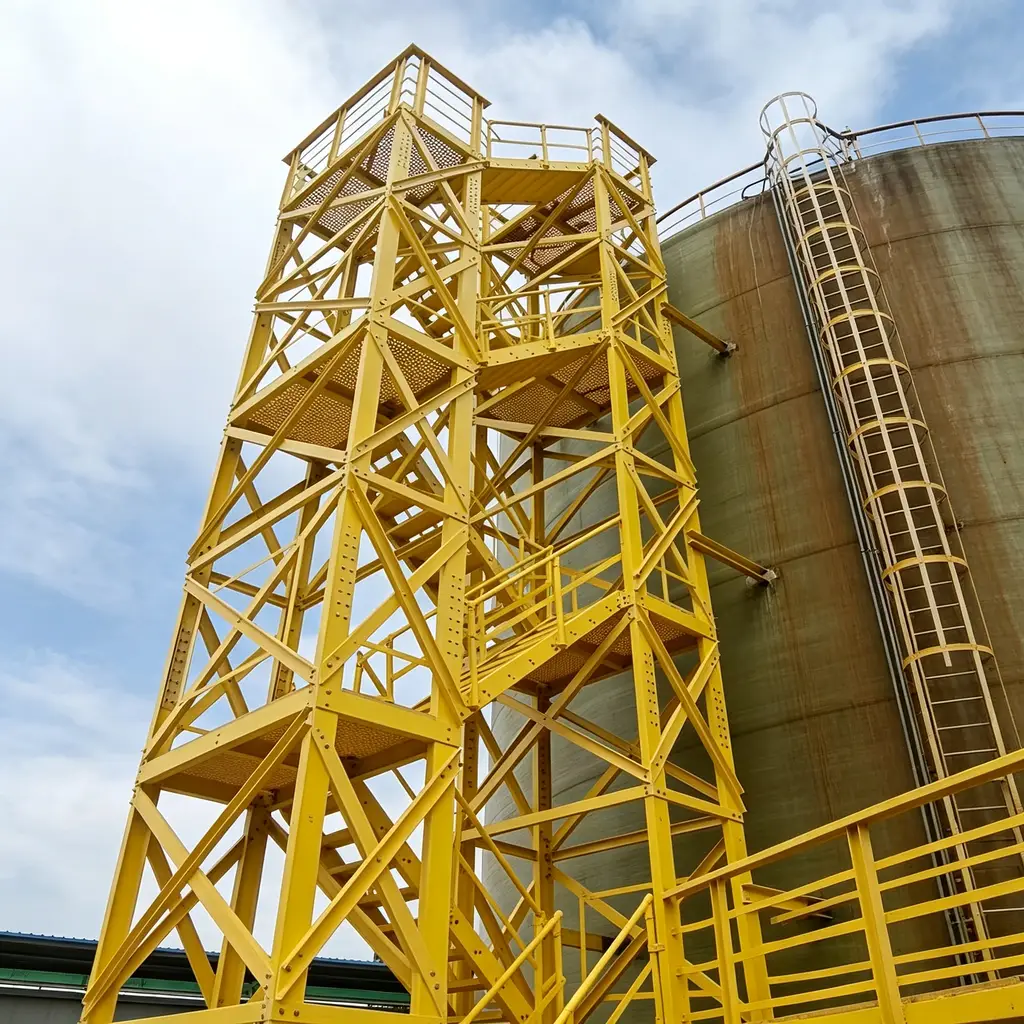
Compared with steel railings, fiberglass railings do not rust and perform better in saltwater environments.
4. Power Plants and Electrical Facilities
FRP railings are suitable for power-related applications because of their non-conductive properties.
Common applications include:
- Substation platforms
- Electrical equipment areas
- Cable maintenance platforms
- Power generation facilities
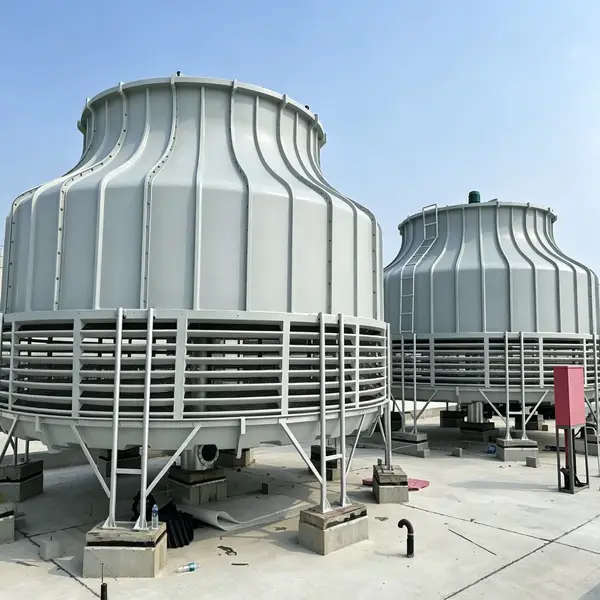
FRP provides a safer alternative where electrical insulation is required.
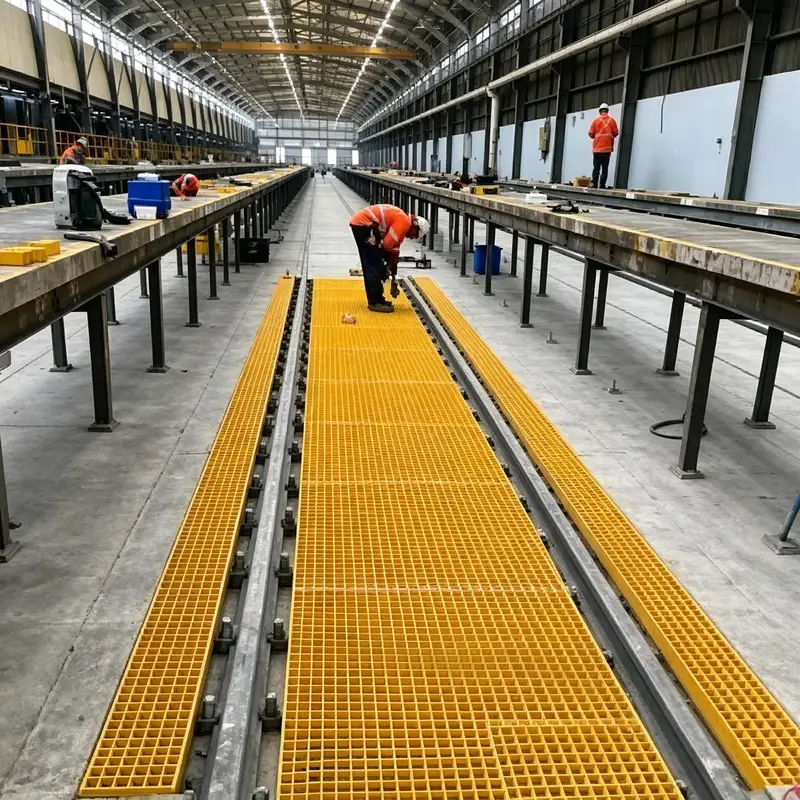
5. Industrial Platforms and Walkways
Many factories require safe access systems for workers.
FRP railing systems are often combined with:
- FRP grating
- FRP stairs
- FRP structural profiles
to create lightweight and corrosion-resistant platforms.
Applications include:
- Factory maintenance platforms
- Equipment access walkways
- Elevated operation platforms
- Inspection bridges
6. Mining and Heavy Industrial Facilities
Mining environments often include:
- Dust
- Moisture
- Chemicals
- Outdoor exposure
FRP railing systems are suitable for:
- Mining platforms
- Conveyor access areas
- Processing plants
- Industrial walkways
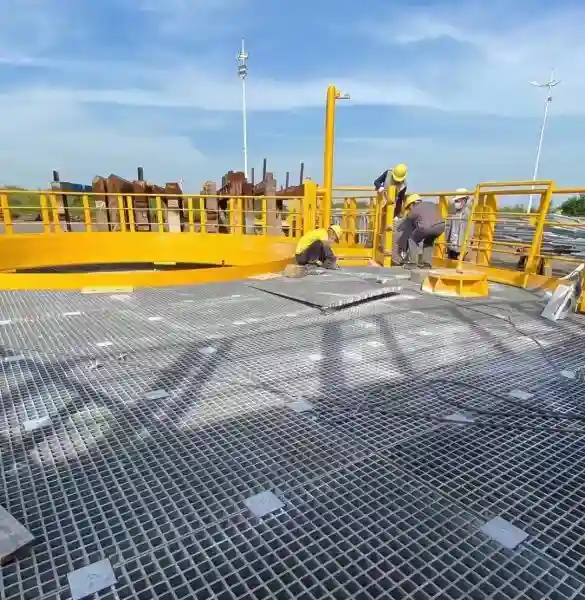
The lightweight and corrosion-resistant properties make FRP a reliable alternative to steel.
Why Choose FRP Railings Instead of Metal Railings?
For industrial applications, FRP is often selected because it provides:
✔ Superior corrosion resistance
Suitable for chemical, marine and wastewater environments.
✔ Lower maintenance requirements
No rust removal, repainting or protective coating replacement.
✔ Lightweight installation
Easier handling and faster project installation.
✔ Electrical safety
Non-conductive properties improve workplace safety.
✔ Long service life
Designed for demanding industrial conditions.
Why Choose Mingchi FRP Railing Systems?
Mingchi provides customized FRP handrail solutions for industrial and infrastructure projects.
Our fiberglass railing systems feature:
- Corrosion-resistant FRP materials
- Lightweight structural design
- Custom sizes and colors
- Easy installation
- Compatibility with FRP grating and structural profiles
Our FRP railing solutions are widely used in:
- Wastewater treatment plants
- Chemical facilities
- Marine projects
- Power plants
- Industrial platforms
Conclusion
Both FRP and metal railings have their own advantages.
Metal railings can be suitable for general applications where appearance and traditional construction methods are preferred.
However, for harsh industrial environments requiring:
- Corrosion resistance
- Low maintenance
- Lightweight installation
- Electrical safety
FRP railing systems are often the better long-term solution.
By choosing the right railing material, companies can improve workplace safety, reduce maintenance costs and extend the service life of industrial structures.