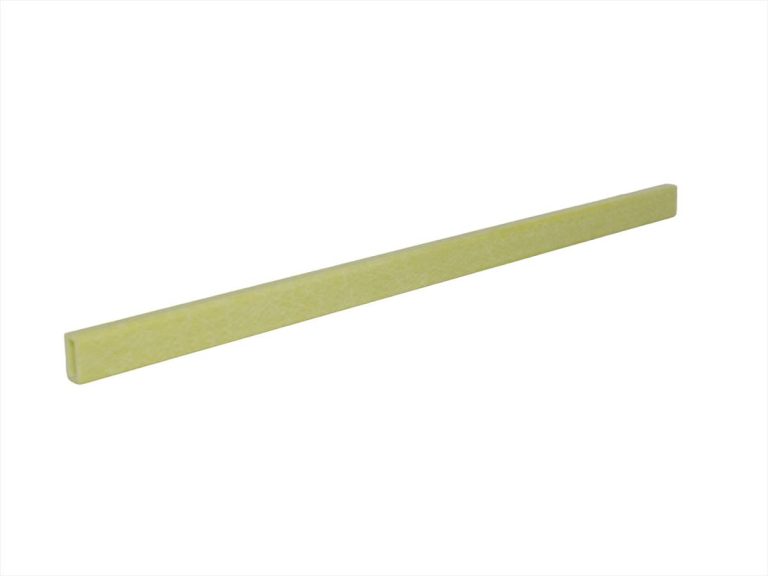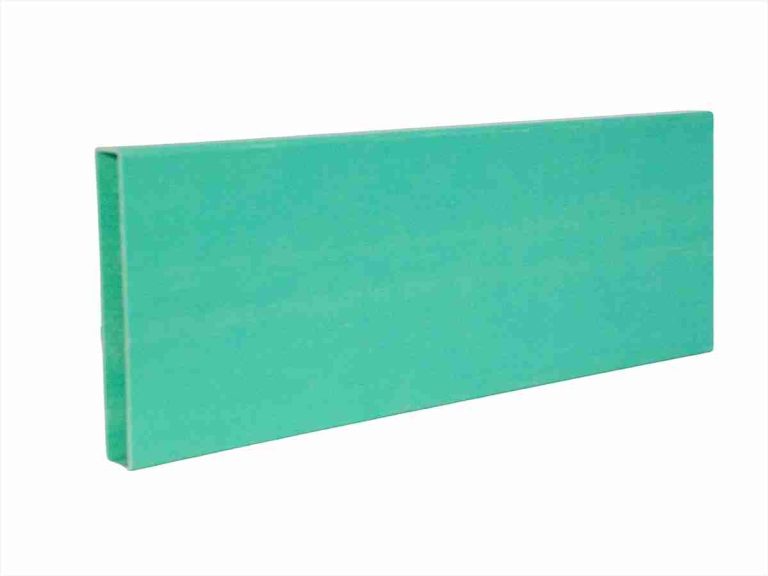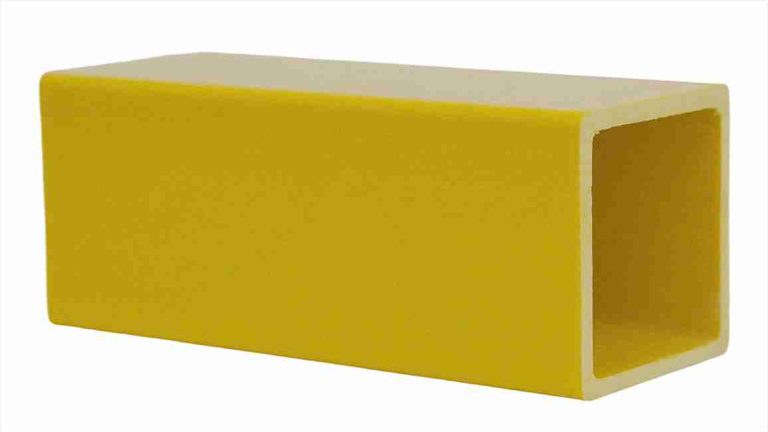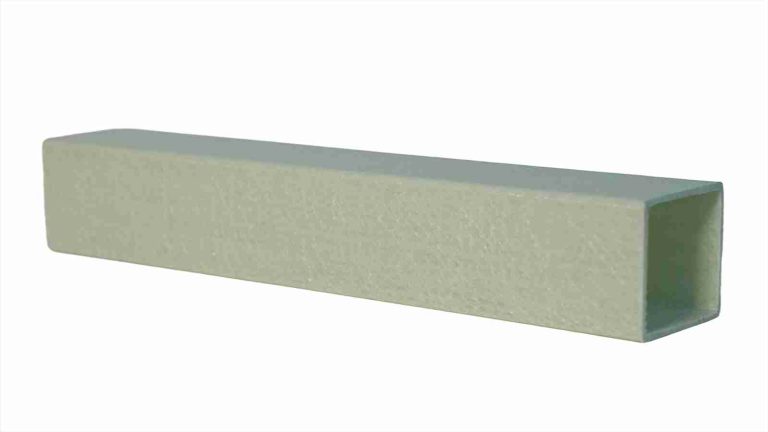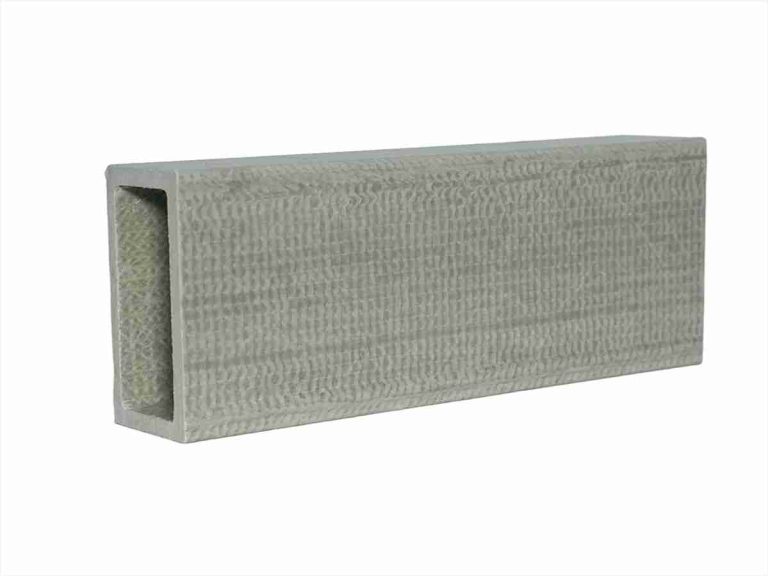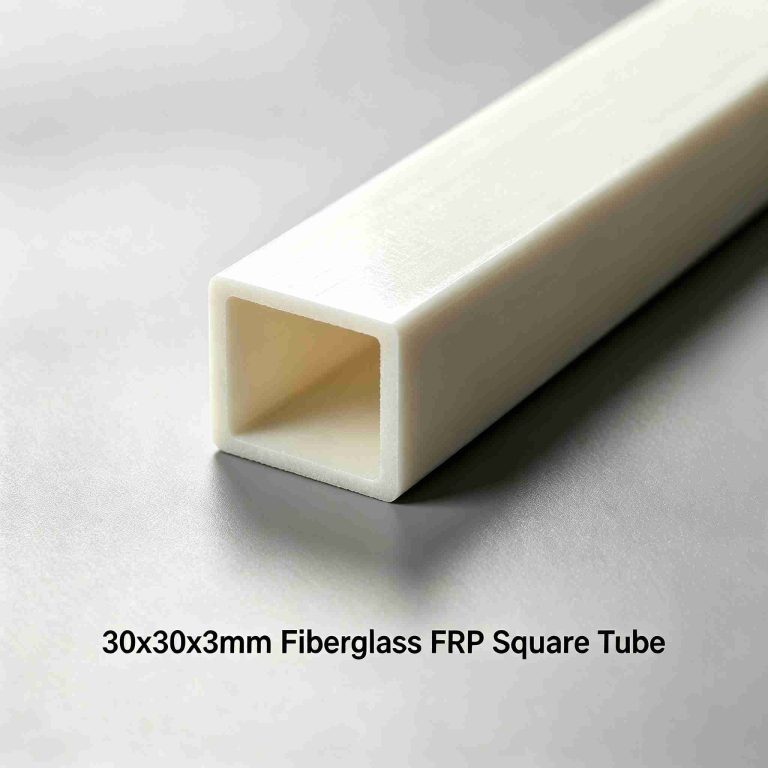

FRP square and rectangular tubes both work well for frames, supports, fences, and handrails in corrosive areas. They use similar fiberglass and resin, so they can look almost the same.
However, their shape affects strength, stiffness, load direction, and installation. Choose the profile based on the actual load and support conditions, not appearance alone.
This guide compares both profiles and helps you choose the right one for your project.
What Is an FRP Square Tube?
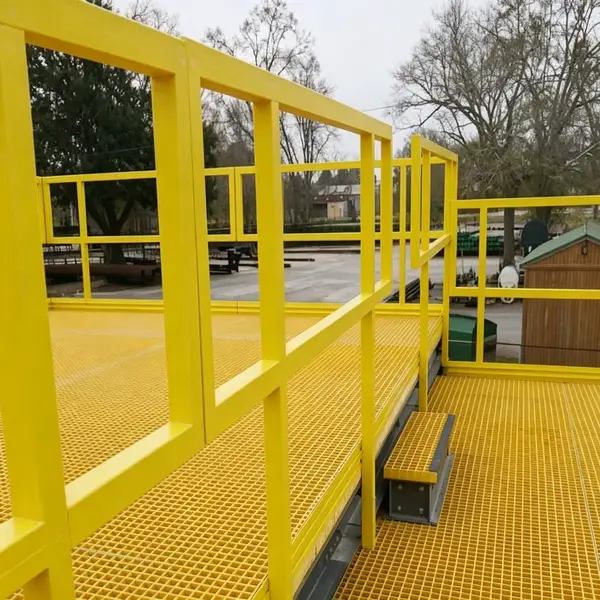
An FRP square tube has the same outside width and height and uses a pultruded fiberglass structure. For example, a 50 × 50 × 4 mm square tube has the same outside dimension in both principal directions.
FRP square tubing is commonly used for:
- Handrail and guardrail posts
- Safety fencing
- Equipment frames
- Machine guards
- Modular structures
- Electrical safety barriers
- Lightweight structural supports
What Is an FRP Rectangular Tube?
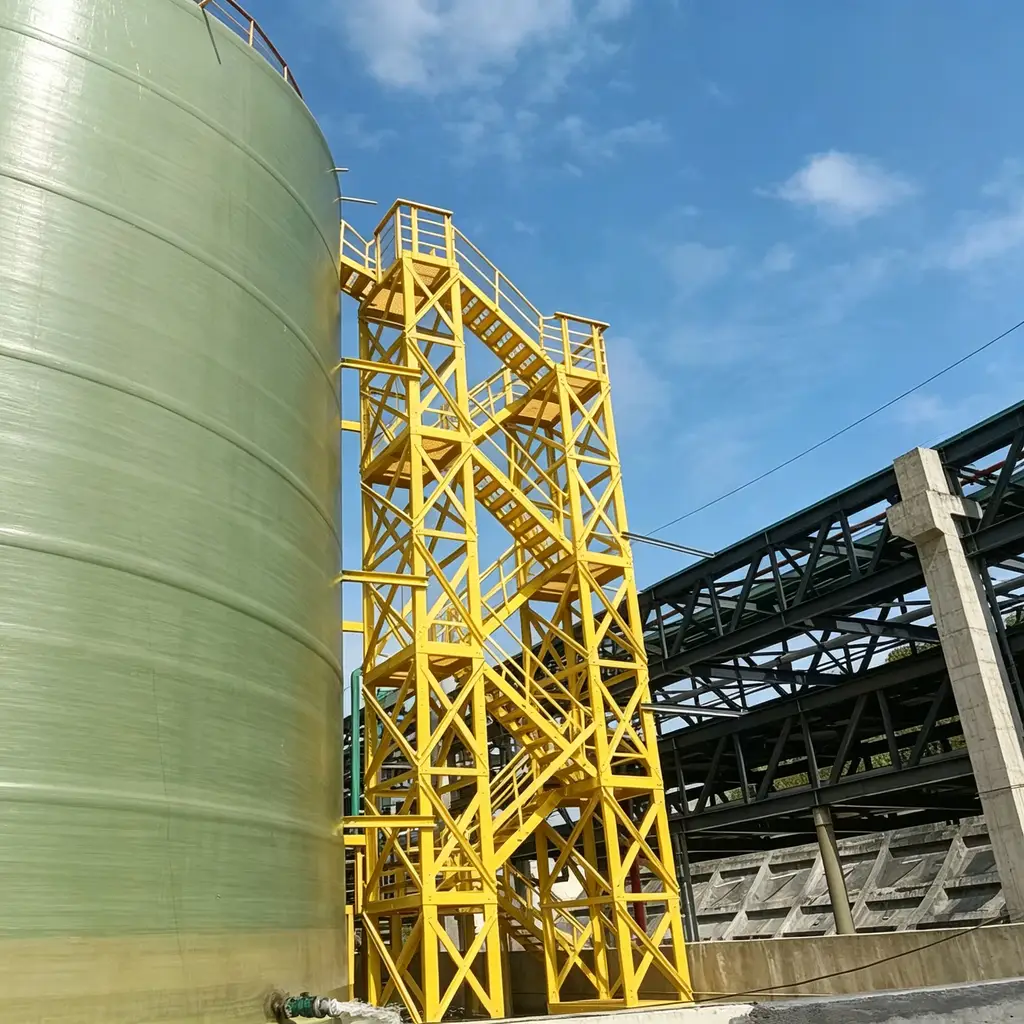
An FRP rectangular tube has different outside width and height dimensions, such as 100 × 50 × 4 mm or 50 × 25 × 3 mm.
It is commonly used for:
- Horizontal support members
- Equipment support beams
- Utility crossarms
- Cable support structures
- Cooling tower frames
- Solar support components
- Machine bases
- Long structural rails
FRP Square Tube vs Rectangular Tube: Quick Comparison
| Selection factor | FRP square tube | FRP rectangular tube |
|---|---|---|
| Cross-section | Equal width and height | Different width and height |
| Principal directions | More geometrically balanced | Defined strong and weak directions |
| Installation orientation | Usually less sensitive | Often important |
| Common structural role | Posts, frames and modular supports | Beams, rails and horizontal supports |
| Multi-directional framing | Generally more convenient | Requires clearer load orientation |
| Space efficiency | Equal depth in both directions | Can fit narrow or restricted spaces |
| Typical connections | Brackets, plates, sleeves and bolts | Plates, brackets, sleeves and bolts |
| Common terminology | FRP square tubing or FRP SHS | FRP rectangular tubing or FRP RHS |
Cross-Section and Load Direction
Load direction affects FRP square and rectangular tubes differently. Turning a square tube 90° does not change its shape or basic bending performance.
A rectangular tube has a deep side and a shallow side. For a horizontal beam, placing the deeper side upright usually adds stiffness and reduces sagging.
This does not mean that the deeper orientation is automatically correct for every project. The final position must also account for:
- Lateral loads
- Connection locations
- Available installation space
- Torsional loading
- Bracing
- Impact
- Maintenance access
Typical Applications of FRP Square Tube
Handrails and guardrails
Square tubes have flat sides for attaching brackets, rails, kick plates, and panels. They also work well as posts for industrial handrails and fences.
Equipment frames
Square tubing has equal sides, so it works well for machine guards, equipment frames, and loads from different directions.
Safety fencing
FRP square tube is lightweight, corrosion-resistant, and generally does not conduct electricity. It works well for fences around electrical, chemical, and wastewater facilities.
Vertical columns and posts
Square profiles work well for short posts and braced columns. Their equal sides make fabrication and installation easier.
Typical Applications of FRP Rectangular Tube
Horizontal support beams
Rectangular fiberglass tubes work well when the main load comes from one direction. Place the deeper side upright to increase stiffness.
Utility crossarms
FRP rectangular tubes are lightweight, resist corrosion, and generally do not conduct electricity. They work well in electrical utility structures.
Cable and service supports
Rectangular tubing works well as rails or crossbars in cable supports and utility frames.
Cooling tower and industrial frames
With the right design, FRP rectangular tubes can replace metal or wood supports in wet or corrosive areas.
Which FRP Tube Should You Choose?
Choose an FRP square tube when:
- Loads may act from more than one direction
- The structure uses repeated modular connections
- Equal face dimensions simplify fabrication
- The tube will be used as a post, column or frame member
- The project uses standard corner brackets
- Installation orientation needs to remain simple
Choose an FRP rectangular tube when:
- The primary bending direction is clearly defined
- A deeper profile is needed in one direction
- The member will function mainly as a beam or rail
- Space restrictions require different width and height dimensions
- The profile must fit beneath equipment or inside an enclosure
- Structural efficiency in one direction is more important than balanced geometry
Neither profile is universally better. The correct choice depends on how the tube will be loaded, supported, connected and installed.
FAQ
1. Is an FRP rectangular tube stronger than an FRP square tube?
Not always. Strength depends on profile size, wall thickness, span, material properties and load direction. Rectangular tubes may offer greater stiffness in their deeper direction.
2. Does the orientation of an FRP rectangular tube matter?
Place the deeper side upright to increase stiffness and reduce sagging under load.
3. When should I choose an FRP square tube?
FRP square tubes work well as posts, fences, modular frames, and supports for loads from different directions.
4. When should I choose an FRP rectangular tube?
FRP rectangular tubes work well for beams, rails, crossarms, and supports when the load comes mainly from one direction.
5. Can FRP square and rectangular tubes be cut and drilled?
Yes. Pultruded FRP tubes can be cut and drilled with suitable tools. Hole spacing, edge distance and sealing of cut surfaces should be considered.
Conclusion
FRP square and rectangular tubes handle loads in different ways. Square tubes work well for posts, frames, and fences, while rectangular tubes are better for beams with loads from one main direction.
Check the size, wall thickness, span, load direction, bending limit, and connections before choosing. Mingchi FRP supplies both profiles for different structural and environmental needs.