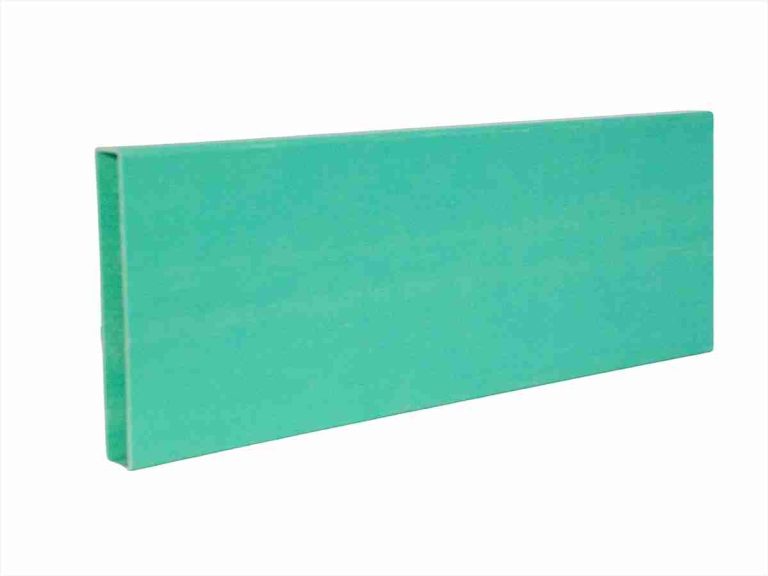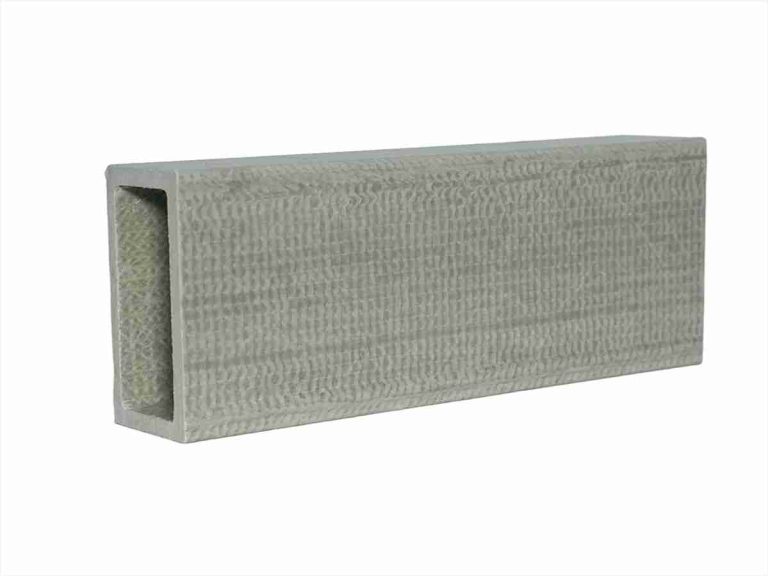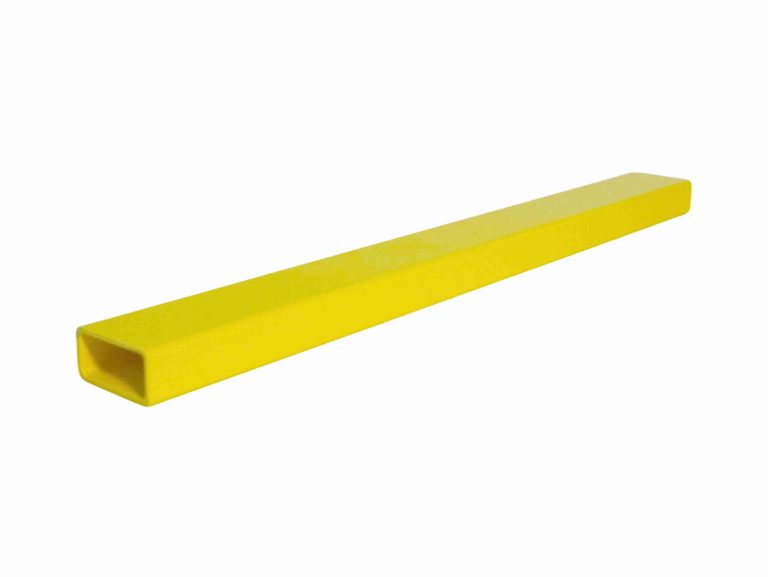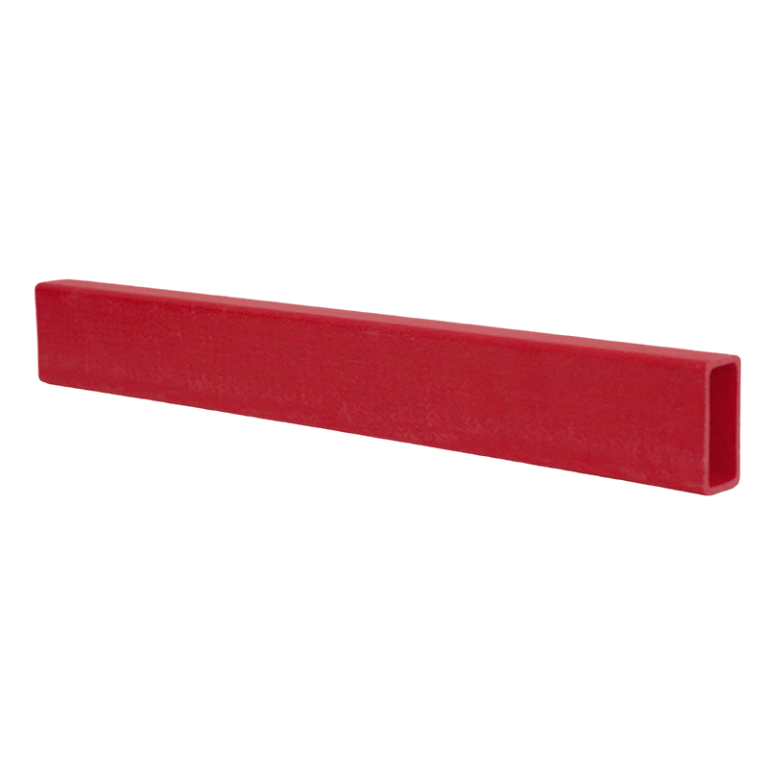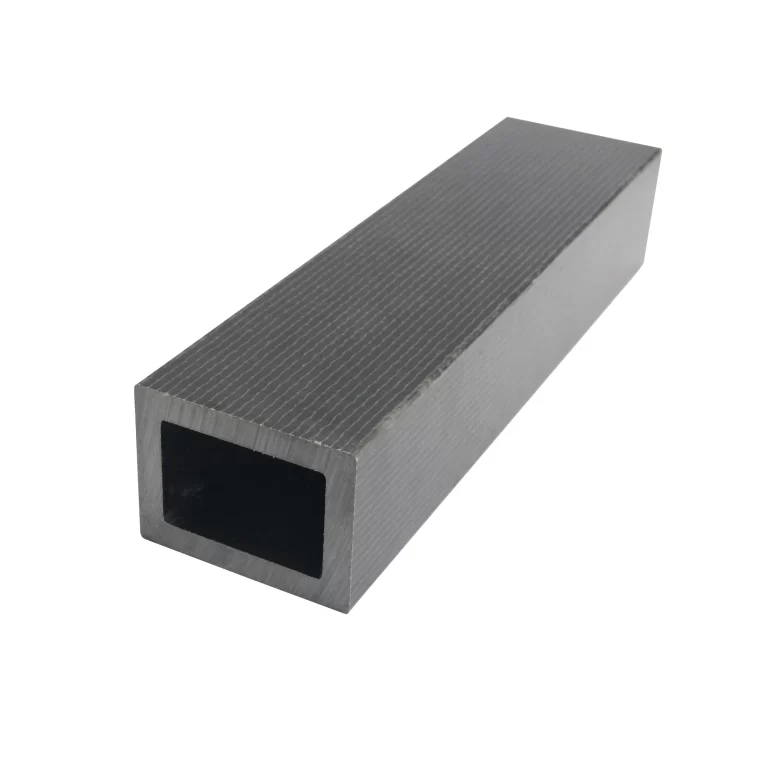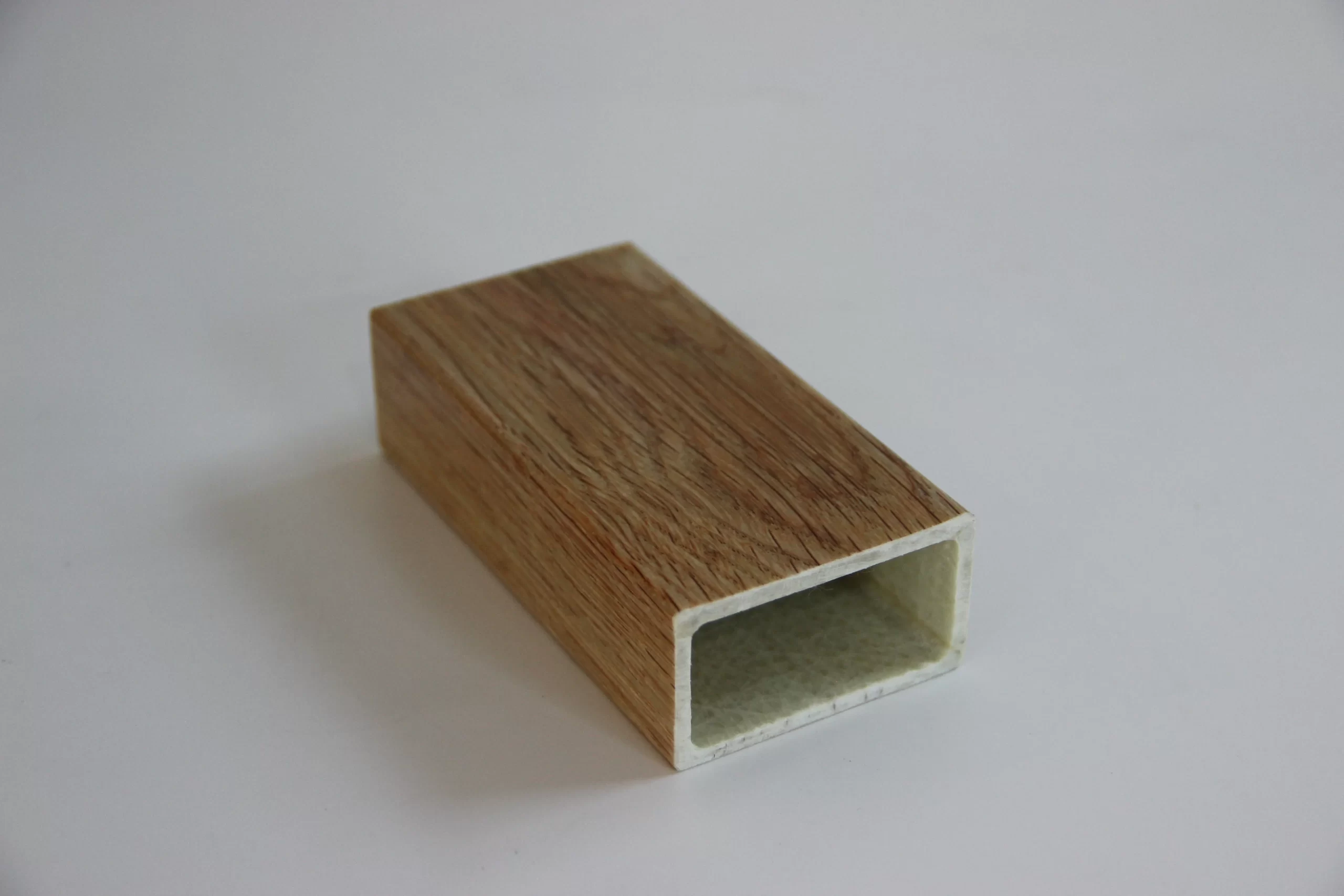

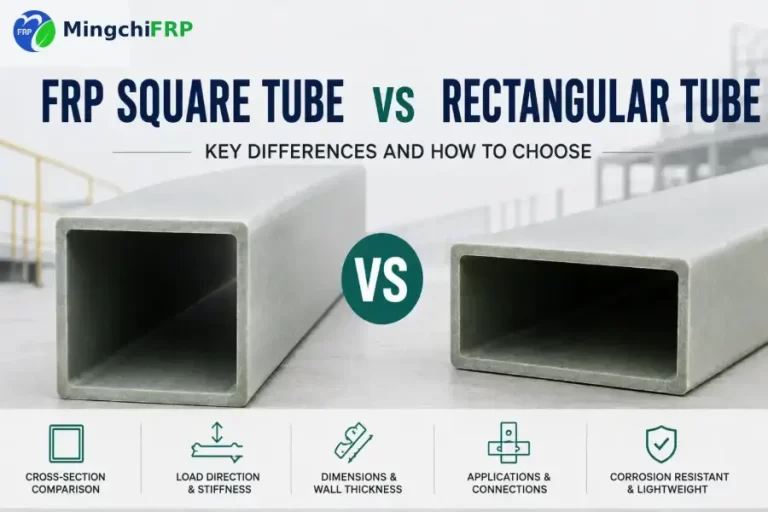
FRP rectangular tube works well for frames, equipment supports, and utility structures. It also resists rust and needs little maintenance.
Before you choose fiberglass rectangular tubing, check its size, wall thickness, span, load direction, resin type, and connections. This guide shows why these details matter.
What Is an FRP Rectangular Tube?
Pultrusion pulls resin-coated fiberglass through a heated mold to form a hollow FRP rectangular tube.
Unlike square tubing, a rectangular profile has different width and height dimensions. How you position the tube affects its strength, especially when you use it as a beam or horizontal support.
Common applications include:
- Equipment frames
- Horizontal support beams
- Utility crossarms
- Cable support structures
- Cooling tower frames
- Fencing and barriers
- Solar support structures
- Industrial platforms
FRP rectangular tubes may also be described as fiberglass rectangular tubes, pultruded rectangular tubes, GFRP rectangular tubes or FRP RHS sections.
1. Choose the Right Tube Dimensions
FRP rectangular tube dimensions are generally written as:
Width × Height × Wall Thickness
For example:
100 × 50 × 4 mm
When comparing FRP rectangular tube sizes, check more than the outside dimensions. Choose a profile that fits the available space and meets the project’s structural needs.
Important dimensions include:
- Width
- Height
- Wall thickness
- Inside dimensions
- Profile length
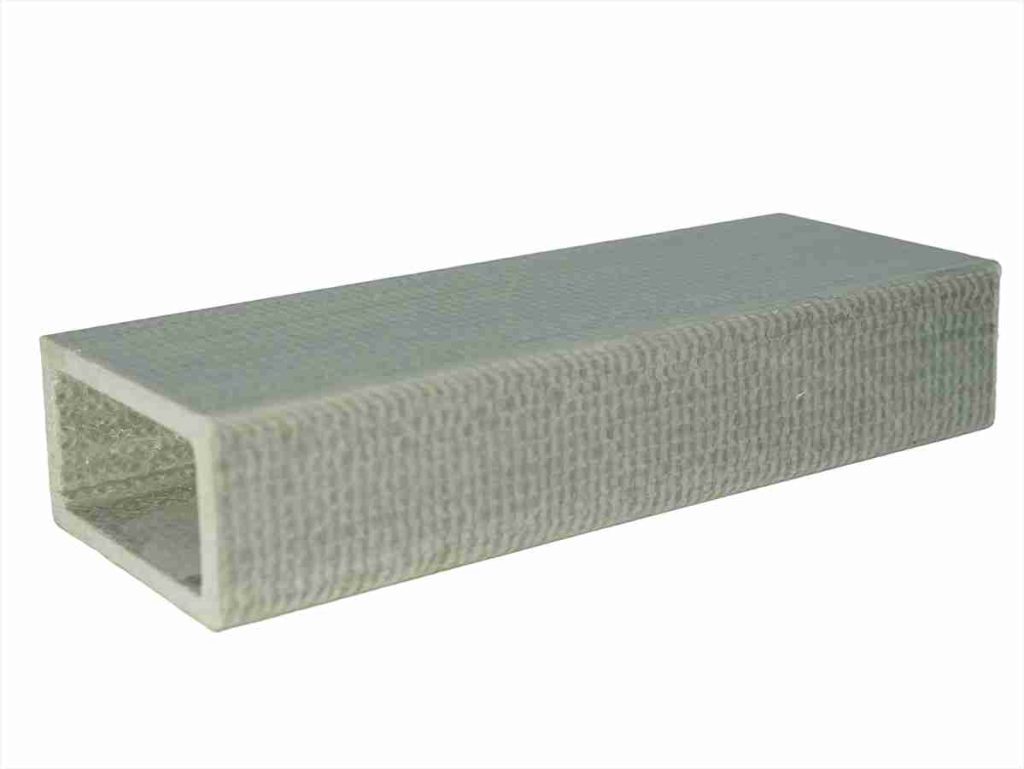
A deeper tube provides more stiffness in that direction. A wider face gives more room for brackets, bolts, and other connections.
2. Consider Wall Thickness
FRP rectangular tube wall thickness affects the tube’s weight, strength, and overall performance.
A thicker wall can handle heavier loads and provide more support around bolts and fasteners. However, wall thickness alone does not decide whether a tube suits the project.
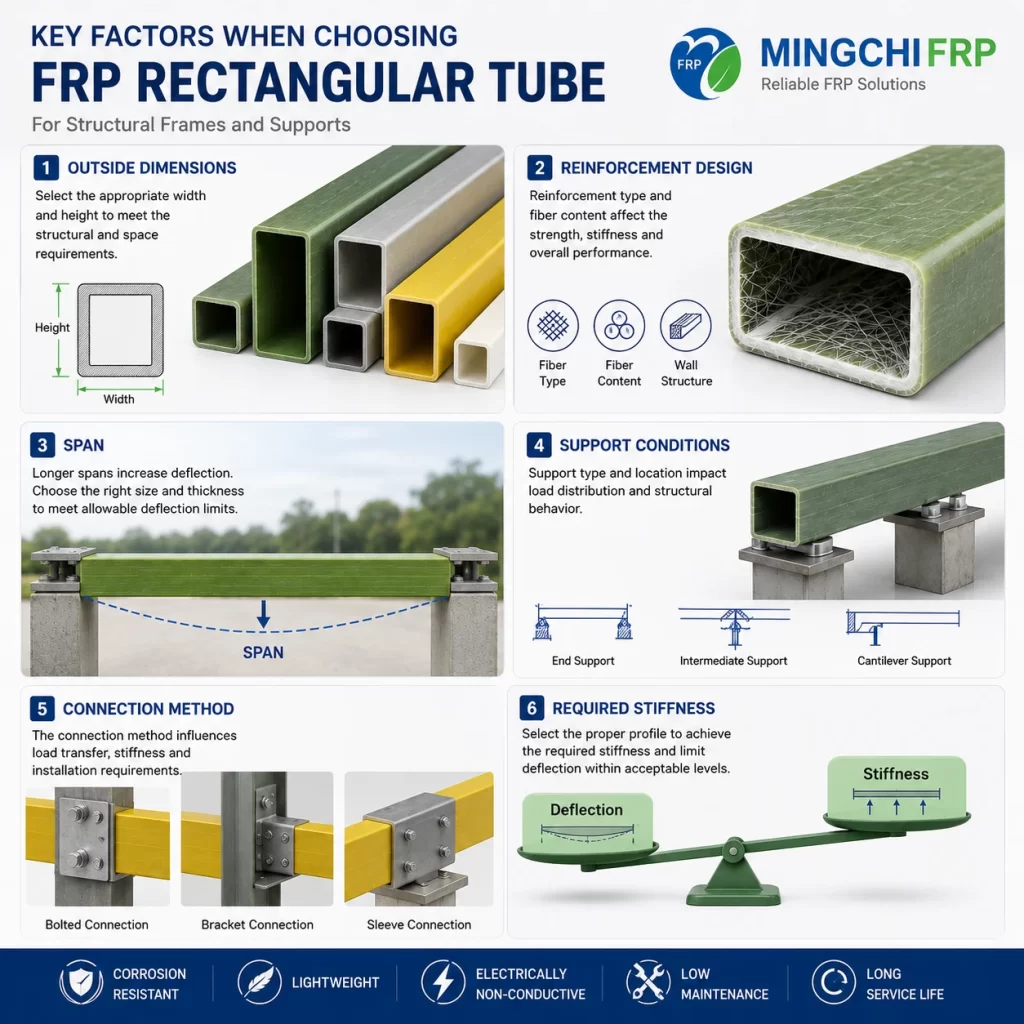
Selection should consider wall thickness together with:
- Outside dimensions
- Reinforcement design
- Span
- Support conditions
- Connection method
- Required stiffness
For load-bearing structures, check the actual profile’s strength data. Do not choose a tube based only on its listed wall thickness.
3. Check Load Direction and Tube Orientation
Load direction is especially important for rectangular fiberglass tubing.
Turning the tube changes how it bends. For a horizontal beam, placing the deeper side upright usually adds stiffness and reduces sagging.
Also check side loads, connections, available space, and bracing before choosing the direction.
Show the correct direction of the structural fiberglass rectangular tube clearly in the fabrication drawings.
4. Evaluate Span and Deflection
The required FRP rectangular tube span is another important selection factor.
As unsupported span increases, deflection generally becomes more important. A tube may have sufficient material strength but still bend more than the project allows.
Consider:
- Unsupported span
- Concentrated load
- Distributed load
- Load direction
- Support arrangement
- Allowable deflection
- Connection spacing
- Safety requirements
When choosing profiles for frames and support beams, check both strength and stiffness.
Do not use another manufacturer’s load or span table as a direct substitute for your selected product. Pultruded profiles can differ in reinforcement, resin formulation, dimensions and mechanical properties.
5. Match the Tube to the Application
Different applications place different demands on an FRP RHS profile.
| Application | Main selection considerations |
|---|---|
| Structural frames | Dimensions, connections and multi-directional loads |
| Support beams | Span, bending stiffness and orientation |
| Equipment supports | Load, mounting points and chemical exposure |
| Utility crossarms | Electrical insulation, stiffness and outdoor exposure |
| Cooling tower frames | Moisture, corrosion and structural stability |
| Solar supports | Outdoor exposure, wind load and connection design |
| Cable supports | Span, distributed load and installation space |
6. Select the Appropriate Resin System
The resin system should match the operating environment.
Common considerations include exposure to:
- Moisture
- Acids or alkalis
- Salt spray
- Industrial chemicals
- Outdoor UV
- Elevated temperatures
The resin type affects chemical resistance and fire performance. Before choosing a pultruded fiberglass rectangular tube, share the working conditions with the supplier.
Do not select a resin system only from a general statement such as “corrosion resistant.” The actual chemicals, concentrations, temperatures and exposure conditions matter.
Standard or Custom FRP Rectangular Tubing?
Choose standard profiles when their size and performance meet the project needs.
Custom fiberglass rectangular tubing may be considered when a project requires:
- Special dimensions
- Different wall thickness
- Custom length
- Specific color
- Alternative resin systems
- Special reinforcement
- Factory cutting or drilling
Custom profiles can meet special design needs. Discuss the order quantity, tooling, and production details with the manufacturer.
Frequently Asked Questions
How do I choose the right FRP rectangular tube size?
Consider the required span, load direction, wall thickness, installation space and allowable deflection. Structural applications should use product-specific engineering data.
Does the orientation of an FRP rectangular tube matter?
The deep and shallow sides bend differently. Turning the tube changes its stiffness and how much it sags.
Is a thicker FRP rectangular tube always stronger?
Not necessarily. Wall thickness is only one factor. Outside dimensions, reinforcement, span, resin system and load direction also affect performance.
Can FRP rectangular tubes be used as support beams?
Yes, when the selected profile meets the required load, span and deflection criteria. The profile orientation and connections should also be considered.
Can FRP rectangular tubes be customized?
Manufacturers can customize the size, color, resin type, length, and fabrication options.
Conclusion
Choosing the right FRP rectangular tube takes more than comparing sizes. Check the wall thickness, span, load direction, bending limit, resin type, and connections.
Mingchi FRP supplies standard and custom rectangular tubes for frames, support beams, and industrial structures. Send us your project details, and we will help you choose the right profile.