

Choosing between FRP stair treads and steel stair treads depends on more than strength or price.
For industrial projects, the main factors are usually:
- corrosion resistance;
- load and span requirements;
- slip resistance;
- weight;
- maintenance;
- electrical conductivity;
- fire performance;
- lifecycle cost.
Steel remains widely used because of its high stiffness and familiar structural performance. However, FRP stair treads are often preferred in chemical plants, wastewater facilities, marine structures, power facilities, and other corrosive or electrically sensitive environments.
This guide compares FRP stair treads vs steel stair treads from a practical industrial perspective.
FRP vs Steel Stair Treads: Quick Comparison
| Factor | FRP Stair Treads | Steel Stair Treads |
|---|---|---|
| Corrosion resistance | High with correct resin selection | Depends on grade, coating or galvanizing |
| Weight | Lightweight | Heavier |
| Structural stiffness | Lower than steel | High |
| Slip resistance | Gritted and concave surfaces available | Serrated or textured surfaces available |
| Electrical conductivity | Generally non-conductive | Conductive |
| Maintenance | Usually low | May require corrosion and coating maintenance |
| Installation | Easier handling in many projects | Heavier and may require more equipment |
| Fire behavior | Depends on resin system | Steel is noncombustible |
| Lifecycle cost | Can be favorable in corrosive environments | Depends strongly on maintenance exposure |
Neither material is always better. The right choice depends on the operating environment and structural requirements.
What Are FRP Stair Treads?
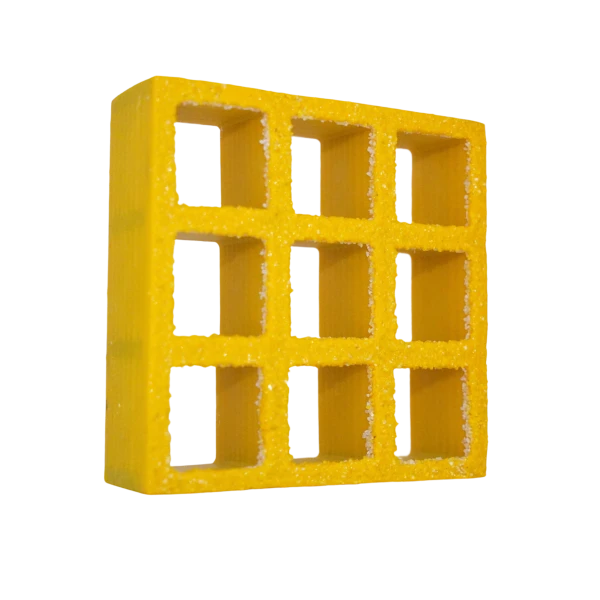
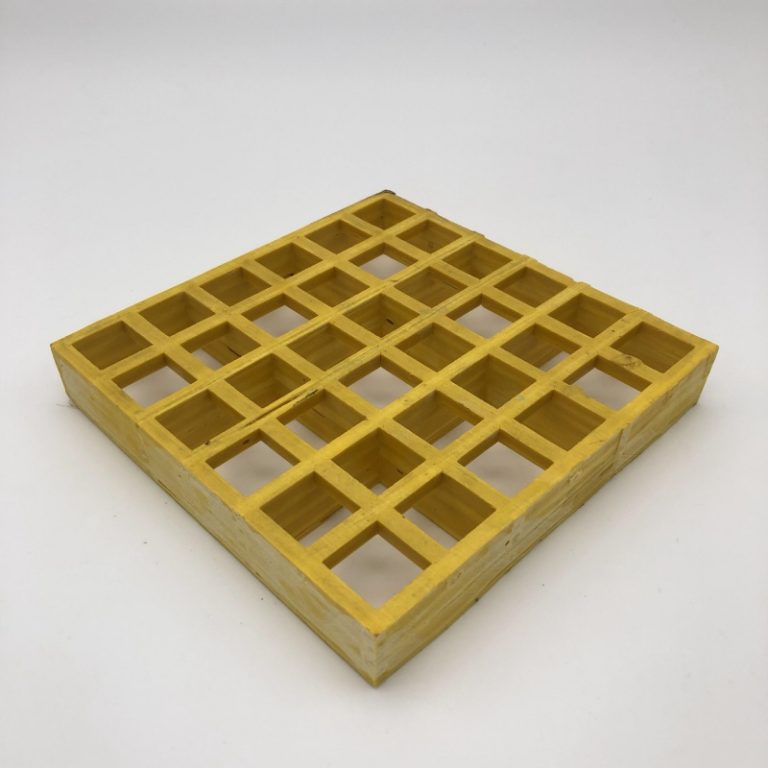
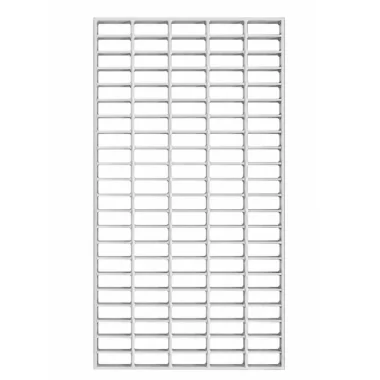
FRP stair treads, also called fiberglass stair treads or FRP grating stair treads, are made from glass-fiber reinforcement combined with a polymer resin matrix.
They are commonly manufactured from:
- molded FRP grating;
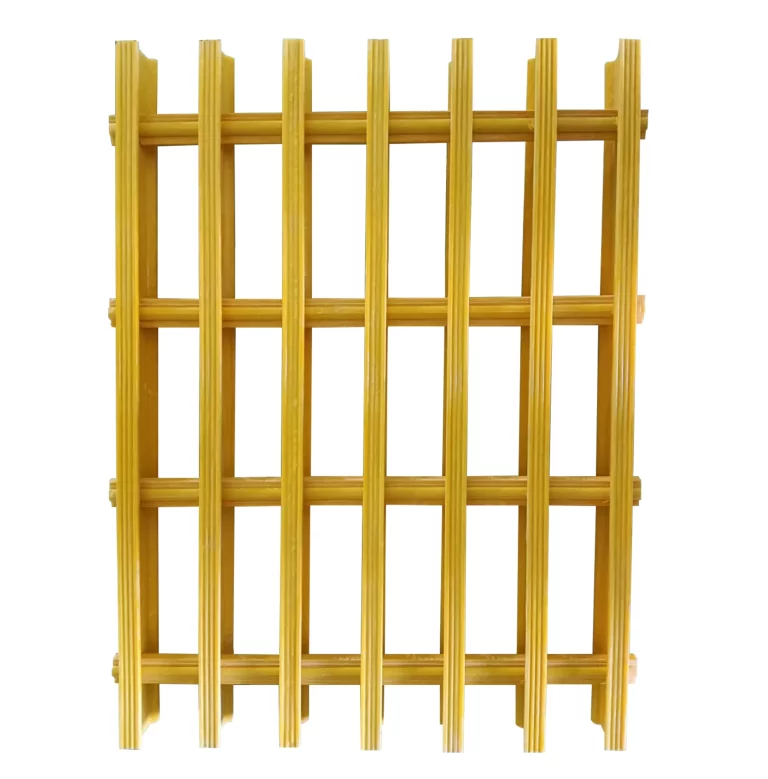
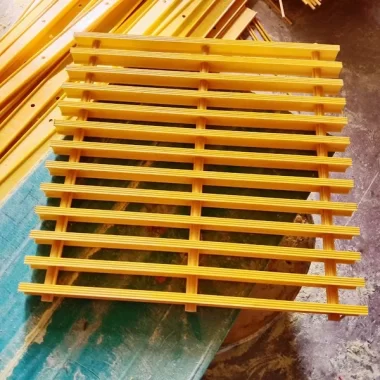
- pultruded FRP grating.
Typical tread options include anti-slip grit surfaces, concave surfaces, stair nosing, and different fixing systems.
Molded FRP Stair Treads
Molded FRP stair treads are commonly used where corrosion resistance and multidirectional reinforcement are important.
They are suitable for many industrial access stairs, wastewater facilities, chemical plants, and outdoor platforms.
Pultruded FRP Stair Treads
Pultruded FRP stair treads use continuous reinforcement mainly along the bearing-bar direction.
They are often selected where engineered span performance is important.
For both types, actual load capacity should always be checked against product-specific load and deflection data.
FRP Stair Treads vs Steel Stair Treads
1. Corrosion Resistance
This is one of the biggest differences between FRP and steel.
FRP does not rust like carbon steel, which makes corrosion-resistant FRP stair treads attractive for:
- chemical plants;
- wastewater treatment plants;
- marine environments;
- coastal facilities;
- wet industrial areas.
Steel can also perform well when properly galvanized, coated, or made from stainless steel, but coatings may require inspection and repair.
FRP should not be described as universally chemical-proof.
Its performance depends on:
- resin type;
- chemical concentration;
- temperature;
- exposure duration.
For aggressive environments, chemical compatibility should be checked before selecting the resin system.
2. Strength, Load Capacity and Deflection
It is not accurate to simply say:
“FRP is stronger than steel.”
Steel generally has higher stiffness.
FRP, however, provides useful structural strength with lower weight and good corrosion resistance.
The performance of an FRP stair tread depends on:
- tread width;
- tread depth;
- clear span;
- thickness;
- support arrangement;
- load type;
- molded or pultruded construction.
FRP Stair Tread Load Capacity
There is no single universal load rating for all fiberglass stair treads.
Engineers should review the actual FRP stair tread load table for the product being specified.
For U.S. general-industry stairs, OSHA requires each stair to support at least five times the normal anticipated live load and never less than a concentrated load of 1,000 lb.
This applies to the stair system and should not be treated as an automatic rating for every FRP tread.
3. Slip Resistance
Industrial stairs are often exposed to water, oil, dust, chemicals, or outdoor weather.
Both FRP and steel can use slip-resistant surfaces.
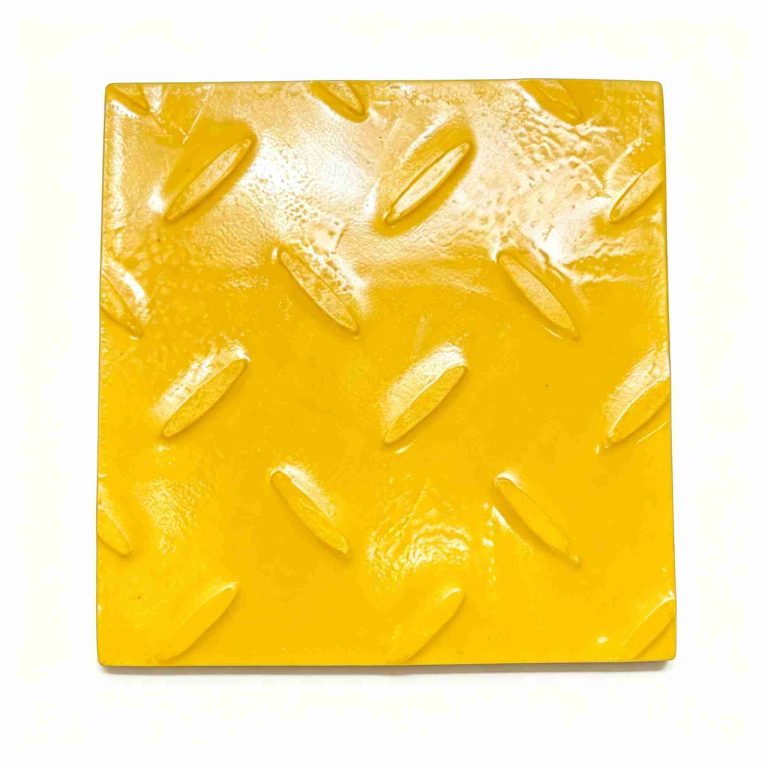
Anti-Slip FRP Stair Treads
Common options include:
- gritted surfaces;
- concave surfaces;
- anti-slip stair nosing.
Gritted FRP stair treads are widely used in wet and outdoor industrial environments.
Steel stair treads can also use serrated bearing bars or textured surfaces.
No material should be described as completely slip-proof. Actual performance depends on contamination, footwear, drainage, and maintenance.
4. Weight and Installation
FRP is generally lighter than an equivalent steel component.
Lower weight can make:
- transportation easier;
- manual handling simpler;
- elevated installation more convenient;
- replacement work easier in restricted areas.
This can be valuable when installing industrial FRP stair treads on platforms, treatment plants, or existing structures.
Steel remains practical where heavy lifting equipment and fabrication facilities are already available.
5. Electrical Conductivity
Steel conducts electricity.
FRP is generally electrically non-conductive, which can make fiberglass stair treads useful around:
- substations;
- power generation facilities;
- electrical equipment;
- utility structures.
This does not mean FRP alone guarantees electrical safety. Electrical requirements should always be considered at the system level.
6. Maintenance
FRP should be described as low maintenance, not maintenance-free.
Routine inspection should still check:
- tread surfaces;
- clips and fasteners;
- cracking;
- accidental damage;
- connection points.
Steel may additionally require:
- rust treatment;
- coating repair;
- repainting;
- galvanizing repair.
In corrosive environments, lower maintenance requirements are one of the main reasons buyers consider FRP.
7. Fire Performance
Steel is noncombustible.
FRP contains a polymer resin matrix and behaves differently under fire.
Fire-retardant FRP resin systems are available, but FRP should not be described as “fireproof.”
ASTM E84 is commonly used to report flame spread and smoke developed indices.
An ASTM E84 result does not mean that an FRP product is noncombustible.
Where fire performance is critical, the actual test documentation and project requirements should be reviewed before material selection.
FRP vs Steel Stair Treads: Cost
Initial price alone does not give a complete comparison.
A more useful approach is to consider:
Purchase cost + installation + maintenance + downtime + repair + replacement
FRP pricing depends on factors such as:
- molded or pultruded construction;
- resin system;
- dimensions;
- surface treatment;
- quantity.
Steel pricing depends on:
- carbon, galvanized, or stainless steel;
- coating;
- fabrication;
- current material prices.
In dry indoor environments, steel may be economically attractive.
In highly corrosive environments, FRP may provide a lower lifecycle cost because it can reduce corrosion-related maintenance.
Which Material Is Better for Different Applications?
Chemical Plants
FRP is often a strong option because the resin system can be selected according to the chemical environment.
Chemical compatibility should always be confirmed.
Wastewater Treatment Plants
Constant moisture and corrosive conditions make FRP stair treads for wastewater treatment plants a common choice for access stairs, platforms, and walkways.
Marine and Coastal Environments
Saltwater and salt spray can accelerate corrosion in many metal systems.
FRP stair treads for marine applications may reduce rust-related maintenance.
Power Facilities and Substations
FRP can be useful where electrical conductivity is undesirable.
Dry Industrial Facilities
In dry, non-corrosive areas, steel may remain the simpler and more economical choice.
Heavy Load Applications
Where very high stiffness or extreme concentrated loads are required, steel may be preferable.
FRP should always be selected using actual span, load, and deflection data.
Molded vs Pultruded FRP Stair Treads
Once FRP has been selected, buyers often need to choose between molded and pultruded construction.
Molded FRP Stair Treads
Common advantages include:
- corrosion resistance;
- multidirectional reinforcement;
- flexible cutting from standard panels;
- suitability for wet and chemical environments.
Pultruded FRP Stair Treads
Common advantages include:
- strong directional reinforcement;
- engineered span performance;
- suitability for structural access systems.
Neither is automatically better.
The correct choice depends on load, span, environment, resin, and dimensions.
When Should You Choose FRP Instead of Steel?
FRP is worth considering when:
- corrosion repeatedly damages steel stairs;
- the area remains wet;
- chemicals are present;
- the structure is near the sea;
- electrical conductivity is undesirable;
- maintenance access is difficult;
- lightweight installation is beneficial.
FRP Stair Treads vs Steel Stair Treads: Final Decision
FRP stair treads are particularly attractive where corrosion resistance, low maintenance, electrical non-conductivity, and lightweight handling are important.
For chemical plants, wastewater facilities, marine sites, and electrical environments, FRP can offer clear practical advantages.
The final choice should be based on:
environment + load + span + deflection + fire requirements + maintenance + lifecycle cost
When selecting FRP, provide the manufacturer with the required tread dimensions, support span, operating environment, and design load so the correct molded or pultruded configuration can be evaluated.