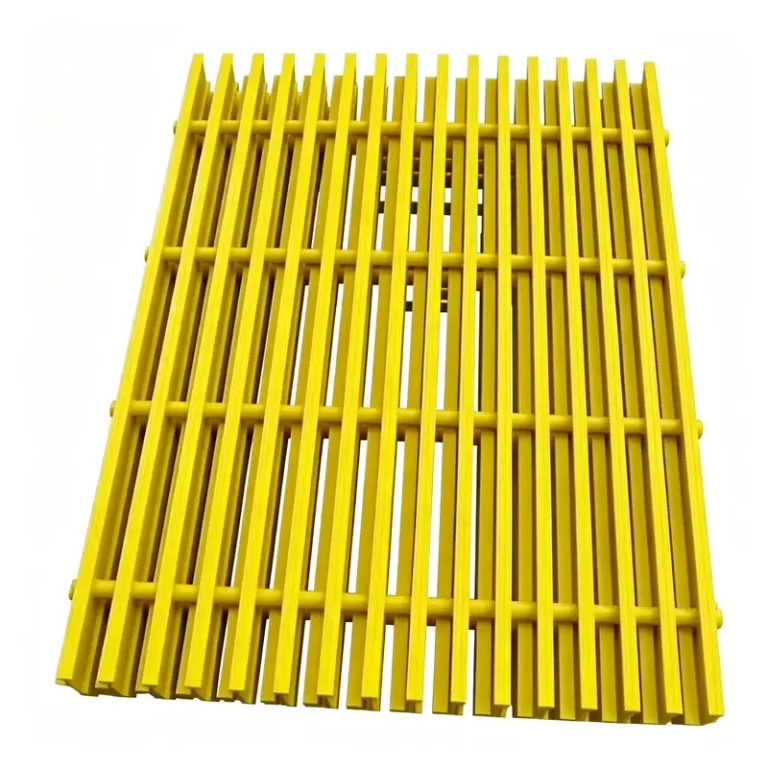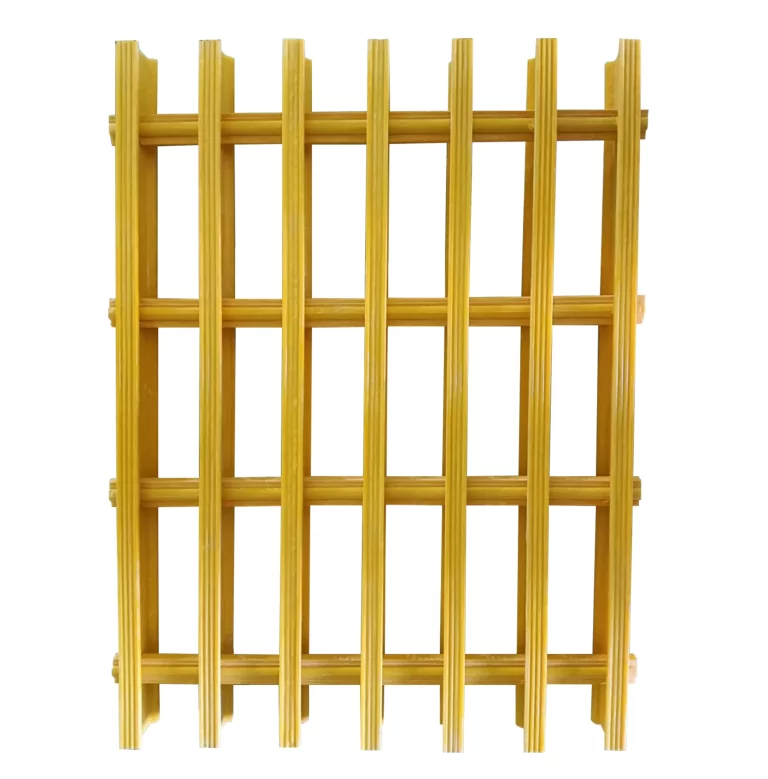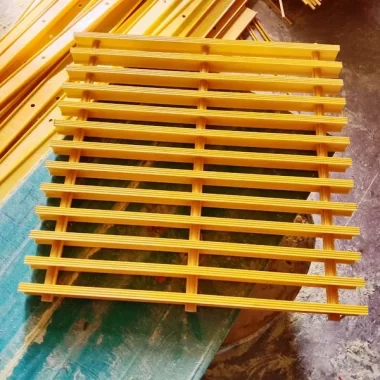

Phenolic grating is a type of FRP grating made with fiberglass and phenolic resin. It is designed for projects where fire resistance and low smoke generation are important.
Phenolic grating is mainly considered for offshore oil and gas platforms, ships and other marine areas where verified fire and smoke performance is required.
The resin name alone is not enough. Buyers must also check the grating structure, load table, fire test report and product approval.
What Is Phenolic Grating?
Phenolic grating is also called phenolic FRP grating or phenolic fiberglass grating.
Glass fibers provide structural strength. Phenolic resin binds and protects the fibers. The resin system also affects flame spread and smoke generation.
Compared with polyester or vinyl ester grating, phenolic resin grating is mainly selected for better fire and smoke performance.
However, not every phenolic product has the same results. Performance can change with the resin formula, grating type, panel depth and test method.
You can view our phenolic FRP grating before requesting project-specific documents.
Why Choose Phenolic FRP Grating?
Fire-resistant FRP grating is often needed in offshore, marine and industrial projects. In these areas, corrosion resistance alone may not be enough.
Phenolic grating can offer several benefits:
- Low flame spread
- Reduced smoke generation
- Corrosion resistance
- High strength-to-weight ratio
- Slip-resistant surface options
- Lower maintenance in corrosive environments
These properties make low-smoke phenolic grating suitable for many fire-sensitive access areas.
However, phenolic grating should not be called completely fireproof. It is still a resin-based composite. Its performance must be supported by a test report for the finished product.
Phenolic vs Polyester vs Vinyl Ester Grating
Different FRP resin systems serve different purposes.
| Resin system | Main selection reason | Common applications |
|---|---|---|
| Polyester | General performance and lower initial cost | Industrial walkways and utility platforms |
| Vinyl ester | Resistance to aggressive chemicals | Chemical plants and wastewater facilities |
| Phenolic | Improved fire and smoke performance | Offshore, marine and fire-sensitive areas |
Phenolic grating is not always the best choice.
Vinyl ester grating may be better when chemical exposure is the main risk. Polyester grating may be enough for a standard industrial walkway.
The correct resin depends on the project environment and safety requirements.
Buyers can also compare molded FRP grating with pultruded FRP grating.
Molded vs Pultruded Phenolic Grating
Phenolic fiberglass grating may be available in molded or pultruded form. Availability depends on the manufacturer and product series.
Molded phenolic grating
Molded grating has reinforcement in several directions. It can work well around pipes, equipment and complex cutouts.
Large cutouts may still require extra support.
Phenolic pultruded grating
Phenolic pultruded grating has most of its reinforcement in the bearing-bar direction. It can be considered for longer spans or higher directional loads.
The bearing bars must run between the supports. Incorrect panel orientation can reduce load capacity.
Neither type is automatically stronger. Buyers should check the load table for the exact grating construction.
Phenolic Grating Fire Standards
Fire standards do not all measure the same performance. A low flame-spread result does not automatically prove structural fire integrity.
ASTM E84 phenolic grating
ASTM E84 measures surface flame spread and smoke development under controlled conditions.
The test does not prove that a product is non-combustible. It also does not show how long the grating can support a load during a fire. ASTM E84
ASTM E84 results should always match the tested product.
ASTM F3059 phenolic grating
ASTM F3059 covers FRP grating used in marine construction and shipbuilding. It includes structural, durability, slip and fire-related requirements.
The standard does not cover hydrocarbon pool fires or jet fires. It also does not confirm equipment support during or after a fire. ASTM F3059-24
Not every phenolic grating meets ASTM F3059. Compliance must be supported by documents for the exact product.
IMO and marine approval
The IMO Fire Test Procedures Code includes separate tests for smoke, toxicity and surface flammability.
Therefore, “IMO-approved phenolic grating” should not be used as a general claim. Buyers should request the exact approval document. International Maritime Organization
Some marine projects may also require approval from a flag state or classification society.
Common Phenolic Grating Applications
Phenolic grating is mainly considered for areas that need both corrosion resistance and improved fire performance.
Common applications include:
- Offshore platforms
- Marine walkways
- Shipboard access areas
- Oil and gas facilities
- Petrochemical plants
- Fire-sensitive industrial platforms
- Tunnels and transport facilities
- Emergency access routes
For example, offshore phenolic grating may be used for walkways, stair systems or access platforms. The final product must still meet the project load and fire requirements.
You can explore more FRP grating applications for other industrial environments.
How to Select Phenolic Grating
1. Confirm the fire requirement
Identify the required standard before selecting the panel.
The project may require ASTM E84, ASTM F3059 or another marine fire test. Do not assume that all phenolic products meet the same standard.
2. Check load capacity and span
Phenolic grating load capacity depends on:
- Grating construction
- Panel depth
- Clear support span
- Load direction
- Allowable deflection
Use the load table for the exact phenolic grating product. Do not use data from a similar polyester or vinyl ester panel.
Our guide to FRP grating load capacity explains how thickness, span and deflection affect performance.
3. Check chemical exposure
Provide the chemical name, concentration and operating temperature.
A general “chemical-resistant phenolic grating” claim is not enough. Chemical compatibility must match the actual environment.
4. Select the mesh and surface
Phenolic grating mesh size affects drainage, walking comfort and falling-object control.
A gritted surface can improve traction. The surface should match the expected water, oil or debris.
5. Review supports and fasteners
The support frame must provide enough bearing area. Clips must match the mesh size, panel depth and support structure.
Cutouts and panel joints may require extra framing.
Practical Phenolic Grating Example
An offshore project needs a corrosion-resistant walkway with documented fire performance.
Two suppliers offer phenolic pultruded grating. Both products look similar. However, only one quotation includes a matching load table and fire test report.
The engineer should check:
- Does the report cover the proposed product?
- Does the panel depth match?
- Is the bearing-bar direction correct?
- Does the standard meet the project requirement?
- Are suitable clips and supports included?
This prevents the project from selecting a product based only on the term “phenolic grating.”
Frequently Asked Questions
Is phenolic grating fireproof?
Phenolic grating can provide improved fire resistance and lower smoke generation. However, it should not be described as completely fireproof. Check the fire test results for the exact product.
Does all phenolic grating meet ASTM F3059?
No. ASTM F3059 compliance is product-specific. The use of phenolic resin alone does not prove compliance.
Is phenolic grating USCG approved?
Some phenolic grating systems may have USCG acceptance. This does not apply to every product. Buyers should request the current approval document.
Is phenolic grating stronger than standard FRP grating?
Not always. Strength depends on the fiberglass reinforcement, panel depth, bearing-bar spacing and support span.
Can phenolic grating be used in chemical plants?
It may be suitable for some chemical environments. The chemical, concentration, temperature and exposure time must be checked.
What affects phenolic grating cost?
The cost depends on the grating construction, panel size, quantity, fabrication and required test documents. Freight and project certification can also affect the final price.
Conclusion
Phenolic grating is a practical option for projects that need corrosion resistance, low smoke generation and improved fire performance. Selection should be based on verified product data. Check the load table, support span, fire test and approval scope before ordering.
Mingchi FRP supplies phenolic FRP grating for offshore, marine and industrial projects. Send us your panel dimensions, load requirements, support span and required standard. Our team can help review the application and recommend a suitable grating solution.