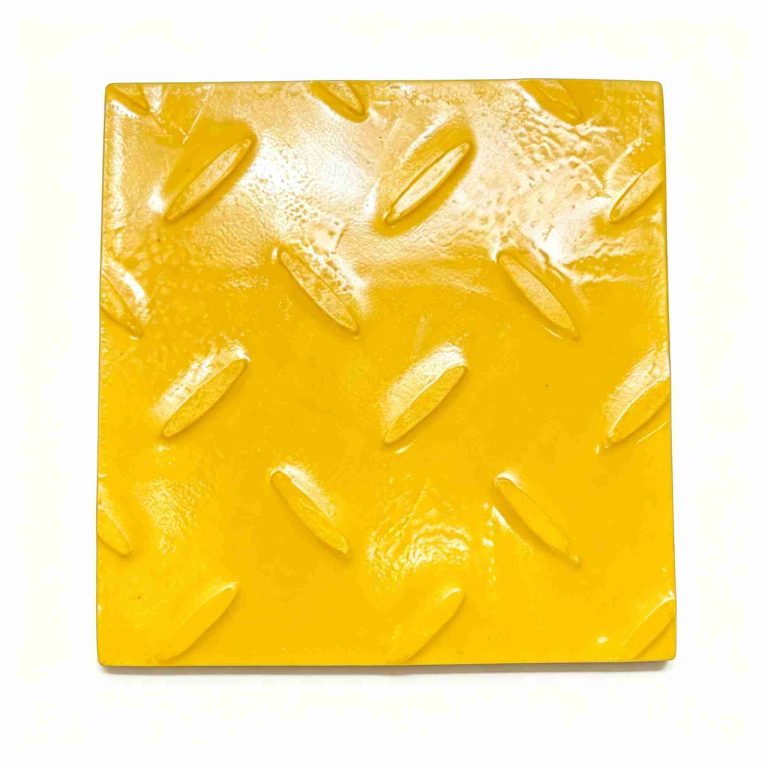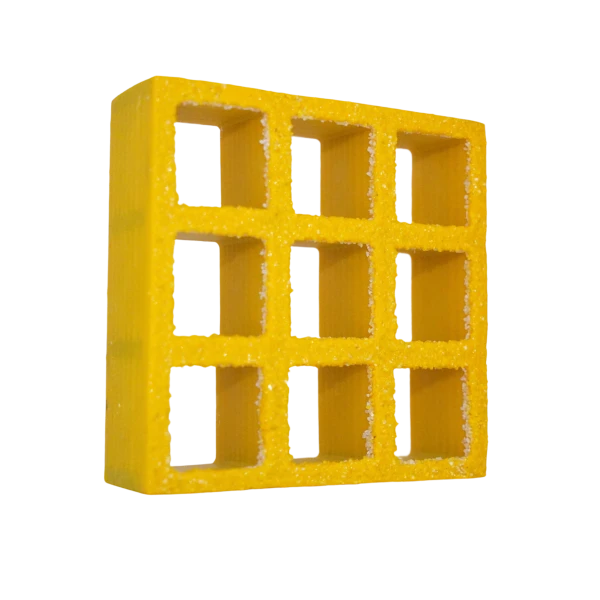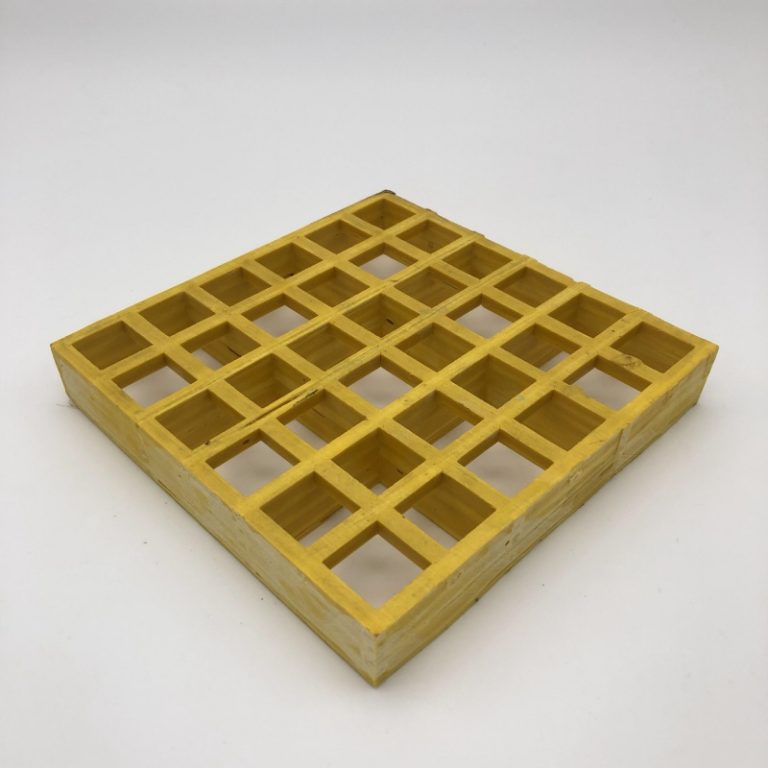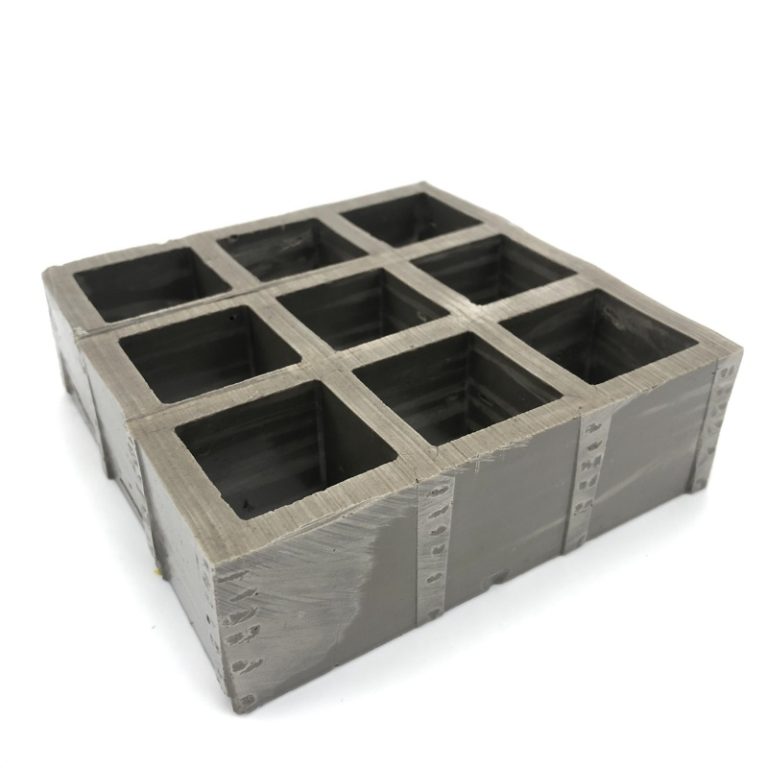


FRP grating load capacity varies by application. For example, grating used on a wastewater treatment plant walkway mainly supports workers and maintenance tools, while grating installed over a loading-area trench may need to withstand carts or vehicle wheel loads. Even with the same thickness, performance can change with the grating type, clear span, load type and allowable deflection.
Therefore, fiberglass grating should not be selected by thickness alone. Always check the load table for the exact product series and actual project conditions.
What Does FRP Grating Load Capacity Mean?
FRP grating selection involves three important values.
Maximum Recommended Load
This is the manufacturer’s recommended working limit under stated conditions. It should come from a verified product load table.
Ultimate Load
Ultimate load refers to the point at which the grating begins to fracture or fail. It should not be treated as the normal working load.
Deflection
Deflection is how far the grating bends under load. A panel may resist failure but still bend too much for safe or comfortable use.
For this reason, load capacity and deflection should always be checked together.
What Affects FRP Grating Load Capacity?
Grating Type
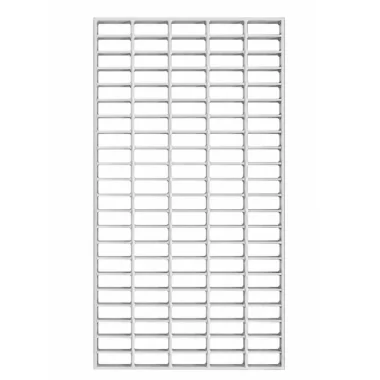
Molded FRP grating distributes loads in two directions. It works well for platforms with irregular cuts or multiple openings.
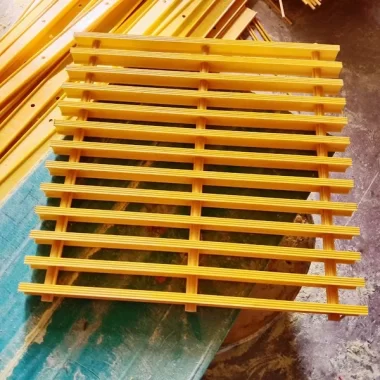
Pultruded FRP grating carries most of the load along its main bearing bars. It normally provides greater stiffness in this direction and can suit longer spans.
Neither type is always stronger. Selection depends on the load direction, span and support layout.
Panel Thickness
Within the same product series, thicker grating normally provides greater stiffness and load capacity.
However, panels with the same thickness may use different mesh patterns, bearing bars and reinforcement. Thickness alone cannot determine performance.
Clear Support Span
Clear span is the unsupported distance between the supports beneath the grating. It is not the total panel length.
As the span increases, deflection normally rises and allowable load decreases. Reducing the support spacing can improve performance without changing the panel.
Support and Installation
Published load data assumes proper support and installation. Loose clips, unsupported edges, insufficient bearing and large cutouts can affect performance.
Pultruded grating must be installed with its main bearing bars spanning between the supports.
Uniform Load vs Concentrated Load
| Load type | Meaning | Example |
|---|---|---|
| Uniform load | Spread across an area | Pedestrian walkway |
| Concentrated load | Applied over a small area | Equipment leg |
| Wheel load | Applied through moving wheels | Cart or forklift |
A concentrated load can create greater local stress than a larger load spread across the entire surface.
Forklift and vehicle applications also require wheel load, contact area, movement, turning and support layout to be checked. Standard pedestrian grating should not automatically be used for vehicle traffic.
How Thickness and Span Work Together
Consider two identical FRP panels:
- Panel A has supports placed close together.
- Panel B has a longer unsupported span.
Under the same load, Panel B will normally deflect more. The panel specification is the same, but the support condition is different.
Use this basic selection process:
- Identify the expected load.
- Determine whether it is uniform, concentrated or moving.
- Measure the clear support span.
- Choose molded or pultruded grating.
- Check load and deflection in the correct table.
- Confirm the support and fastening layout.
How to Read an FRP Grating Load Table
1. Confirm the product
Check the:
- Grating type
- Panel thickness
- Mesh or bearing-bar spacing
- Surface type
- Product series
Do not use data from another manufacturer or product series.
2. Find the clear span
Use the unsupported distance between supports, not the total panel length.
3. Select the correct load type
Use uniform-load data for loads spread across an area. Use concentrated or wheel-load data for localized loads.
4. Check the deflection
Do not look only at the maximum load. Confirm that the corresponding deflection meets the project requirement.
Practical Selection Example
Consider an industrial maintenance walkway in a wet environment.
Before choosing the grating, the project team should confirm:
- Required pedestrian load
- Clear support span
- Maintenance-cart or equipment loads
- Panel size
- Support layout
- Surface requirement
Molded grating may suit a platform with several pipe openings. Pultruded grating may be considered when greater stiffness over a longer span is required.
The final choice must still be checked against the product-specific load table. Choosing a “38 mm grating” without load and span information is not enough.
Molded vs Pultruded Load Performance
| Factor | Molded grating | Pultruded grating |
|---|---|---|
| Load pattern | Two directions | Mainly along bearing bars |
| Typical span | Short to moderate | Often better for longer spans |
| Cutouts | More adaptable | Removed bearing bars need attention |
| Common use | Walkways and complex platforms | Longer-span platforms |
Application Conditions Matter
Load requirements change between projects.
In agricultural greenhouses, consider moisture, drainage, fertilizers and cart traffic.
For electrical and energy facilities, consider maintenance access, equipment loads and electrical safety.
When grating forms part of safety fencing and access systems, the panels, supports, fasteners and handrails should work together as a complete system.
Frequently Asked Questions
How much weight can FRP grating hold?
There is no universal value. Capacity depends on the exact product, thickness, span, load type and allowable deflection.
Does thicker FRP grating carry more load?
Normally yes within the same product series. However, thickness alone does not determine capacity.
What is the maximum span for FRP grating?
Use the load table for the exact product and required load. The corresponding deflection must also meet the project limit.
Is molded or pultruded grating stronger?
Molded grating distributes loads in two directions. Pultruded grating normally provides greater stiffness along its main bearing bars.
Can FRP grating support a forklift?
Purpose-designed heavy-duty grating may support certain forklift applications. Wheel loads, movement, turning and support conditions require technical review.
Can I use another manufacturer’s load table?
No. Similar-looking panels may use different geometry, reinforcement and manufacturing methods.
Conclusion
FRP grating load capacity depends on the product series, thickness, clear span, load type, deflection and support conditions. Thickness alone is not enough for reliable selection.
Provide Mingchi FRP with your load, span, panel size, support layout and working environment. These details help identify a suitable molded, pultruded or heavy-duty grating solution.